
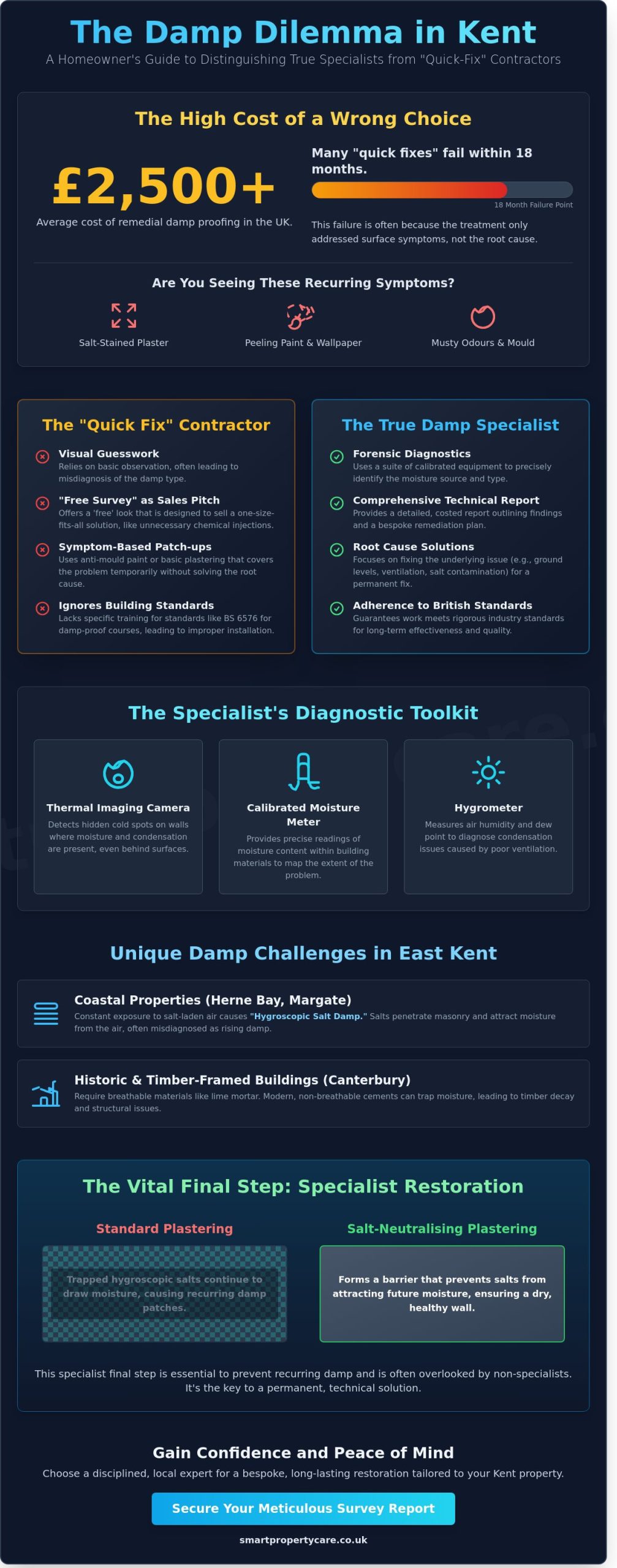
According to industry data, the average cost of remedial damp proofing in the UK can exceed £2,500, yet many of these “quick fix” treatments fail within eighteen months because they address surface symptoms rather than the source. Finding a reliable damp specialist shouldn’t feel like a gamble with your life savings. It’s incredibly frustrating to watch salt-stained plaster or peeling paint return just weeks after a contractor has left your property. You likely feel the weight of confusion over different damp types, especially when the salt air in coastal towns like Herne Bay or Margate begins to take its toll on your masonry.
You deserve a dry, healthy home environment and a bespoke restoration that preserves the original character of your building. We promise to show you how to secure a meticulous, honest survey report that prioritises long-term structural integrity over a rapid, low-quality patch-up. This guide provides the clarity you need to distinguish between a “cowboy” repair and expert craftsmanship. We will explore the specific credentials to look for and how to ensure your property receives a permanent, technical solution tailored to the unique Kent climate.
Key Takeaways
- Learn to distinguish between visual guesswork and professional diagnostics using calibrated moisture meters and thermal imaging technology.
- Discover why hiring a dedicated damp specialist is essential for identifying the root cause of moisture rather than applying a temporary “quick fix.”
- Understand the specific structural vulnerabilities of Kent’s Victorian and Edwardian terraces, particularly the impact of modern cements on traditional lime mortars.
- Reveal why specialist, salt-neutralising plastering is a vital final step to prevent hygroscopic salts from attracting recurring moisture to your walls.
- Gain the confidence to choose an expert craftsman who provides bespoke, long-lasting restoration solutions tailored to the unique needs of East Kent properties.
What Defines a True Damp Specialist in Kent?
A true damp specialist isn’t merely a tradesman with a basic moisture meter. They’re forensic investigators of the built environment. While a general builder might suggest a quick patch-up or a lick of anti-mould paint, a specialist uses calibrated equipment like thermal imaging cameras, protimeters, and hygrometers to identify the root cause of structural dampness. This precision prevents homeowners from wasting thousands of pounds on unnecessary treatments that fail to address the underlying issue.
Choosing a preservation expert with over 20 years of experience ensures your property benefits from a deep understanding of building physics. It’s about more than just applying a product; it’s about adhering to British Standards. Specifically, BS 6576 governs the installation of chemical damp-proof courses. This standard requires a meticulous approach that many general contractors lack the specific training to execute. Our team brings a level of high-end craftsmanship that guarantees a seamless, long-term solution rather than a temporary fix.
The Difference Between Salesmen and Surveyors
Many firms offer a “free survey” that’s actually a disguised sales pitch. These visits often result in a recommendation for expensive chemical injections regardless of the actual problem. A genuine damp specialist provides a comprehensive, costed technical report that details the findings and the required remediation. We advocate for a family-run approach where the surveyor is often the lead craftsman. This creates a direct line of accountability. You receive a professional diagnosis from someone who understands the practicalities of the repair work, ensuring the outcome meets our rigorous quality standards.
Why East Kent Properties Require a Specialist Touch
East Kent presents unique environmental challenges that require local expertise. Properties in Herne Bay, Whitstable, and Margate face constant exposure to salt-laden coastal air. This salt penetrates external masonry and attracts moisture from the atmosphere, a process known as hygroscopic action. In historic hubs like Canterbury and Faversham, the challenge shifts to timber-framed buildings that require breathable materials to prevent decay.
We frequently encounter “salt damp” which is misdiagnosed as rising damp by less experienced contractors. Without specific knowledge of East Kent’s geology and climate, a builder might install a redundant damp proof course while the real issue remains. A specialist understands these nuances, providing bespoke solutions that protect the integrity of Kent’s diverse architectural heritage. Our approach delivers the peace of mind that comes from knowing your property is in the hands of a disciplined, local expert.
The Diagnostic Process: What to Expect from a Professional Survey
A professional inspection is a systematic investigation of your property’s structural health. It begins with a non-invasive assessment of the building’s envelope to identify vulnerabilities. A qualified damp specialist uses a suite of precision instruments to map moisture patterns with clinical accuracy. Electronic moisture meters provide instant readings of surface dampness, while thermal imaging cameras detect cold spots where condensation typically forms. Hygrometers measure relative humidity and dew point, which are essential for identifying ventilation failures that lead to mould growth.
The survey extends well beyond the interior walls. We examine external ground levels to ensure they remain at least 150mm below the damp proof course. Blocked guttering or faulty downpipes often cause localised saturation that mimics more serious structural issues. Sub-floor ventilation is another critical check; restricted air bricks lead to stagnant air and eventual timber decay. We prioritise finding the “why” before proposing the “how”, ensuring the solution targets the source rather than just the symptoms.
Identifying the Root Cause
Distinguishing between rising damp and penetrating damp requires technical precision. Rising damp typically leaves a distinct “tide mark” and affects the lower 1.2 metres of a ground-floor wall. Penetrating damp often appears as isolated, irregular patches following heavy rainfall. A key step involves testing for the “hygroscopic” nature of salts in the plaster. These salts attract moisture from the atmosphere, meaning a wall can remain damp even after the original leak is repaired. For a detailed breakdown of these technical nuances, read our guide on specialist dampness surveyors.
The Technical Report and Specification
Following the site visit, you receive a comprehensive damp and timber report that adheres to the professional standards for damp investigation established by leading industry bodies. The report provides a clear specification for remedial works, which is vital for preventing “scope creep” and hidden costs during repairs. A reliable surveyor explains these findings in plain English, ensuring you understand the necessary steps to protect your property investment. If you’re concerned about a specific damp issue, our team provides a bespoke assessment to give you total peace of mind.
Common Damp Challenges in Herne Bay, Canterbury, and East Kent
Kent’s property landscape features a dense concentration of Victorian and Edwardian terraces. These buildings were meticulously designed to breathe using lime mortars and timber frames. Problems arise when modern maintenance ignores these traditional physics. A qualified damp specialist often discovers that 20th-century cement repairs have caused internal decay. Hard cement prevents moisture from evaporating, forcing it into the brickwork instead. This trapped water eventually manifests as internal damp patches that traditional paints cannot hide.
The Kent climate adds another layer of complexity to property preservation. With an average annual rainfall of 720mm, the region’s external walls face constant saturation. In renovated homes across Canterbury and Herne Bay, we frequently see the “Condensation Trap.” This occurs when homeowners install high-spec double glazing and loft insulation but neglect ventilation. The result is a sealed environment where humidity levels exceed 60 percent, leading to black mould growth on cold spots. Our team provides bespoke solutions to restore the natural equilibrium of these historic structures.
Rising Damp and the Failure of Old DPCs
Rising damp occurs through capillary action, where groundwater climbs through porous Kentish bricks. Most properties built before 1920 utilised bitumen or slate damp proof courses that eventually crack or degrade. You’ll often spot salt banding or peeling wallpaper just above the skirting boards. In many cases, the DPC is bridged by high external ground levels like new driveways or garden beds. This creates a direct path for moisture to bypass the original barrier. For a permanent fix, our damp proofing Kent solutions address these structural failures at the source.
Penetrating Damp and Coastal Exposure
Coastal towns like Dover and Ramsgate face extreme weather conditions. Driving rain during 80mph winter gales forces water into the smallest masonry cracks. This moisture carries sea salts that crystallise inside the brick, causing “spalling” where the brick face literally flakes off. A typical Ramsgate seafront property might look solid, but porous Victorian bricks can absorb hundreds of litres of water during a single storm cycle. A local damp specialist must assess whether the render is protecting the building or merely hiding saturated masonry. We often find that defective rendering acts as a reservoir, holding water against the house and accelerating decay.
The Restoration Phase: Why Specialist Plastering is Essential
Installing a damp-proof course (DPC) is only 50% of the solution. Many homeowners feel frustrated when, months after a professional intervention, patches of damp reappear on their walls. This isn’t usually a failure of the DPC itself. It’s a result of contaminated plaster. When rising damp occurs, ground water carries nitrates and chlorides into the brickwork. These minerals, known as hygroscopic salts, remain embedded in the substrate long after the moisture source is blocked. Commissioning a professional damp survey in Herne Bay or Canterbury before any restoration work begins ensures these salt deposits are accurately mapped and the correct remediation strategy is specified from the outset.
A professional damp specialist understands that standard gypsum plaster is entirely unsuitable for these environments. Gypsum is porous and will actively draw those residual salts to the surface, creating a cycle of dampness that persists regardless of the weather. Smart Property Care provides a comprehensive solution by combining structural treatment with high-end restoration. We ensure your property doesn’t just function correctly, it looks immaculate too.
Salt Contamination and the “Never-Ending” Damp
Hygroscopic salts are chemically programmed to attract moisture from the atmosphere. Even in a perfectly dry room, these salts pull humidity from the air, making the wall feel cold and look “wet” to the touch. This often leads to peeling wallpaper and bubbling paint. The only solution is the meticulous removal of the old plaster, often up to 1 metre high or 500mm above the last sign of salt. This stage is labour-intensive and requires precision to ensure every trace of contamination is gone before we apply specialist salt-retardant renders. This process ensures the internal finish remains dry and salt-free for the long term.
Rendering and External Protection
The exterior of your property is its first line of defence. In East Kent towns like Whitstable or Folkestone, coastal winds and driving rain make external rendering vital. The role of a damp specialist in these areas involves using breathable, weather-resistant shields that allow moisture to escape from the brickwork while preventing new water ingress. Our team matches the finish to the specific architectural style of your local area, ensuring the protection is as beautiful as it is functional. This bespoke approach preserves the building’s envelope and prevents penetrating damp from compromising your interior refurbishment. If you’re planning a wider property renovation in Kent, understanding how damp treatment integrates with structural preservation is essential to protecting your investment from the ground up.
Don’t settle for a temporary fix that fails at the first sign of winter. Ensure your home is protected by experts who understand the science of restoration. Book your professional damp survey with Smart Property Care for a seamless, high-end solution.
Smart Property Care: Your Local Family-Run Damp Specialists
Smart Property Care has spent 20 years protecting Kent homes from our central base in Herne Bay. We aren’t just another contractor; we’re a family-run business that understands the specific challenges of coastal and rural properties across the county. Our team acts as a dedicated damp specialist, providing the high-level technical expertise required to resolve structural moisture issues for good. We treat every property with absolute respect, combining two decades of local heritage with a modern, results-orientated approach.
Our “Expert Craftsman” philosophy defines everything we do. We reject generic, “one size fits all” patches that often fail within a year. Instead, we deliver bespoke solutions tailored to the specific construction of your building. Whether you own a Victorian terrace in Whitstable or a modern development in Canterbury, our meticulous attention to detail ensures we identify the root cause of moisture ingress. Our comprehensive service handles every stage of the restoration process:
- In-depth technical damp and timber surveys.
- Targeted woodworm and dry rot treatments.
- Specialist salt-retardant plastering and finishing.
- Advanced structural waterproofing and basement tanking.
Our Commitment to Quality and Transparency
Our team is fully insured and uses the latest thermal imaging and moisture-mapping technology to diagnose hidden issues. We possess deep knowledge of the local building stock in historic towns like Faversham and Sandwich. These areas often feature older masonry that requires specific breathable materials to function correctly. We promise a seamless experience that restores your home’s aesthetic beauty while securing its structural integrity. You’ll receive transparent communication from the initial inspection through to the final sign-off.
Book Your Specialist Kent Damp Survey Today
Don’t let damp devalue your property or impact your family’s health. A small patch of moisture can quickly transform into a major structural problem if you ignore it. Contact us today for a technical inspection and a detailed report from an experienced damp specialist. We provide the clarity you need to protect your investment and regain peace of mind. If you’re struggling with surface-level issues right now, read our guide on how to get rid of mould on walls for professional advice on keeping your home healthy.
Protect Your Kent Property with Expert Care
Selecting a qualified damp specialist is the single most important decision you’ll make for your home’s longevity. A thorough diagnostic survey ensures you address the underlying moisture source rather than just masking the symptoms. Whether you’re dealing with coastal condensation in Herne Bay or rising damp in a historic Canterbury terrace, precise identification saves you significant time and expense. High-end restoration plastering is the final, essential step to ensure your interior walls remain salt-free and pristine for years to come.
Smart Property Care brings over 20 years of property preservation experience to homeowners across the region. We’re a local, family-run business based in Herne Bay that prides itself on meticulous craftsmanship and transparent service. We don’t just treat damp; we restore your property to its highest standard using bespoke techniques and professional-grade materials. Our team handles everything from initial detection to the final coat of specialist plaster, providing a seamless, stress-free experience from start to finish. For homeowners planning a broader property renovation in Kent, addressing damp at the outset is the foundation of any successful structural preservation and aesthetic restoration project.
Book your expert damp survey in East Kent today. It’s time to reclaim your home and enjoy the lasting peace of mind you deserve.
Frequently Asked Questions
How much does a damp specialist survey cost in Kent?
A professional damp specialist survey in Kent typically costs between £150 and £450 depending on the size and age of your property. This fee covers a meticulous inspection using thermal imaging and moisture meters to provide a detailed diagnostic report. Many reputable firms offer to deduct this initial survey cost from the final invoice if you proceed with the recommended remedial works.
What is the difference between a damp specialist and a general builder?
A damp specialist possesses specific CSRT (Certificated Surveyor in Remedial Treatments) qualifications that a general builder usually lacks. While a builder might suggest a quick fix, a specialist uses advanced diagnostic tools to identify the root cause of moisture. This professional approach ensures a permanent solution rather than a temporary cover-up of the visible symptoms.
Do I really need specialist plastering after a damp proof course is installed?
You must use specialist salt-neutralising plaster because standard gypsum plaster absorbs hygroscopic salts from the masonry. These salts continue to draw moisture from the air even after the damp proof course is active, leading to persistent damp patches. Our meticulous re-plastering process ensures your walls remain dry and your decorative finishes stay intact for years.
How long does damp proofing treatment typically take to complete?
Most damp proofing treatments take between 3 and 5 working days to complete for a typical Kentish semi-detached home. This timeframe includes the removal of contaminated plaster, the injection of a new chemical damp proof course, and the application of specialist waterproof rendering. We provide a clear schedule of works to ensure your property remains functional during the transformation.
Can a damp specialist identify dry rot and woodworm as well?
Qualified specialists are trained to identify timber-destroying issues like dry rot and woodworm infestations alongside moisture problems. These issues often occur together in older Kent properties with poor sub-floor ventilation. Identifying these threats early prevents structural failure and saves homeowners an average of £2,000 in emergency timber replacements. If you’ve noticed small exit holes or fine powder beneath your floorboards, commissioning a woodworm survey is the most reliable way to determine whether an infestation is active or historic.
Is damp proofing covered by a guarantee for my peace of mind?
Reliable damp proofing is backed by a long-term guarantee, typically lasting for 20 years. We provide insurance-backed guarantees through providers like the GPI, which remain valid even if the original contractor stops trading. This high standard of protection offers total peace of mind and is a vital document for solicitors when you sell your property.
What are the most common causes of damp in coastal Kent properties?
Coastal Kent properties in towns like Folkestone or Whitstable frequently suffer from penetrating damp caused by wind-driven rain and salt-spray erosion of mortar. The high saline content in the air accelerates the breakdown of external masonry, allowing moisture to bridge the cavity. A damp specialist will often recommend a bespoke breathable water repellent to protect these exposed elevations.
How do I know if the damp in my Canterbury home is rising or just condensation?
Rising damp in Canterbury homes usually presents as a distinct tide mark up to 1.2 metres above the floor, whereas condensation often manifests as black mould in stagnant corners. If you notice peeling wallpaper at skirting level or salty deposits on the brickwork, it’s likely a groundwater issue. A professional damp survey uses a calibrated hygrometer to distinguish between these two very different moisture sources.