
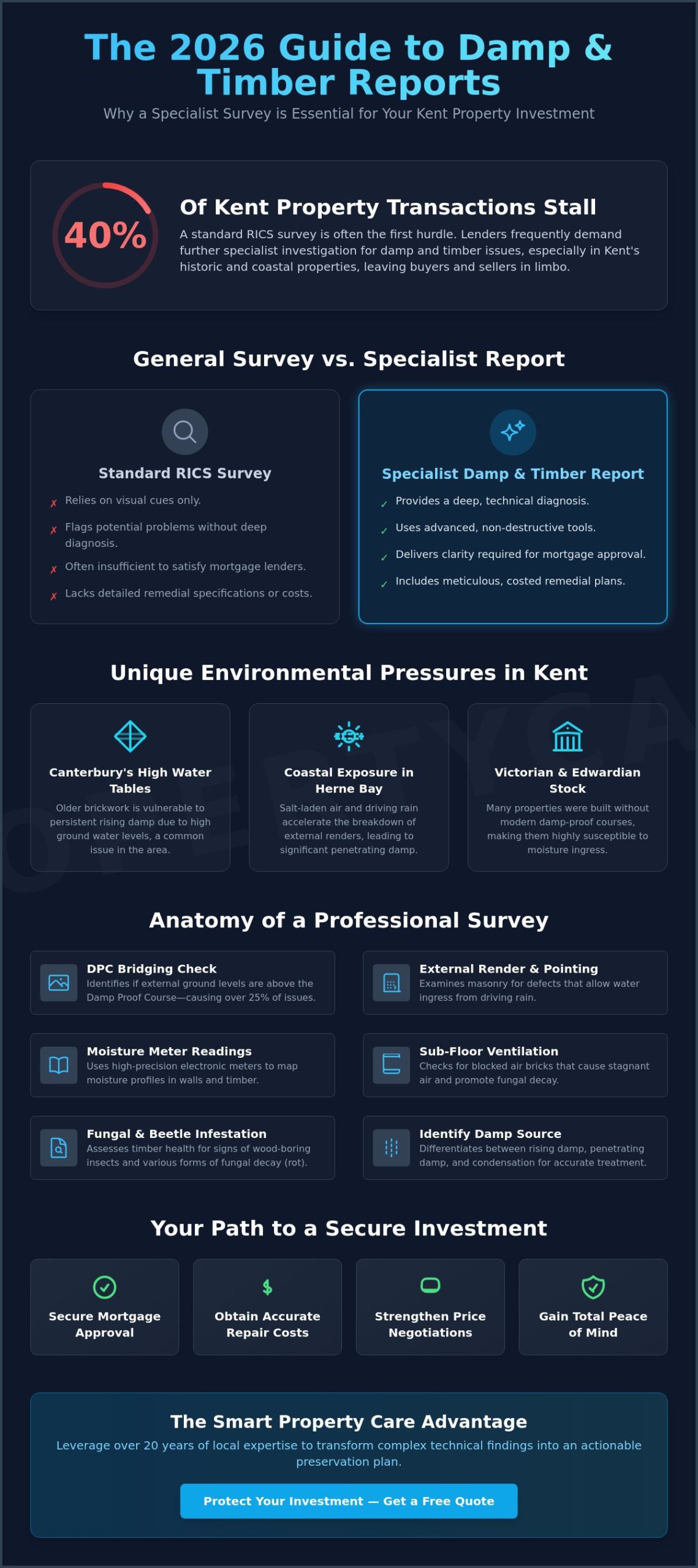
A standard RICS Level 2 survey is often the primary reason 40% of Kent property transactions hit a stalemate during the mortgage valuation stage. You likely already know that buying or maintaining a home in our county, with its unique coastal exposure and historic architecture, feels like a constant battle against the elements. It’s stressful when a lender demands further investigation, leaving you worried about hidden structural costs or rising damp issues you didn’t see coming.
A specialist damp and timber report is no longer just a recommendation. It’s a vital shield for your investment that provides the technical clarity needed to secure mortgage approval and obtain meticulous costings for any remedial works. We promise to unlock the full technical details of these specialist property surveys, giving you total peace of mind regarding property preservation. This 2026 guide explains exactly what our experts look for, how to interpret the findings, and why a bespoke inspection is the only way to protect your Kent home from moisture and decay.
Key Takeaways
- Discover why a standard RICS survey often flags the need for a specialist damp and timber report to satisfy mortgage lenders and secure your Kent property investment.
- Learn about the advanced, non-destructive diagnostic tools used to identify hidden moisture and decay without compromising your home’s structural integrity.
- Navigate the 2026 Kent property market with clear guidance on survey turnaround times and costs across Herne Bay and Canterbury.
- Gain total peace of mind by leveraging over 20 years of local expertise to transform complex technical findings into a meticulous, actionable preservation plan.
What is a Damp and Timber Report and Why is it Essential in Kent?
A damp and timber report is a rigorous, technical diagnostic tool. It isn’t a surface-level check. It’s a deep-dive inspection that identifies the root cause of moisture ingress and timber decay. For Kent homeowners and buyers in 2026, this document provides the clarity needed to handle complex property issues with confidence. It moves beyond visual symptoms to examine the structural health of the building, providing a clear path to resolution.
Mortgage lenders across the South East frequently request these reports for properties built before 1950. While a standard homebuyer survey might flag a damp patch, it won’t provide the technical depth required to satisfy a lender’s risk assessment. Our specialist reports provide a bespoke remedial specification. This includes transparent, costed solutions that ensure the property remains a viable investment. By using an expert, you receive a certified document that outlines exactly how to restore the building’s integrity.
The Purpose of a Specialist Property Survey
General surveys often rely on visual cues, but a specialist survey uses advanced moisture meters and diagnostic techniques to find hidden issues. This protects the buyer’s capital and the lender’s security. Understanding What is Structural Damp is the first step in realizing that moisture is a threat to the building’s fabric, not just a cosmetic flaw. A specialist report provides:
- Accurate identification of rising versus penetrating damp.
- Assessment of wood-boring beetle infestations and fungal decay.
- Meticulous remedial specifications to guide repair works.
- A professional document to support price negotiations.
Kent-Specific Damp Challenges
Kent’s geography creates unique environmental pressures on its housing stock. In Canterbury, high water tables frequently lead to persistent rising damp in older brickwork. Along the coast in Herne Bay, salt-laden air accelerates the breakdown of external renders, causing significant penetrating damp issues. The Victorian and Edwardian terraces common in East Kent were often built without modern damp-proof courses, making them highly susceptible to moisture ingress from the ground and driving rain. You should always consult local dampness surveyors who recognize these regional patterns and the specific needs of coastal properties. Kent’s traditional building materials require specialist knowledge because the porous nature of historic ragstone and lime mortar demands a sympathetic, breathable approach to moisture management.
The Anatomy of a Professional Survey: What a Specialist Identifies
A specialist damp and timber report is a technical diagnostic process that goes far beyond a visual inspection. Our surveyors use non-destructive testing methods to assess the structural health of a property without causing unnecessary damage. We utilize high-precision electronic moisture meters to map out moisture profiles within masonry and timber. These tools provide a numerical reading of moisture levels, allowing us to distinguish between surface-level damp and deep-seated structural issues. For atmospheric assessments, hygrometers measure relative humidity and dew points, which are essential for identifying internal environmental imbalances.
The external inspection focuses on the integrity of the building envelope. We meticulously examine the damp proof course (DPC) to ensure it hasn’t been breached or bypassed. Over 25% of damp issues in older Kent properties stem from “bridging,” where external ground levels, such as new patios or flower beds, are raised above the original DPC line. We also evaluate the condition of external rendering and mortar joints; defective pointing is a primary culprit for water ingress during the driving rain common in coastal regions.
Internally, the assessment shifts to sub-floor ventilation and timber health. We check that air bricks are clear and functional to prevent stagnant air from accumulating under floorboards. This airflow is the first line of defence against fungal decay. If you suspect your property is suffering from these issues, you can request a free, no-obligation quote to get a professional evaluation of your home’s condition.
Diagnostic Damp Checks
Effective treatment requires an accurate diagnosis. We differentiate between rising damp, penetrating damp, and condensation through evidence-based analysis. Rising damp typically leaves a “tide mark” of salt contamination. These hygroscopic salts continue to draw moisture from the air even after the source of damp is fixed, which is why we assess whether specialist salt-neutralising plastering is required. Addressing these problems quickly is vital for your well-being, as the health risks of damp and mould are a significant concern for residents and landlords across the UK.
Timber Infestation and Decay Analysis
Our survey identifies specific threats to the property’s structural timber. We look for active woodworm infestations, most commonly the Common Furniture Beetle, by identifying fresh “exit holes” and bore dust known as frass. Distinguishing between wet rot and dry rot is equally critical. While wet rot stays confined to damp areas, dry rot (Serpula lacrymans) can spread through masonry to attack dry timber elsewhere. Our detailed woodworm survey provides the clarity needed to protect the structural integrity of your floors and roof timbers, ensuring your investment remains secure for years to come.
Damp and Timber Report vs. General Homebuyer Survey
Understanding the distinction between a standard RICS survey and a specialist damp and timber report is vital for any Kent property transaction. While a general surveyor assesses the entire building, they operate as generalists. Their professional indemnity insurance typically limits their ability to provide definitive diagnoses on structural damp or wood-boring insects. Consequently, most RICS reports include a “further investigation” caveat, shifting the responsibility of diagnosis to a specialist.
A general survey provides a broad health check, whereas a specialist report is a surgical diagnostic tool. The differences in depth and liability are significant:
- Technical Equipment: General surveyors often rely on basic moisture meters. Specialists use thermal imaging, hygrometers, and sub-floor cameras to find hidden issues.
- Liability: A general surveyor flags potential problems to protect themselves from future claims. A preservation expert takes professional responsibility for the specific diagnosis and the proposed solution.
- Invasive Testing: Specialists may perform “salted” brick tests or lift floorboards to inspect joists, actions a general surveyor is rarely authorized to take.
Why General Surveys Often Fall Short
RICS Level 2 and Level 3 surveys are primarily visual and non-invasive. If a surveyor detects moisture using a basic meter, they issue a “Condition Rating 3.” This red light signifies a serious defect but doesn’t identify the root cause. It simply triggers the need for a specialist. In 2026, UK mortgage lenders have become increasingly strict. They often place a “retention” on the loan, withholding funds until a damp specialist provides a certified assessment. This specialist documentation is legally required to release those funds and ensure the property is a viable security for the debt.
The Value of a Costed Specification
A specialist damp and timber report provides what a general survey cannot: a fixed price for remediation. General surveyors provide vague estimates based on broad industry averages. These figures often lack the accuracy needed for a high-stakes property sale. A technical report from a preservation expert includes a meticulous breakdown of required works, from chemical DPC injection to timber resin repairs.
This documentation becomes a powerful tool during price negotiations. If a report identifies £4,800 of essential timber treatment, the buyer has a factual basis to request a direct price reduction. These reports also include long-term guarantees, often lasting 20 years. This adds immediate value to the property, ensuring that the work is not just a temporary fix but a permanent, insured solution that protects the building’s structural integrity. For homeowners planning to act on these findings, understanding the full scope of property renovation in Kent — from structural preservation to aesthetic restoration — is an essential next step.
The Process: Buying, Selling, and Costs in East Kent
Booking a specialist survey in Herne Bay or Canterbury is a seamless process designed to fit around your schedule. You simply provide the property address and any specific observations, such as salt staining on masonry or musty odours in the cellar. In the 2026 Kent property market, efficiency is paramount. We aim for a turnaround time of 3 to 5 working days for your completed damp and timber report. This rapid delivery helps you avoid delays in the conveyancing process, keeping your move on track while ensuring every structural detail is scrutinized.
The documentation you receive is comprehensive and meticulous. It serves as a definitive record of the property’s health. Your report includes:
- Detailed Floor Plans: These map exactly where moisture ingress or timber decay has been identified.
- Digital Moisture Readings: We provide precise data points taken from across the building’s elevations using calibrated equipment.
- Bespoke Remedial Quotes: You get a transparent breakdown of costs for any required repairs, which are fully insured and certified.
Who Pays? Buyer vs. Seller Responsibilities
Standard practice in the UK usually dictates that the buyer covers the cost of a pre-purchase damp and timber report. It’s an investment in their future home’s structural integrity. Recent data from 2025 indicates that 18% of sellers in the South East now commission pre-sale reports to streamline the transaction. Having this documentation ready can prevent buyers from negotiating lower prices late in the process. If repairs are needed, parties often agree to adjust the final sale price or hold funds in retention based on our expert findings. This transparency builds trust and prevents the sale from collapsing at the eleventh hour.
Understanding Survey Fees in 2026
Survey costs aren’t one-size-fits-all. A compact flat in Dover requires less time than a sprawling period property in Faversham. Property size and architectural complexity are the primary factors influencing the final fee. You should avoid companies offering “free” surveys. These are frequently used as a gateway to sell remedial treatments that your property might not actually need, creating a clear conflict of interest. At Smart Property Care, we provide transparent, expert-led assessments. We pride ourselves on being a dependable partner, offering the clarity you need to make an informed decision without the pressure of a sales pitch. Our fees reflect the time and expertise required to protect your investment properly.
Ensure your property investment is sound with a professional assessment. Request your meticulous damp and timber report today.
The Smart Property Care Advantage: Expert Preservation in Kent
Smart Property Care delivers over 20 years of specialized experience in property preservation across East Kent. We’ve built a reputation for family-run reliability, serving homeowners in Canterbury, Ashford, and the coastal towns of Thanet. Our team combines traditional craftsmanship with modern diagnostic technology, such as thermal imaging and high-precision moisture meters. We operate as a comprehensive one-stop shop. This means we handle every stage of the process, from the initial damp and timber report to the final coat of specialist plastering. This integrated approach ensures long-lasting protection for both residential and commercial buildings throughout the region.
We understand that property issues cause significant stress. That’s why our service is designed to be as seamless as possible. We don’t just identify problems; we provide the skilled labor and technical expertise to fix them. Our craftsmen are disciplined and punctual, taking immense pride in maintaining the structural integrity of Kent’s diverse building stock. Whether you’re managing a single flat or a large commercial portfolio, we provide the same meticulous attention to detail that has defined our business for two decades.
Our Bespoke Reporting Process
Our reporting process begins with meticulous on-site inspections conducted by local Kent craftsmen. These experts possess a deep understanding of regional architecture, from historic timber-framed cottages to modern developments. We produce technical reports designed to satisfy the strict criteria of mortgage lenders and insurers. Every remedial plan is bespoke. We analyze the specific environmental factors affecting your building to create a tailored solution that addresses the root cause of moisture or decay. This ensures your damp and timber report serves as a reliable roadmap for necessary repairs.
Long-Term Peace of Mind
We provide fully insured and certified treatments for woodworm and fungal decay, including dry and wet rot. Our specialists prioritize aesthetic restoration, ensuring that structural repairs don’t compromise the visual character of your home. We use industry-leading techniques that offer decades of protection. This commitment to quality transforms a stressful property issue into a manageable, professional repair. You can trust our team to restore your property’s integrity and market value. It’s about more than just a quick fix; it’s about the future of your investment.
Secure Your Kent Property Investment Today
Protecting a property in East Kent requires more than a surface-level glance. A specialist damp and timber report provides the technical clarity needed to safeguard your investment against rising damp, woodworm, and fungal decay. While general homebuyer surveys offer a broad overview, they often lack the meticulous detail required to uncover hidden structural threats. By identifying these issues early, you avoid the risk of spiralling costs and ensure your home remains a safe, dry environment for years to come.
Smart Property Care brings over 20 years of local expertise to every inspection across Herne Bay and Canterbury. As a family-run business, we prioritise transparent pricing and deliver a seamless service that covers everything from the initial survey to comprehensive property preservation. We don’t just find problems; we provide bespoke solutions that restore your peace of mind. Our team handles every stage of the process with the discipline and pride of true expert craftsmen, ensuring your renovation or purchase stays on track.
Take the first step toward a healthier home and a more secure future. Book Your Specialist Damp and Timber Report in Kent with a team that understands the unique challenges of the local landscape. It’s time to invest in quality care that stands the test of time.
Frequently Asked Questions
What is a damp and timber report?
A damp and timber report is a specialist technical inspection that evaluates the structural integrity and moisture levels of a property. Our surveyors identify specific issues like rising damp, wood-boring beetles, and fungal decay. This document provides a meticulous breakdown of defects and outlines the necessary remedial actions to protect your investment. It ensures homeowners have a clear, professional roadmap for maintaining a dry and stable environment.
How much does a damp and timber report cost in 2026?
In 2026, the cost of a professional survey typically ranges between £200 and £600 depending on the property size. Larger Victorian terraces in Kent or complex commercial spaces may command higher fees. While some companies offer free inspections, a comprehensive, independent report from a certified surveyor provides the transparent, unbiased data required for high-stakes property transactions. This investment secures your peace of mind before committing to a purchase.
Who is responsible for paying for a damp and timber survey?
The prospective buyer is usually responsible for the cost of the survey as part of their pre-purchase due diligence. It acts as a protective measure to uncover hidden liabilities before the exchange of contracts. In some cases, a seller might commission a report to prove the property’s condition and speed up the sale. If issues are found, buyers often use the findings to negotiate a price reduction based on the estimated repair costs.
How long does it take to get the report back?
You’ll typically receive your completed report within 48 to 72 hours following the physical inspection. Our surveyors prioritize a swift turnaround to ensure your property transaction remains on schedule. The document arrives as a digital PDF, detailing every finding with photographic evidence and clear technical recommendations. This efficient process allows you to make informed decisions without unnecessary delays in the buying or selling cycle.
Is a damp and timber report mandatory for a mortgage?
A damp and timber report isn’t a legal requirement, but 85% of mortgage lenders will request one if their general valuer identifies potential moisture issues. If the lender’s basic survey flags high damp readings, they may withhold funds until a specialist confirms the extent of the problem. Securing a certified report early prevents your mortgage application from stalling and demonstrates that the property is a viable security for the loan.
Does the report cover woodworm and rot?
Yes, the survey includes a thorough assessment of all accessible structural timbers for signs of woodworm infestation and fungal rot. We look for active Common Furniture Beetle exit holes and the distinct mushroom-like growth of dry rot. Identifying these issues early is vital, as 20% of untreated timber infestations lead to significant structural weakened areas. Our report specifies whether the infestation is historic or active, ensuring you only pay for necessary treatments.
What happens if the report finds significant dry rot?
If significant dry rot is detected, the report will detail a bespoke remediation plan to stop the spread and replace damaged timber. Dry rot can travel through masonry; the solution often involves stripping back plaster and treating the surrounding area. We provide a clear, itemized quote for these works. This allows you to understand the full financial impact and request a corresponding price reduction from the property seller before proceeding.
How long is a specialist damp and timber report valid for?
Most mortgage lenders and legal professionals consider a report valid for 6 to 12 months. Because moisture levels and timber conditions change with the seasons, data older than a year is often deemed unreliable. If your property sale takes longer than 12 months to complete, you may need a fresh inspection to confirm no new issues have emerged. Keeping your documentation current ensures a seamless transition during the final stages of a sale.