
Your historic Faversham home isn’t just a building; it’s a living structure that modern materials are slowly suffocating. It’s incredibly frustrating to invest in professional repairs only to see flaking paint and salt deposits return just months later. You likely fear that modern gypsum or cement might devalue your listed property or, worse, trap moisture that causes permanent structural decay. You aren’t alone in this struggle, as many local homeowners find that standard solutions simply don’t work for heritage masonry.
Specialized lime plastering for old homes faversham offers the definitive solution by acting as the “breathing lung” of your property. By reading further, you’ll discover how traditional materials prevent damp and why they’re essential for the long-term health of Faversham’s unique architecture. We’ll examine the latest 2026 conservation perspectives, the importance of like-for-like repairs to satisfy local authorities, and how expert craftsmanship provides the peace of mind you deserve. This article provides a clear roadmap to a dry, breathable home that retains its historic charm while meeting modern performance standards.
Key Takeaways
- Understand how vapour-permeable materials manage moisture levels naturally to prevent structural dampness in solid-wall properties.
- Select the correct grade of lime plastering for old homes faversham by distinguishing between non-hydraulic putty and hydraulic mixes for different environmental exposures.
- Master the specialized application techniques required to ensure proper curing and long-term durability within the unique Kentish climate.
- Protect your property’s historic integrity and market value by aligning repairs with strict local conservation standards and expert craftsmanship.
- Integrate traditional lime application with modern damp proofing strategies to create a healthier and more resilient living environment for your family.
The Importance of Lime Plastering for Faversham’s Historic Homes
Faversham’s streets, from the medieval timber frames of Abbey Street to the grand Victorian terraces near the station, require a specific approach to maintenance. Unlike modern cavity wall houses, these historic structures rely on their ability to breathe. Lime plastering for old homes faversham is not just a cosmetic choice; it’s a structural necessity. To understand the technical properties involved, one should investigate what lime plaster is and how it differs from modern alternatives. It acts as a moisture regulating skin that allows water vapour to pass through the walls rather than trapping it inside the masonry.
Traditional Kentish building methods prioritize moisture management over moisture exclusion. In the damp climate of East Kent, solid walls naturally absorb moisture from the air and rain. If this moisture cannot escape, the building’s fabric begins to deteriorate rapidly. Professional lime application ensures that your home remains dry and structurally sound by facilitating this natural evaporation process. It’s a time tested solution that respects the original engineering of your property.
Faversham’s Unique Architectural Heritage
The ME13 conservation area contains a high density of listed buildings where preserving the original fabric is a legal and practical requirement. Whether your property features local flint, Gault clay bricks, or oak timber frames, these materials must interact harmoniously with internal finishes. Specialist lime plaster supports the thermal mass of these thick walls. This helps regulate internal temperatures while protecting the delicate balance of the historic structure, ensuring the building remains resilient against the elements.
Why Modern Gypsum is the Enemy of Old Walls
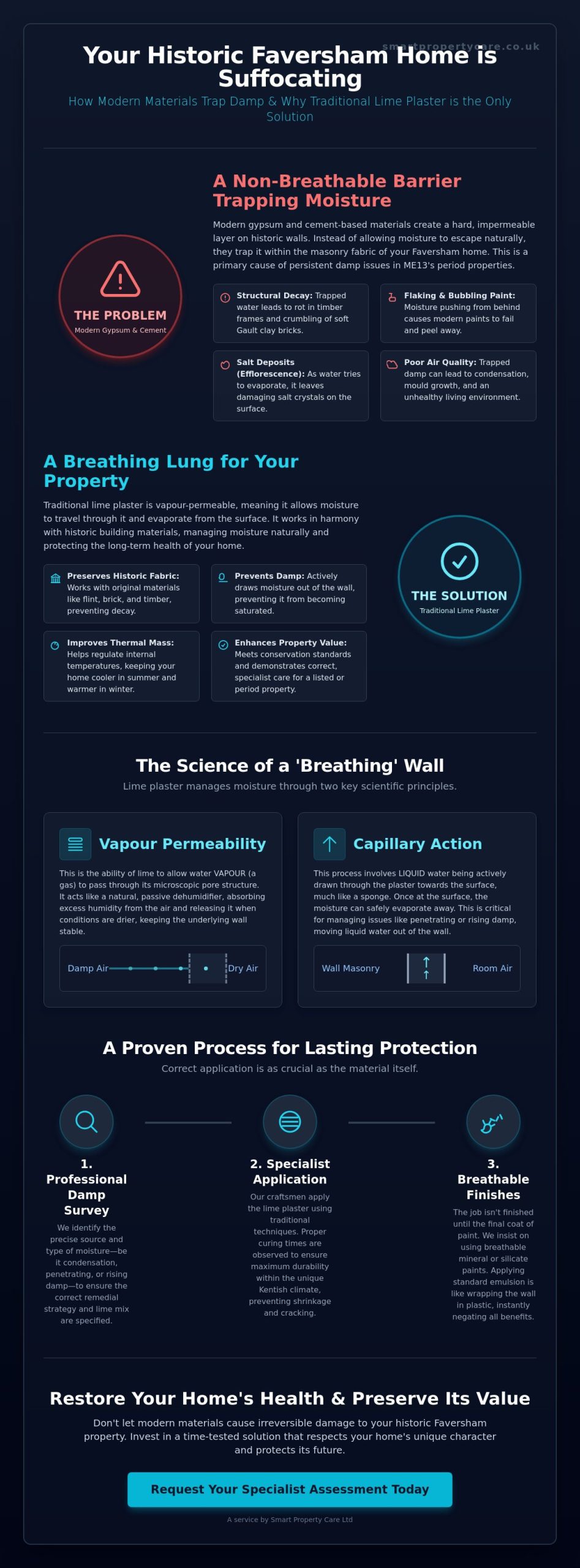
Using modern gypsum in a period property often leads to catastrophic results. Gypsum creates a hard, non-breathable barrier that traps moisture against the original brickwork or timber. This leads to hidden rot and structural decay that remains invisible until the damage is severe. You’ll often see visual cues like bubbling paint, flaking surfaces, or sweating walls where condensation has nowhere to go. Vapour permeability is the capacity of a material to allow water vapour to diffuse through its structure, preventing the saturation of the underlying masonry. Transitioning back to lime plastering for old homes faversham restores this vital function, providing immediate relief for the building’s structure.
The Science of Breathability: Preventing Damp in ME13
Many homeowners in Faversham believe that “sealing” a wall is the only way to stop damp. This is a costly misconception. In reality, traditional solid walls need to move moisture, not block it. The Science of Breathability explains that historic materials must allow water vapour to escape to prevent structural decay. Lime plastering for old homes faversham provides this essential function, acting as a natural dehumidifier that regulates the internal environment. It absorbs excess humidity during damp periods and releases it when the air dries, keeping the masonry stable.
A symbiotic relationship exists between specialist plastering and broader damp proofing strategies. Sealing a wall with modern tanking or non-permeable resins often forces moisture to migrate elsewhere, potentially damaging timber frames or adjacent rooms. By contrast, lime works with the building. It ensures that moisture doesn’t become trapped, which is the primary cause of salt deposits and flaking paint. If you’re noticing persistent damp, arranging a professional assessment is the first step toward a permanent fix.
Capillary Action and Moisture Management
Lime plaster manages water through capillary action. This process allows liquid water to be drawn to the surface where it can evaporate harmlessly. Before starting any work, it’s vital to conduct a professional damp survey to identify the source of the moisture. Whether the issue is rising damp or penetrating rain, the survey ensures the right lime mix is used. Once applied, you must use breathable mineral or silicate paints. Standard emulsion acts like a plastic wrap, instantly nullifying the benefits of your new lime finish.
Mould Remediation Through Natural Materials
Mould spores thrive in stagnant, damp environments. One of the most significant benefits of lime plastering for old homes faversham is its high alkalinity. Lime has a naturally high pH level, which creates an environment where fungi and mould simply cannot survive. This provides a long-term solution for homeowners looking for how to get rid of mould on walls permanently. By reducing the presence of spores, you protect your family’s respiratory health and improve the overall air quality of your historic residence. It’s a clean, chemical-free way to maintain a healthy home in the Kentish climate.
Types of Lime Plaster: Choosing the Right Mix for Your Property
Selecting the correct material is the most critical decision in any restoration project. A mismatch between the plaster strength and the underlying masonry often leads to delamination or cracking. When executing lime plastering for old homes faversham, we categorize materials based on their setting properties and intended environment. There isn’t a one-size-fits-all “lime” solution; instead, we engineer a specific mix to suit your building’s unique requirements.
Non-Hydraulic Lime, often called lime putty, remains the gold standard for internal work on delicate timber-framed buildings. It sets slowly through carbonation, a process of absorbing CO2 from the air. This provides maximum flexibility, allowing the plaster to move with the natural shifts of an ancient oak frame without failing. For areas requiring more robust performance, we utilize Natural Hydraulic Lime (NHL). These are categorized by their compressive strength:
- NHL 2 (Feebly Hydraulic): Ideal for internal use on soft brickwork or where maximum vapour exchange is required.
- NHL 3.5 (Moderately Hydraulic): The versatile choice for most general internal and external applications in East Kent.
- NHL 4 or 5 (Eminently Hydraulic): Reserved for high-exposure areas like chimney stacks or foundations where rapid setting and high durability are essential.
The binder is only half the story. We blend these limes with carefully selected aggregates, such as sharp local sands and animal hair. Hair acts as a natural reinforcement, providing tensile strength that prevents the plaster from pulling away from the substrate during the curing process. This attention to detail ensures the finish remains stable for decades.
Traditional Lath and Plaster Restoration
In many Faversham properties, we encounter original lath and plaster ceilings and walls. We prioritize restoring riven oak or chestnut laths rather than replacing them with modern plasterboard. Riven laths follow the natural grain of the wood, making them significantly stronger and more durable than sawn alternatives. Our craftsmen apply a traditional three-coat system: a hair-rich scratch coat, a leveling brown coat, and a fine setting coat for a smooth, high-end finish.
Hemp-Lime and Insulating Renders
For homeowners in cold Victorian terraces, hemp-lime offers a modern way to improve thermal performance. These insulating plasters add a layer of “thermal mass” to solid walls, reducing heat loss while maintaining full breathability. It’s an excellent solution for meeting 2026 energy efficiency expectations while remaining fully compliant with local conservation officer requirements. These mixes provide a warmer feel to the touch, significantly reducing the risk of surface condensation and improving overall comfort.
The Specialist Plastering Process: What Homeowners Should Expect
Achieving a flawless, durable finish requires more than just mixing lime and sand. It demands a disciplined, methodical approach that respects the original building fabric. When we undertake lime plastering for old homes faversham, we follow a rigorous multi-stage process designed to eliminate underlying issues before the first coat even touches the wall. This isn’t a fast-track service; it’s a high-end restoration that rewards patience with a home that remains dry and beautiful for decades.
The process begins with the careful removal of existing, non-breathable finishes. In many ME13 properties, previous owners may have applied modern gypsum or cement renders that trap moisture. We strip these back to the original masonry or timber laths with precision, ensuring we don’t damage the historic substrate. During this phase, we also take steps to protect your property, covering floors and architectural features to maintain a clean and organized work environment.
Preparing the Substrate for Success
Once the walls are exposed, we assess the health of the underlying structure. It’s common to find issues like woodworm or rot in older Kentish timber frames. We treat these infestations immediately to ensure the structural integrity of your walls. If the masonry has been affected by rising damp, we utilize salt neutralization techniques to prevent hygroscopic salts from migrating into your new plaster. Finally, we clean and appropriately wet the masonry to manage suction, which prevents the lime from drying too quickly and losing its bond.
The Importance of Slow Drying
The curing phase is where many general contractors fail. Lime doesn’t “dry” like modern plaster; it cures through carbonation, a chemical reaction where the lime absorbs CO2 to turn back into stone. This process is highly sensitive to the Kentish climate. In 2026, we still see homeowners making the mistake of using industrial heaters to speed up the job. We don’t do this. Forcing lime to dry leads to shrinkage, cracking, and eventual failure. Instead, we manage humidity and airflow naturally, allowing each coat to cure at its own pace.
Maintaining your new walls is straightforward but essential. You must avoid modern, plastic-based paints that seal the surface. By using mineral-based finishes, you ensure the carbonation process continues and the wall remains fully breathable. This level of care preserves your property’s value and structural health for the next century. If you’re ready to restore your home with precision and expertise, contact our specialist plastering team to discuss your project requirements.
Smart Property Care Ltd: Faversham’s Specialist Plastering Experts
Smart Property Care Ltd brings over 20 years of dedicated property preservation experience to every street in Faversham. We operate with an “Expert Craftsman” philosophy that rejects quick fixes in favor of permanent, high-end restoration. Choosing the right team for lime plastering for old homes faversham ensures your property remains a valuable asset rather than a maintenance burden. We combine traditional lime skills with modern diagnostic technology to provide a service that is both historically sensitive and technically superior. This disciplined approach is designed to relieve the stress homeowners feel when managing a period building’s complex needs.
A holistic approach is the only way to safeguard a historic building. Many contractors simply plaster over a problem, but we identify the root cause of moisture first. By combining a detailed survey with targeted treatments and specialist finishes, we save homeowners significant money long-term. We don’t just apply plaster; we restore the structural health of your home. Our team maintains a disciplined and punctual schedule, taking immense pride in leaving every site clean and organized. We understand that we’re working in your home, not just a construction site, and we treat the environment with the respect it deserves.
A Comprehensive Solution for Period Homes
Our specialists at Smart Property Care Ltd seamlessly integrate lime plastering for old homes faversham with our broader damp proofing Kent services. This ensures that every aspect of moisture management, from external masonry to internal finishes, works in harmony. We provide detailed technical reports that are invaluable for Faversham property sales, offering prospective buyers professional assurance that the building has been maintained to the highest standards. As a family-run business, we prioritize local reliability and personal accountability in every project we undertake.
Book Your Specialist Survey in Faversham
Your restoration journey begins with a comprehensive professional assessment. Our specialist surveys go far beyond a visual check; we utilize advanced moisture mapping and deep-timber inspections to locate hidden rot or woodworm infestations. This data-driven approach allows us to create a precise specification for your lime work, ensuring the mix and application method are perfectly matched to your building’s needs. We provide clear, actionable advice that removes the guesswork from heritage property maintenance. Our surveys include:
- Precision moisture mapping of solid masonry walls.
- Timber condition assessments for active rot or woodworm.
- Salt contamination analysis for rising damp issues.
- Site-specific recommendations for hydraulic or non-hydraulic lime mixes.
Protect your historic home—book a specialist survey with Smart Property Care Ltd today.
Securing the Future of Your Faversham Heritage Property
Maintaining a period home in ME13 requires more than just aesthetic repairs. You’ve learned that breathability is the foundation of structural health and that selecting the correct hydraulic or non-hydraulic mix prevents long-term moisture damage. Investing in specialist lime plastering for old homes faversham ensures your property remains dry, mould-free, and compliant with local conservation standards. It’s a vital step in protecting the longevity of your home’s unique architectural character and market value.
Smart Property Care Ltd brings over 20 years of Kent property preservation experience to every restoration project. We provide expert damp surveys with detailed technical reports and deliver specialist heritage plastering for listed buildings with absolute precision. Don’t let modern, non-breathable materials compromise your home’s integrity or lead to costly structural rot. Request a specialist damp and plastering survey in Faversham from Smart Property Care Ltd to start your restoration journey with total peace of mind. Your historic property is a significant piece of Kentish history that deserves to thrive for another century.
Frequently Asked Questions
Is lime plastering more expensive than modern gypsum plastering?
Lime plastering involves a higher initial cost than gypsum because it requires specialized labor and significantly longer curing times. It’s a high-end restoration process that involves multiple stages of application and precision. However, it’s more cost-effective for period properties over the long term. By allowing walls to breathe, it prevents the recurring moisture damage and crumbling surfaces that often lead to expensive repeat repairs with modern materials.
How long does lime plaster take to dry in a typical Faversham home?
A standard three-coat system usually takes several weeks to cure fully, depending on the specific environmental conditions of your home. Each layer must carbonate naturally before the next coat is applied to ensure structural stability. You shouldn’t attempt to rush this process with industrial heaters, as forced drying leads to surface cracking. We manage airflow and humidity carefully to ensure the plaster turns back into stone at a stable pace.
Can I paint over lime plaster with standard emulsion paint?
You should never use standard emulsion paint on lime surfaces. Standard paints contain plastics that create a non-breathable film, which instantly nullifies the benefits of lime plastering for old homes faversham. Instead, you must use specialized mineral or silicate paints. These coatings bond chemically with the lime, maintaining the wall’s ability to breathe while providing a durable, high-quality decorative finish that won’t flake or peel due to trapped moisture.
Does lime plastering really stop damp from coming back?
Lime plastering manages moisture through evaporation rather than simply blocking it. It works by drawing dampness out of the masonry and releasing it into the air, acting as a natural dehumidifier for the building fabric. While it doesn’t resolve structural issues like leaking pipes, it prevents the moisture entrapment that causes traditional walls to decay. We always recommend a professional damp survey first to identify the moisture source before starting any work.
Is lime plaster suitable for my Grade II listed home in Faversham?
Yes, lime is the standard and often mandatory requirement for Grade II listed buildings throughout Kent. Historic England and local conservation officers typically require like-for-like repairs using traditional materials to protect the building’s historic fabric. Using modern cement or gypsum on a listed property can lead to legal enforcement action and structural damage. Our expert team ensures all work complies with these strict heritage guidelines for your peace of mind.
What is the difference between hydraulic and non-hydraulic lime?
The primary difference is the setting process. Hydraulic lime (NHL) contains silicates that allow it to set through a chemical reaction with water, making it faster and more durable for external or high-exposure areas. Non-hydraulic lime, often called lime putty, sets slowly by absorbing carbon dioxide from the air. This provides maximum flexibility, which is why it’s the preferred choice for internal work on delicate, timber-framed Faversham houses.
Can I apply lime plaster directly onto modern brickwork or plasterboard?
You can apply lime to modern brickwork, provided the surface is clean and stable enough to ensure a strong bond. However, applying it to modern plasterboard is generally avoided because the board itself isn’t breathable, which defeats the core purpose of the material. If you’re seeking a breathable solution for a modern extension, we suggest using wood wool boards as a much more compatible substrate for high-quality lime finishes.
How do I know if my existing plaster is lime or gypsum?
You can identify the material by its color, texture, and the presence of reinforcement. Gypsum is typically pink or white and has a very smooth, hard finish. Lime is usually off-white, grey, or light brown and often contains visible animal hair used for tensile strength. Identifying the original material is a crucial first step in any lime plastering for old homes faversham project to ensure the new finish is fully compatible with the old.