
Your Canterbury basement is a significant portion of your property’s footprint that shouldn’t be surrendered to the damp. Many homeowners across Kent live with the recurring stress of winter flooding and musty smells, often feeling trapped by the fear of unreliable repairs. By investing in professional cellar waterproofing canterbury residents can finally transform these neglected areas into high-value, habitable rooms while protecting their foundations from the elements.
You deserve a space that remains bone-dry and functional regardless of how harsh the local weather becomes. We understand that protecting a historic or period home requires a specialized approach that respects the original structure while utilizing modern technology. This article details how we apply the rigorous BS 8102:2022 standards to protect local property types, ensuring your home meets current safety and moisture control requirements. We will examine the specific benefits of internal tanking and cavity drain systems, providing a clear roadmap to a restored environment and the lasting peace of mind that comes with expert craftsmanship.
Key Takeaways
- Understand why Canterbury’s proximity to the River Stour and high water tables make professional structural waterproofing a necessity for local property owners.
- Compare the advantages of Type A tanking and Type C cavity drainage systems to find the most effective solution for your specific basement structure.
- Learn how to apply cellar waterproofing canterbury techniques to historic and period homes without compromising the building’s traditional masonry or breathability.
- Discover why a professional survey is the essential first step in identifying the root cause of moisture before any remedial work begins.
- See how high-end craftsmanship and specialized systems turn damp, neglected spaces into dry, habitable rooms that increase your property’s overall value.
Why Cellar Waterproofing is Essential for Canterbury Properties
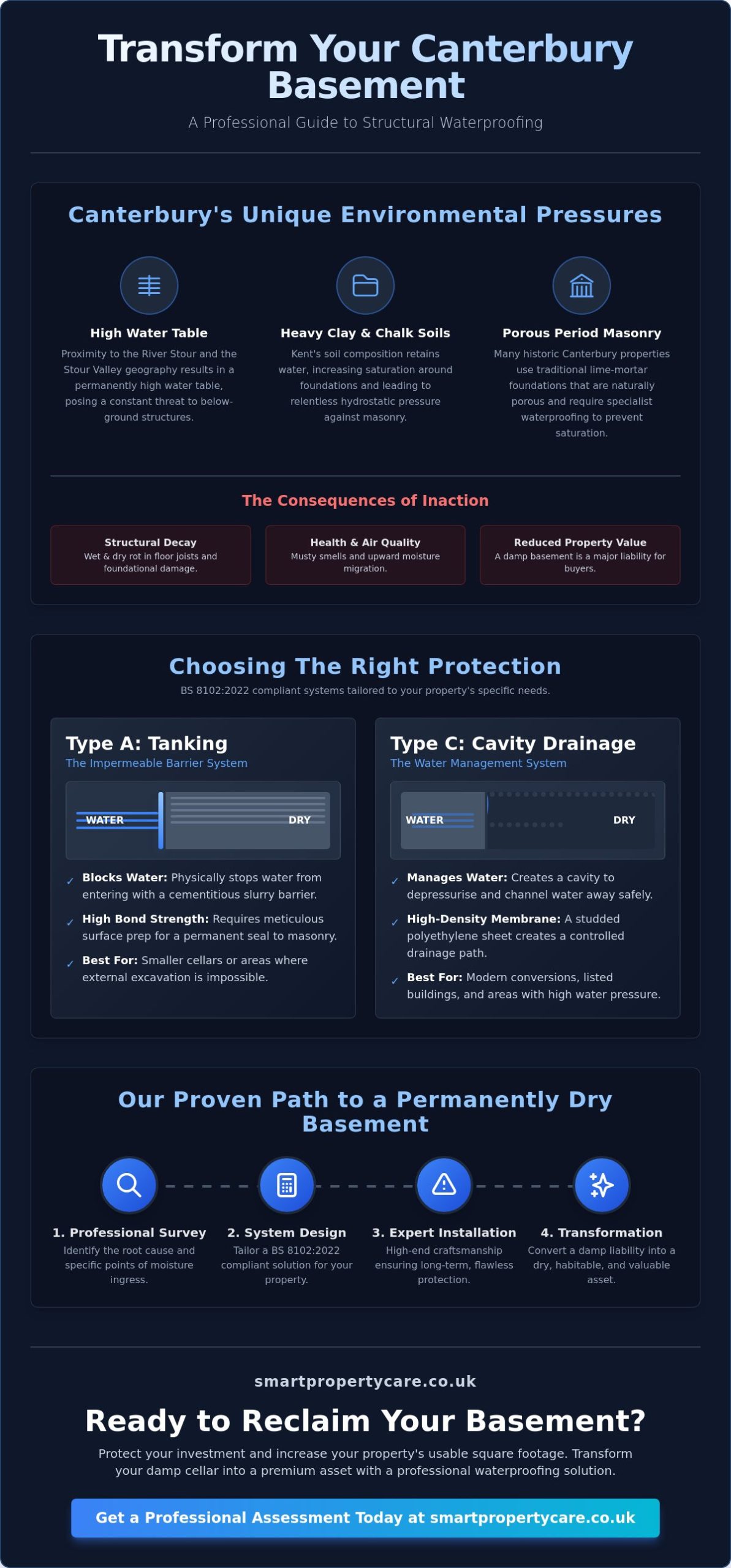
Canterbury’s unique geography dictates the health of its historic and modern buildings. The city sits within the Stour valley, where high water tables are a permanent reality for many property owners. When you combine this proximity to the River Stour with Kent’s heavy clay and chalk soils, your basement faces constant environmental stress. Professional cellar waterproofing canterbury services address these geological threats at the source. It isn’t a luxury; it’s a fundamental structural requirement. Without a robust system, groundwater exerts relentless hydrostatic pressure against your foundations, eventually forcing its way through the smallest fissures in the masonry.
Understanding the difference between simple damp-proofing and true structural waterproofing is vital. While damp-proofing resists capillary moisture, structural waterproofing is designed to withstand the physical pressure of standing water. The industry standard, BS 8102:2022, provides the framework for these protective measures. By employing various basement waterproofing techniques, we ensure that your below-ground space remains dry even when the external water table rises significantly. This transition from a damp cellar to a waterproofed structure is what separates a temporary patch from a permanent engineering solution.
The Impact of Canterbury’s Local Climate
East Kent experiences significant seasonal groundwater fluctuations. During heavy winter rainfall, the Stour valley’s water table can rise rapidly, leading to penetrating damp in unprotected basements. Many historic properties in the city centre rely on traditional lime-mortar foundations. These materials are naturally porous and require specialist care to prevent saturation. If left unmanaged, this moisture doesn’t just stay in the cellar; it migrates upwards, affecting the air quality and structural health of the entire home. We use professional cellar waterproofing canterbury methods to stop this migration before it causes internal damage.
Protecting Property Value and Integrity
Ignoring a damp basement is a costly mistake in Canterbury’s competitive property market. Excess moisture leads directly to structural timber decay, specifically wet and dry rot in the floor joists above. We focus on creating a truly habitable environment rather than just a dry storage area. A professional installation provides the peace of mind that your investment is secure. It transforms a dark, musty liability into a premium asset, significantly increasing the usable square footage and overall value of your property. Our approach ensures that every project meets the high standards expected by modern surveyors and buyers.
Tanking vs. Cavity Drainage: Which System Suits Your Basement?
Selecting the correct protection method requires a deep understanding of Canterbury’s diverse architecture. Whether you own a Victorian terrace near the Westgate Towers or a modern build on the city’s outskirts, the strategy must be bespoke. We evaluate every ingress point with a focused eye, identifying exactly where groundwater pressure is most likely to compromise the structure. This expert approach to cellar waterproofing canterbury ensures that we don’t just apply a product; we engineer a long-term solution that matches the specific needs of your property. Our team prioritizes high-end craftsmanship, treating each basement as a unique structural challenge rather than a simple repair job.
Type A: Structural Waterproofing (Tanking)
Type A waterproofing, commonly known as tanking, involves the application of cementitious slurries to create a completely impermeable barrier. This system is designed to physically block water from entering the building. It’s an excellent choice for smaller cellars or urban properties where external excavation isn’t possible. For this method to succeed, surface preparation is everything. We meticulously remove all old plaster and contaminants to ensure a permanent, high-strength bond between the tanking slurry and the original masonry. This creates a robust seal that can withstand the significant hydrostatic pressure common in Kent’s clay soils.
Type C: Cavity Drainage Membrane Systems
Type C systems are often the preferred choice for modern basement conversions. Instead of trying to hold water back, these systems manage it. We install a studded, high-density polyethylene membrane across the walls and floors. This creates a controlled “cavity” that allows water to travel safely behind the membrane into a dedicated drainage channel. From there, the water is directed to a sump and pump system for safe discharge. This method is particularly effective for older properties because it reduces hydrostatic pressure on the walls. When dealing with sensitive structures, following guidance for historic homes is essential to ensure the intervention doesn’t cause unintended stress to traditional masonry.
Every system requires ongoing care to maintain its integrity. A Type C system relies on the mechanical efficiency of its sump pump, which acts as the heart of the protection. We recommend annual check-ups to clear drainage channels and test pump performance, ensuring your peace of mind remains intact year after year. If you’re unsure which method fits your home’s unique layout, a professional assessment of your basement waterproofing needs is the most reliable way to secure your property’s future.
Adapting Waterproofing for Canterbury’s Historic and Period Homes
Canterbury’s architectural heritage is a source of pride, yet it presents unique challenges for modern property preservation. Victorian and Edwardian basements weren’t designed to be bone-dry living rooms; they were built to breathe. Traditional masonry allows moisture to move through it naturally. Blocking this process with a rigid, non-breathable system can sometimes push damp higher up the walls into the living areas. This is why selecting cellar waterproofing canterbury specialists who understand historic fabric is critical. We balance the need for a dry interior with the physical requirements of the original structure, ensuring the building stays healthy for another century.
A common concern for owners of period homes is whether waterproofing will damage original foundations. The reality is quite the opposite. By managing moisture effectively, we prevent the salt crystallization and freeze-thaw cycles that eventually crumble old bricks. In Canterbury’s tightly packed terrace streets, such as those found in Northgate or St. Dunstan’s, moisture often migrates between adjoining properties. Our tailored solutions account for these shared boundaries. We ensure your cellar remains protected without impacting the structural integrity of neighboring homes.
Preserving Original Features
Historic cellars often feature beautiful vaulted ceilings or original coal bunkers. We don’t believe in hiding these under generic plasterboard. Instead, we use sympathetic methods to keep these features visible while ensuring the space is habitable. Proper ventilation is non-negotiable in these environments. Our condensation control measures ensure that once a space is sealed from groundwater, it doesn’t become a trap for internal humidity. This approach maintains the character of the brickwork while providing a modern, dry environment.
Sympathetic Materials and Techniques
We utilize specialist rendering and lime-based products that accommodate the natural movement of older buildings. This approach is vital for compliance within Canterbury’s strict conservation areas, where modern “quick-fix” materials are often inappropriate. Every intervention is designed to be sympathetic to the existing masonry. By using high-end specialist plastering techniques, we provide a finish that feels contemporary yet remains deeply respectful of the property’s history. This meticulous attention to detail ensures your project meets both aesthetic desires and local building regulations.
The Professional Survey: Mapping Your Basement’s Protection
A “free quote” often serves as a simple sales exercise, but a technical cellar waterproofing canterbury project requires much more than a price tag. We approach every basement with the precision of an engineer, conducting a professional damp survey to distinguish between the superficial symptoms and the underlying structural source. Our process moves beyond visual inspections. We provide a detailed technical report and a costed specification that outlines exactly how we will secure your property. During this initial phase, we also inspect for woodworm and rot, ensuring that the timber joists supporting your home are as protected as the walls themselves.
This diagnostic phase is the most critical part of the project. It prevents the costly mistake of treating a symptom while the source remains active. We look for evidence of dry rot and wet rot, which often thrive in the high-humidity environments found in Kentish cellars. By identifying these issues early, we can incorporate woodworm treatment or timber repairs into the overall waterproofing strategy. This comprehensive approach ensures that the entire structural envelope of your home is restored and reinforced.
Identifying Ingress and Vulnerabilities
Precision tools are essential for accurate mapping. We utilize thermal imaging and high-sensitivity moisture meters to track water movement through your cellar walls. This data helps us identify active leaks and hidden reservoirs of moisture that a naked eye might miss. We don’t just look inside; our experts assess external ground levels and drainage pipes to identify contributing environmental factors. By examining the condition of existing floor slabs and the critical wall-floor junctions, we build a comprehensive profile of your basement’s vulnerabilities before a single tool is lifted.
The Post-Treatment Finish: Specialist Plastering
The final layer of protection is often where generic builders fail. Standard gypsum plaster is hygroscopic, meaning it absorbs moisture and salts from the air and masonry. In a basement environment, this leads to rapid failure, bubbling, and musty odors. We utilize specialist plastering techniques and salt-retardant renders that act as a final, aesthetic barrier. These high-end finishes are specifically engineered to resist the mineral salts that groundwater carries. By linking the waterproofing system to the final renovation, we deliver a seamless, durable result that looks as good as it performs.
If you’re ready to move beyond temporary patches, book your technical assessment with our expert team today and receive a clear, actionable plan for your home.
Smart Property Care: Your Local Canterbury Waterproofing Specialists
Local trust is earned through decades of consistent, high-quality performance. Smart Property Care has spent 20 years refining its approach to property preservation across Herne Bay, Canterbury, and the wider Kent area. As a family-run business, we offer a level of direct accountability and personal care that larger national firms often lack. We provide a comprehensive suite of services, moving seamlessly from specialized basement waterproofing to technical mould remediation. This breadth of expertise ensures that every moisture-related issue in your home is resolved by a single, highly specialized partner who takes pride in the results.
Selecting cellar waterproofing canterbury specialists should be a decision that brings immediate relief and long-term security. We combine the latest modern technological solutions with robust, long-term guarantees to protect your property’s structural integrity and overall value. Our status as local Kent specialists means we possess a deep understanding of the specific challenges posed by the region’s high water tables and clay-heavy soils. We don’t just provide a technical service; we deliver the enduring peace of mind that comes from knowing your home is in the hands of disciplined, local experts who value reliability above all else.
Our Commitment to Quality
We treat every residential Canterbury home with the meticulous care it deserves. Our teams prioritize clean and organized worksites, ensuring that the installation process is as non-intrusive as possible for you and your family. The Expert Craftsman personality is at the core of everything we do. We arrive punctually, work with discipline, and take immense pride in the precision of every finish. We often integrate essential structural repairs directly with the renovation process. This provides a “one-stop” solution that eliminates the need for you to coordinate between multiple different contractors, ensuring a faster and more cohesive transformation.
Next Steps: Reclaiming Your Basement
Reclaiming a damp, neglected basement starts with a clear, technical understanding of its current state. You can book your specialist survey in Canterbury or Herne Bay today to initiate the transformation of your property into a dry, habitable space. When preparing for our inspection, please ensure the cellar is clear of obstructions so we can examine the wall-floor junctions and any visible ingress points. Book your specialist property survey now to take the definitive first step toward a dry, healthy, and valuable home.
Secure Your Canterbury Home’s Structural Future
Protecting your home from the unique environmental pressures of the Stour valley requires more than just a quick fix. You now understand that a combination of BS 8102:2022 standards and a deep respect for historic masonry is the only way to achieve lasting results. By choosing the right system and ensuring your foundations are free from wet and dry rot, you turn a damp liability into a dry, premium asset. Every step of the process, from the initial technical survey to the final specialist plastering, contributes to a healthier living environment.
Smart Property Care brings over 20 years of local Kent expertise to every project. As a family-run business, we provide comprehensive damp and timber reports that prioritize the long-term health of your property. Our commitment to high-end craftsmanship ensures that your investment in cellar waterproofing canterbury delivers both structural security and increased property value. We take pride in our disciplined approach and the peace of mind we provide to every homeowner.
Don’t let another wet winter compromise your home’s integrity. Secure your property with a specialist cellar survey from Smart Property Care and begin the journey toward a dry, habitable basement. We look forward to helping you reclaim your space with precision and professional care.
Frequently Asked Questions
How much does cellar waterproofing cost in Canterbury?
The cost of your project depends on several site-specific factors including the size of the basement, the existing structure’s condition, and the local groundwater level. Every property requires a bespoke approach to ensure long-term protection. You should arrange a professional survey to receive an accurate, costed specification tailored to your home’s unique requirements and the specific hydrostatic pressure it faces.
Can I waterproof my cellar from the inside?
Yes, you can effectively waterproof a cellar from the interior using either Type A tanking or Type C cavity drainage systems. Internal cellar waterproofing canterbury is the most common solution for urban properties where external excavation is restricted. These internal methods allow us to create a dry, habitable environment without disturbing the ground surrounding your foundations.
Is tanking a cellar a permanent solution?
Tanking provides a robust and long-lasting barrier when applied to a stable, well-prepared substrate. It creates an impermeable seal that blocks water ingress. For older properties that may experience structural movement, we often recommend a cavity drainage system instead. This manages water rather than blocking it, providing a more flexible and durable solution for Canterbury’s historic building stock.
Do I need planning permission for basement waterproofing in Canterbury?
Internal waterproofing typically doesn’t require planning permission as it doesn’t alter the building’s exterior appearance. However, if your project involves structural alterations or changing the use of the space, you will need to comply with building regulations. Always check with the local authority if your home is a listed building or situated within one of Canterbury’s many conservation areas.
How long does it take to waterproof a standard cellar?
A standard waterproofing installation usually takes between one and two weeks to complete. This timeframe covers the essential preparation of the masonry, the installation of the membrane or tanking slurries, and the application of specialist plastering. More complex projects involving multiple sump pumps or extensive timber treatments for dry rot may require a longer schedule to ensure precision.
Will waterproofing my cellar stop the smell of damp upstairs?
Effective waterproofing eliminates the musty odors that often migrate from a damp basement into the rest of the house. These smells are usually caused by mould spores and evaporating moisture from saturated walls. By sealing the cellar and installing proper condensation control, you stop this moisture at the source and significantly improve the air quality throughout your entire property.
What is the difference between Type A and Type C waterproofing?
Type A waterproofing, or tanking, creates a physical barrier that blocks water from entering the structure. Type C is a cavity drainage system that uses a studded membrane to collect and direct water to a sump and pump. While Type A is designed to hold water back, Type C manages the water flow to reduce hydrostatic pressure on your walls.
Does cellar waterproofing come with a guarantee?
Professional waterproofing systems are designed for long-term durability and typically come with technical guarantees covering both materials and workmanship. You should always review the specific terms provided in your survey report. These assurances provide peace of mind that your structural protection meets the required BS 8102:2022 standards and will remain effective for years to come.