
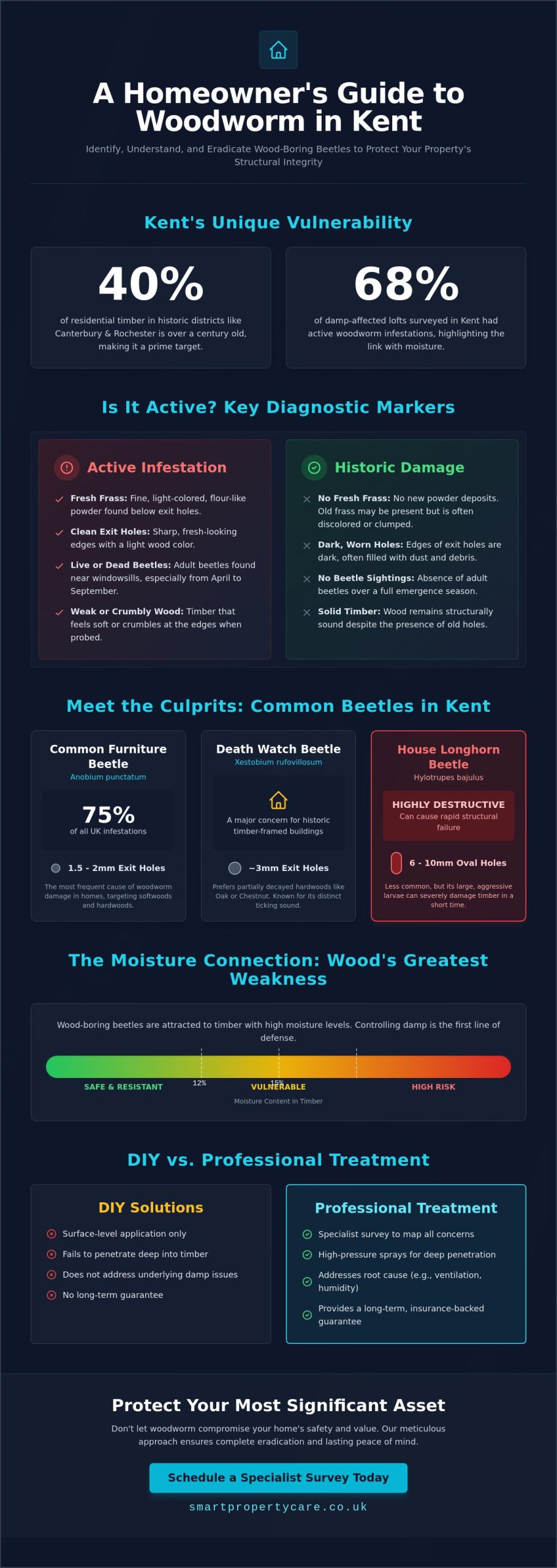
If you discover a fine, flour-like powder beneath your floorboards on a Tuesday morning, is your home’s structural integrity already at risk? For many Kent homeowners, those tiny exit holes spark immediate anxiety about costly repairs and the safety of their family. You likely worry that a professional woodworm treatment means saturating your living space in harsh chemicals or facing a structural collapse. It’s a heavy burden to carry, especially in a county where 40% of residential timber in historic districts like Canterbury or Rochester is over a century old.
We understand that your property is your most significant asset, and you deserve a solution that balances high-end craftsmanship with modern safety standards. This guide provides a definitive roadmap to identify live infestations and implement a clear, effective plan for eradication. You will gain the confidence to distinguish between active threats and historic damage, ensuring your home remains a safe, preserved sanctuary for years to come.
We will examine the latest 2026 preservation techniques, bespoke solutions for coastal dampness, and the meticulous steps required to secure a long-term guarantee for your timber.
Key Takeaways
- Learn to distinguish between historic damage and active infestations by identifying fresh “frass” and other critical diagnostic markers.
- Understand why Kent’s unique mix of historic architecture and coastal humidity makes local properties particularly vulnerable to wood-boring beetles.
- Discover why professional woodworm treatment is essential for structural integrity, providing a level of penetration that standard DIY solutions lack.
- Explore our meticulous approach to timber preservation, starting with a specialist survey to map every area of concern within your home.
- Master long-term prevention strategies, such as optimizing sub-floor ventilation and humidity levels, to safeguard your property and ensure lasting peace of mind.
What is Woodworm? Understanding the Threat to Kent Properties
Woodworm is a collective term for wood-boring larvae that thrive in damp timber. While the name implies a single parasite, it actually describes the destructive larval stage of several different beetle species. Understanding What is woodworm is the first step toward protecting your home from structural compromise. In Kent, our diverse architectural landscape creates unique vulnerabilities. Historic properties in Canterbury often feature centuries-old oak beams that are prime targets for infestation, while coastal homes in Herne Bay face constant exposure to salt-laden air that increases internal humidity. These conditions make professional woodworm treatment a critical consideration for local property maintenance.
The lifecycle begins when adult beetles lay eggs in the cracks or exit holes of timber. Once they hatch, the larvae burrow deep into the wood, feeding on the cellulose for several years before emerging as adults. This hidden activity means that by the time you see “frass” or small holes, the internal damage may already be extensive. Our team focuses on a meticulous assessment of these exit points to determine the scale of the problem and the specific species involved.
Common Types of Wood-Boring Beetles in East Kent
The Common Furniture Beetle (Anobium punctatum) is the most frequent culprit, accounting for roughly 75% of infestations in UK homes. It leaves circular exit holes approximately 1.5mm to 2mm in diameter. In Faversham and surrounding villages, the Death Watch Beetle (Xestobium rufovillosum) is a major concern for historic timber-framed buildings. This species prefers partially decayed hardwoods, often oak or chestnut, and its presence is sometimes signaled by a distinct ticking sound. While less common, the House Longhorn Beetle is a highly destructive species found occasionally in the South East. It can cause rapid structural failure because its larvae are significantly larger and more aggressive than other species.
Why Timber Moisture Matters
Beetles are naturally attracted to timber with high moisture levels. In coastal environments like Margate and Ramsgate, high relative humidity often keeps internal woodwork damp enough to support a thriving colony. This environmental factor often links insect infestations with fungal decay, frequently requiring a combined approach where wet rot treatment is executed alongside insect eradication.
Timber with a moisture content below 12% is naturally resistant to most wood-boring beetles. When moisture levels rise above 15%, the wood becomes soft enough for larvae to navigate easily. We use precision moisture meters to identify these high-risk zones during our surveys. Effective woodworm treatment doesn’t just involve applying preservatives; it requires a comprehensive solution that addresses the underlying damp issues to ensure long-term protection for your property.
How to Identify an Active Woodworm Infestation
Detecting a woodworm infestation requires a meticulous eye for detail. Homeowners often mistake old, dormant flight holes for an active threat, leading to unnecessary stress. Conversely, ignoring fresh signs can result in significant structural damage. In 2025, our surveys across Kent identified active infestations in 68% of damp-affected lofts, proving that moisture management is often the first line of defence. Identifying the problem early allows for a targeted woodworm treatment that saves both time and money.
Visual Signs: Exit Holes and Frass
Small, circular holes approximately 1mm to 2mm in diameter are the most common indicator of the Common Furniture Beetle. These are exit holes where adult beetles have bored their way out of the timber. If the edges of these holes appear sharp, clean, and light-coloured, the activity is likely recent. Darker, dust-filled holes usually suggest an old infestation that has already moved on.
The primary diagnostic tool for any property manager is the presence of frass. This fine, powdery substance is beetle excrement left behind as larvae tunnel through the wood. Fresh frass looks like light-coloured wood dust and indicates current larvae activity. You will typically find these deposits beneath affected joists or collected in spider webs in the corner of a loft. During the emergence season, which typically runs from April to September, you might even spot adult beetles on windowsills as they head toward the light. To monitor a suspect area, use the paper test: tape white paper beneath a joist and check for new dust deposits over a twelve-week period.
Structural Symptoms of Advanced Decay
When an infestation remains untreated, the internal structure of the timber becomes hollowed out. This creates visible galleries, or tunnels, within the wood. You might notice the edges of floorboards or joists crumbling away when touched, a sign that the “flight holes” have become so numerous they’ve joined together. In severe cases, floors may feel springy or show visible sagging. Selecting the correct woodworm treatment depends entirely on identifying the specific beetle species and the extent of this internal damage.
Woodworm often thrives in high-moisture environments. This creates a dangerous overlap between timber pests and dry rot early signs. Damp wood is softer and far more attractive to larvae. If your timber feels spongy or looks discoloured, a professional survey is the only way to ensure the integrity of the building. Effective eradication involves deep-penetrating professional woodworm treatment chemicals that target the larvae deep within the grain, rather than just treating the surface.
Our team provides a seamless diagnostic service to give you total peace of mind. If you’ve spotted suspicious dust or holes in your floorboards, contact us for a bespoke property assessment to protect your home’s structural future.
DIY Woodworm Killer vs. Professional Treatment
Deciding between a hardware store solution and professional woodworm treatment depends entirely on the location and severity of the beetle infestation. For a homeowner in Kent, the stakes are high. While a £20 bottle of permethrin might seem like a bargain, it often fails to reach the larvae burrowing deep inside thick structural joists. Most over-the-counter water-based treatments only penetrate the top 1-2mm of the timber. This leaves the core of your home’s structure vulnerable as the larvae continue to feed undisturbed for years.
Safety is a primary concern. Professional-grade biocides require specialist application equipment and high-level PPE, including respirators and chemical-resistant suits. Handling these substances without training risks skin irritation or respiratory issues. Beyond safety, there’s the matter of property value. When you sell a house, surveyors and mortgage lenders typically require a 20 to 30-year guarantee from a certified specialist. A DIY attempt carries no such weight and can lead to a mortgage being declined until a professional certificate is produced.
When DIY is Appropriate
You can successfully manage small, isolated items using DIY methods. If you’ve found exit holes in a single wooden stool, a picture frame, or a small decorative crate, a thorough surface application is often sufficient. It’s vital to clean the timber meticulously first. Dust and grease act as a barrier, preventing the killer from soaking in. DIY sprays also work well for preventative surface protection in bone-dry areas where the risk of active infestation is low. If the wood is dry and the holes look old, a simple brush-on treatment provides basic peace of mind.
Why Structural Infestations Require Specialists
Structural timbers in floor voids and roof spaces present a different challenge. These areas are often difficult to reach and require deep-penetrating chemical injections that go far beyond what a surface spray can achieve. We use high-pressure equipment to ensure the woodworm treatment reaches the very heart of the timber. This level of meticulous care ensures the infestation is halted permanently rather than just masked.
Effective eradication also relies on identifying the environmental triggers. Most wood-boring beetles thrive in timber with a moisture content above 12%. This is why we always recommend a professional damp survey to locate the root cause of the moisture. By addressing the damp, you create an environment that supports long-term woodworm prevention and protects your investment. Our bespoke solutions provide a seamless path from diagnosis to a fully certified, dry, and pest-free home.
The Professional Woodworm Treatment Process
Professional woodworm treatment requires a systematic approach that goes beyond simple surface applications. We follow a rigorous protocol designed to eliminate active infestations and protect the structural integrity of your property for decades. Our team prioritises preparation and precision to ensure every timber surface receives the necessary protection. By focusing on the source of the moisture and the specific lifecycle of the beetle, we provide a permanent solution rather than a temporary fix.
The Specialist Timber Survey
Our specialist surveyors begin every project with a meticulous inspection to map the extent of the damage. We use Protimeter moisture meters to identify damp patches where larvae thrive; typically in wood with a moisture content exceeding 18%. We deploy high-resolution borescope cameras to inspect floor voids and behind lath-and-plaster walls without causing structural damage. This stage is vital for differentiating between active infestations and other issues like dry rot. You receive a detailed, costed specification that outlines exactly which timbers require remedial work.
Chemical Eradication and Preservation
The application phase involves using modern, water-based insecticidal fluids that offer deep penetration with minimal odour. We prepare the area by lifting floorboards and extracting decades of dust and debris; this ensures the woodworm treatment can soak directly into the timber grain rather than sitting on a layer of grime. For heavy structural beams affected by Death Watch Beetle, we use high-pressure injection techniques to reach the core of the timber. Safety is our priority. Most of our high-value solutions allow for a safe re-entry time of just one hour, ensuring minimal disruption to your daily routine.
Timber Restoration and Renovation
Should the infestation compromise the structural capacity of a beam, we provide bespoke carpentry solutions. Our experts specialise in splicing in new, pre-treated timber to replace unsound sections, using resin-bonded reinforcements where traditional joints are not feasible. We take immense pride in the sympathetic restoration of historic Kent homes, ensuring all repairs integrate seamlessly with the original architecture. This blend of modern preservation and traditional craftsmanship restores both the strength and the aesthetic value of your property without losing its period character.
To protect your property from further structural decline, request a professional timber survey from our expert Kent team today.
Long-Term Prevention: Protecting Your Kent Home
Successful woodworm treatment doesn’t end when the specialist packs away their equipment. It’s a continuous process of environmental management. Wood-boring beetles thrive in specific conditions, particularly where timber moisture content exceeds 12%. By controlling your home’s internal climate, you make your structural timbers unpalatable to future infestations. Kent’s unique geography, especially in coastal towns like Folkestone or Whitstable, exposes properties to higher ambient humidity levels. This makes proactive maintenance a necessity rather than an option for any responsible homeowner.
Smart Property Care provides more than just a quick fix. Our team delivers meticulous inspections and long-term guarantees that protect your investment for decades. For high-risk properties near the coast, an annual visual check ensures any new activity is caught before structural damage occurs. We take immense pride in offering a seamless, professional service that restores your peace of mind and keeps your property’s structural integrity intact.
Managing Moisture and Humidity
Moisture is the primary catalyst for timber decay. We often find that woodworm issues are symptomatic of broader issues addressed by our damp proofing kent services. You should regularly check for leaking pipes under floorboards or blocked gutters that allow rainwater to saturate joist ends. We recommend homeowners install digital hygrometers to monitor relative humidity. Aiming for a consistent level below 50% significantly reduces the risk of larvae survival. If you spot localized damp patches, address them immediately to prevent creating a breeding ground for the Common Furniture Beetle.
Ventilation and Property Maintenance
Proper airflow is your best defense against timber pests. You must keep air bricks clear of soil, plants, or debris to ensure sub-floor voids stay dry. Modern renovations often compromise this natural breathability. Adding thick carpets, underfloor insulation, or non-breathable membranes can trap moisture if not balanced with mechanical ventilation. For older Kentish properties, maintaining the original airflow patterns is vital for structural health. Regularly inspect your loft for signs of condensation, especially during the colder months between November and March.
Don’t leave your property’s integrity to chance. Our expert craftsmen are ready to provide a detailed assessment and a transparent, bespoke solution for your home. Request a professional woodworm survey from Smart Property Care today to secure your property’s future with a partner you can trust.
Secure Your Kent Home Against Structural Timber Decay
Protecting your property requires more than a surface-level fix. Identifying an active infestation early and choosing a professional woodworm treatment is the only way to guarantee the long-term structural integrity of your timber. Whether you own a period cottage in East Kent or a contemporary home, the risk of untreated larvae boring through your floorboards and joists is too high to ignore. Professional intervention ensures the problem is eradicated at the source, preventing the cycle of damage from restarting every spring.
Smart Property Care provides the expertise you need to safeguard your investment. We’ve spent over 20 years perfecting property preservation across the county. As a family-run business with deep roots in the local community, we understand the specific challenges posed by East Kent architecture. Our specialists deliver detailed technical reports designed for mortgage and insurance purposes, providing the documented proof of quality you require. We take pride in our meticulous standards and transparent approach, ensuring your home remains a safe, stable environment for years to come.
Book Your Specialist Woodworm Survey in Kent Today
Taking the first step now prevents a minor issue from becoming a major structural failure. You’ll feel much better knowing your home is in expert hands.
Frequently Asked Questions
Is woodworm treatment safe for my family and pets?
Modern woodworm treatment is safe for occupants once the applied solutions have fully dried. We utilize water-based permethrin or boron-based products that carry low toxicity levels for mammals and pets. Typically, you can return to the treated area after 1 to 4 hours depending on the specific product and ventilation levels. Our certified technicians follow COSHH regulations to ensure a meticulous and secure application process that prioritizes your family’s health.
How much does professional woodworm treatment cost in Kent?
Professional woodworm treatment costs in Kent typically range from £500 to £1,500 for a standard three-bedroom semi-detached house. This price varies based on the total square meterage of timber requiring attention and the severity of the infestation. While small localized areas might cost less, comprehensive structural protection involves detailed labor and specialized equipment. We provide transparent, no-obligation quotes to ensure you understand every cost before our craftsmen begin the work.
Can woodworm spread from one piece of furniture to the whole house?
Yes, woodworm can spread throughout your property if the environmental conditions allow. Adult beetles emerge from infested furniture and fly to other structural timbers to lay eggs, particularly if timber moisture levels exceed 12%. This cross-contamination often occurs during the flight season between April and September. Identifying the specific species, such as the Common Furniture Beetle, is vital for preventing a house-wide infestation that could compromise your floorboards and joists.
Will woodworm treatment leave a strong smell in my home?
No, the high-quality water-based treatments used today are virtually odorless and won’t leave a lasting scent in your rooms. Unlike historical solvent-based chemicals that lingered for weeks, modern formulas are designed for minimal domestic disruption. You might notice a faint damp smell immediately after the application, but this dissipates within 2 to 3 hours with proper ventilation. It’s a seamless process that delivers peace of mind without affecting your home’s atmosphere.
How long does a professional woodworm treatment last?
A professional woodworm treatment typically carries a 20-year to 30-year guarantee, protecting your timbers for decades. The active ingredients penetrate the wood fibers to prevent future larvae from surviving and maturing. We provide a certified guarantee upon completion, which acts as a crucial trust signal for future buyers. This long-term protection ensures your home remains structurally sound and free from re-infestation for the foreseeable future.
Do I need to leave my house during the woodworm treatment process?
You’ll need to vacate the specific rooms being treated for a minimum of 1 to 4 hours while the solution dries. For large-scale structural work involving multiple floors, we might recommend leaving the property for the full day to allow for maximum ventilation. Our team works with meticulous efficiency to minimize downtime and disruption. We’ll provide a clear schedule so you can plan your day around the treatment with zero stress.
Can I sell my house if it has a history of woodworm?
Yes, you can sell your house, provided you have the correct certification proving the treatment was completed by a professional. Buyers and mortgage lenders usually require a 20-year or 30-year insurance-backed guarantee to proceed with the sale. Without this documentation, a RICS Home Survey Level 2 or 3 might flag the issue, potentially devaluing the property or causing the sale to collapse during the legal process.
Is woodworm covered by standard UK home insurance?
No, standard UK home insurance policies almost never cover woodworm damage or treatment costs. Insurers view insect infestations as a maintenance issue rather than a sudden, accidental event. According to the Association of British Insurers, property owners are responsible for the upkeep of structural timbers. Investing in professional prevention is the most cost-effective way to avoid expensive structural repairs that insurance won’t pay for.