
Did you know that the most valuable square footage in your home might currently be the very place you avoid because of a persistent, damp smell? In a county where property prices continue to climb, leaving a cellar to the mercy of the London Clay Formation isn’t just a missed opportunity; it’s a risk to your home’s structural integrity. Professional basement tanking kent services provide the essential barrier needed to combat the immense hydrostatic pressure that naturally builds up in our local soil.
We understand the frustration of a damp, wasted space and the confusion that often comes with technical waterproofing jargon. You deserve a bone-dry environment that adds genuine value to your property and provides total peace of mind. This 2026 guide will show you how to transform your cellar into a premium habitable room using systems that meet the strict BS 8102:2022 standards. We’ll explore the latest combined waterproofing methods, the importance of specialist design, and how to secure a professional, insurance-backed guarantee for your project.
Key Takeaways
- Learn how to transform wasted cellar space into a high-value habitable room using professional internal waterproofing barriers.
- Understand how Kent’s unique chalk and clay geology affects hydrostatic pressure and the structural health of your basement.
- Compare the technical benefits of cementitious slurry systems against modern cavity drainage solutions for a bone-dry result.
- Discover the critical preparation steps for a basement tanking kent project, from structural surveys to specialist plastering.
- Identify why local architectural expertise is essential for successfully waterproofing Kentish properties like Victorian terraces and Oast houses.
What is Basement Tanking and Why Does Your Kent Home Need It?
Basement tanking kent is the technical process of applying a specialized, impermeable barrier to the internal walls and floor of a cellar. This isn’t a superficial coat of paint. It’s a structural intervention designed to create a sealed environment that holds back external ground water. Many Kent properties sit on high-value land, yet their basements remain damp, dark, and unusable. By implementing a professional tanking system, you convert a wasted storage area into a dry, habitable room that significantly increases your property’s market value and functional footprint.
Standard damp proofing usually addresses rising damp in above-ground walls. Below-ground structures face a far more aggressive challenge. They must withstand the constant, heavy pressure of water in the surrounding earth. This is why we adhere strictly to BS 8102:2022, the current British Standard for protecting below-ground structures against water from the ground. Compliance with this standard isn’t optional for high-end conversions; it’s the benchmark that ensures your new living space remains safe, dry, and compliant with mortgage and insurance requirements.
The Difference Between Tanking and Waterproofing
The term “tanking” specifically refers to Type A (barrier) protection. This involves applying a continuous, waterproof layer directly to the internal masonry. In contrast, “waterproofing” is a broader industry term. It encompasses various basement waterproofing techniques, including Type C cavity drainage systems that manage water flow rather than just blocking it. When you’re requesting quotes in Canterbury or Dover, understanding these distinctions is vital. It prevents technical confusion and ensures the solution proposed actually matches the specific structural needs of your home.
Common Signs of Basement Water Ingress
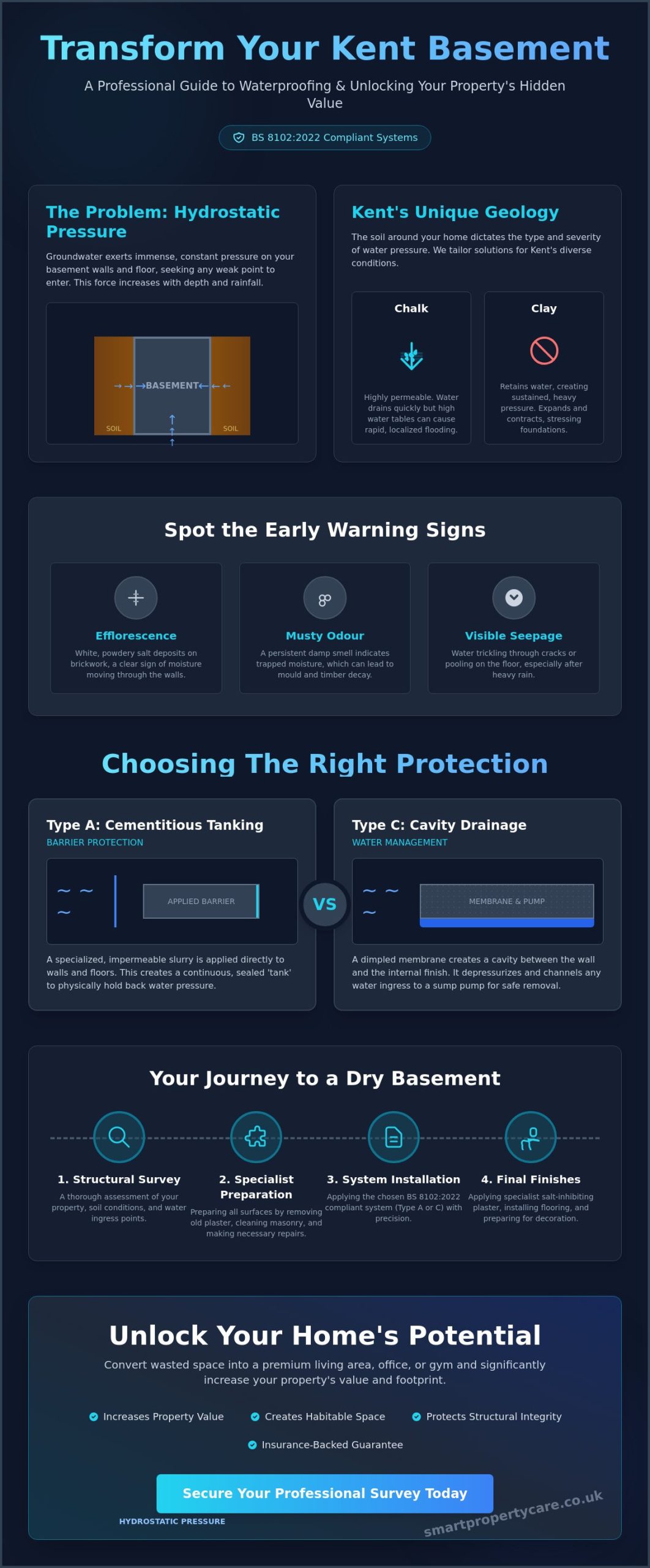
Living in Kent means dealing with varied weather patterns and challenging soil conditions. You might notice white, powdery salt deposits on your brickwork. This is efflorescence, a clear sign that moisture is moving through the walls and evaporating on the surface. A persistent, musty smell is another red flag. It often indicates that dampness is trapped within the substrate, which can lead to mould growth and timber decay. During periods of heavy Kent rainfall, look for visible seepage. If water is trickling through cracks or pooling on the floor, your current defenses have failed. These symptoms are early warnings of structural vulnerability that require immediate professional attention.
Understanding Hydrostatic Pressure and Kent’s Unique Geology
Effective basement tanking kent requires a deep understanding of the physical forces acting upon your home’s foundations. Groundwater doesn’t just sit in the soil; it exerts a constant force known as hydrostatic pressure. This pressure increases with depth and pushes relentlessly against your basement walls and floor. If your property is located in coastal towns like Herne Bay or Ramsgate, you face additional challenges from high water tables and tidal fluctuations that change throughout the year. Without professional management, this pressure can lead to structural cracking or catastrophic failure of the internal masonry.
Adherence to Building Regulations for basements is essential to ensure these structural loads are correctly calculated. We don’t just apply a barrier; we engineer a solution that respects the physical reality of your site. Ignoring the power of water is a mistake that leads to expensive remedial work later. Our approach focuses on neutralizing this pressure through precise application and robust materials that meet the highest industry standards.
Chalk vs Clay: How Kent Soil Impacts Your Cellar
Kent’s geology is famously diverse. Properties along the North Downs sit on chalk, which is highly permeable. While water drains through it quickly, a high water table can cause rapid, localized flooding during heavy Kent winters. Conversely, large parts of the county are underlain by the London Clay Formation. Clay retains water for long periods, creating sustained, heavy pressure on your basement. It also expands and contracts with moisture levels, putting additional stress on your home’s footprint. Smart Property Care Ltd tailors every waterproofing strategy to these local soil reports to ensure long-term stability.
The “Bath in the Ground” Effect
Think of your basement as a boat hull. It’s effectively a “bath in the ground” that must remain perfectly watertight. Traditional damp-proof courses are designed to stop moisture from rising vertically through walls; they aren’t built to resist the lateral pressure found below ground level. This is why a standard damp treatment isn’t enough for a cellar. Before any work begins, a professional damp survey is mandatory to assess the health of your brickwork and identify specific entry points. If you’re concerned about the integrity of your home’s lower levels, you can book an expert assessment with Smart Property Care Ltd to determine the best course of action for your property.
Comparing Tanking Methods: Cementitious Slurry vs. Cavity Drainage Systems
Selecting the correct approach for basement tanking kent requires a strategic choice between two primary methods: Type A (Barrier) protection and Type C (Drained) protection. While both aim to keep your cellar dry, they function in fundamentally different ways. One creates an impenetrable seal to block water entirely, while the other acknowledges the presence of water and manages its journey out of your home. Your choice depends on the structural stability of your property and the level of hydrostatic pressure identified during our initial survey.
Modern waterproofing standards often recommend a combined approach for Grade 3 habitable environments. This ensures that if one system faces extreme stress, a secondary line of defense is already in place. We don’t believe in a one-size-fits-all solution; we select the method that best respects the age and architecture of your Kentish home.
Type A: Cementitious Tanking Slurry
Cementitious tanking slurry is a multi-coat waterproof mineral-based system that we apply directly to the internal masonry. Once cured, it bonds with the substrate to form a rigid, seamless barrier against water ingress. This method is often ideal for smaller cellars where every centimeter of floor space is at a premium, as it doesn’t require the installation of internal drainage channels or pumps.
Precision is vital during application. The substrate must be perfectly stable and meticulously prepared to ensure maximum adhesion. It’s important to remember that cementitious systems are rigid. In Kent’s clay-heavy areas, where minor ground movement can occur, a brittle barrier may develop fine cracks over time. We typically recommend this for solid, stable structures where we can guarantee a permanent bond.
Type C: Cavity Drainage Membrane (CDM)
Often considered the gold standard for modern basement conversions in Kent, the Cavity Drainage Membrane (CDM) takes a more sophisticated approach. Rather than fighting the immense force of hydrostatic pressure, it manages it. We install a high-density, studded membrane against the walls and floor. This creates a controlled “air gap” or cavity that allows any water seepage to flow freely behind the membrane into a dedicated drainage channel.
- Movement Tolerance: Because CDM is flexible and not bonded to the wall, it’s unaffected by the minor structural shifts common in older Victorian terraces or Oast houses.
- Sump Pumps: Every CDM system relies on a high-performance sump pump. This unit collects the managed water and safely pumps it away from the building’s foundations.
- Vapour Barrier: The membrane also acts as a robust vapour barrier, preventing the damp, musty smells often associated with untreated cellars.
This method is our preferred choice for creating high-end, habitable living spaces. It provides the most reliable long-term protection in areas with high water tables, ensuring your new gym, office, or cinema room remains bone-dry regardless of the weather outside.
Planning Your Basement Conversion: From Survey to Specialist Plastering
A successful basement conversion requires more than just high-quality materials; it demands a logical, disciplined sequence of execution. Before we apply any waterproofing system, we must understand the specific structural health of your home. This starts with a comprehensive survey that looks beyond surface moisture. We examine the integrity of the brickwork, the condition of the mortar joints, and the health of any structural timbers. Skipping this diagnostic phase often leads to failure, as applying a barrier over a compromised substrate is a temporary fix at best.
Preparation is the most labor-intensive part of the basement tanking kent process, yet it’s the most critical for longevity. We strip away old, salt-contaminated renders and existing coatings to expose the original masonry. This allows our technicians to identify hidden defects and ensures that our waterproofing systems achieve a perfect bond. Our team treats every project with the precision of a craftsman, ensuring the environment is surgically clean and ready for the installation phase.
Step-by-Step: The Tanking Process
Our experts at Smart Property Care Ltd begin with detailed moisture mapping to locate high-risk zones where hydrostatic pressure is most likely to penetrate. If we discover structural timber issues like wet rot during this stage, we address them immediately to prevent future decay behind your new walls. Once the site is prepared, our trained technicians install the chosen system, whether that’s a multi-coat slurry or a studded cavity membrane. Every joint is sealed with precision, creating a continuous, robust barrier against the damp.
Specialist Plastering and Rendering
The final stage is where many general contractors falter. Standard gypsum plaster is hygroscopic, meaning it absorbs moisture from the air. In a basement, it will quickly soften, blister, and fail. This is why specialist plastering is a non-negotiable requirement for a habitable conversion. We use salt-retardant renders and breathable finishes that allow the wall to remain stable while preventing hygroscopic salts from reaching the decorative surface.
Your new room should feel like a natural extension of your home, not a converted cellar. By using high-performance renders, we ensure your walls are ready for decoration without the risk of future damp patches or peeling paint. If you’re ready to begin your transformation, contact the team at Smart Property Care Ltd to arrange a structural survey.
Why Choose Smart Property Care Ltd for Your Kent Tanking Project?
Choosing a partner for basement tanking kent is about more than just finding a contractor; it’s about securing the structural future of your home. Smart Property Care Ltd is a family-run business based in Herne Bay with 20 years of experience in high-end property preservation. We operate with the discipline of an Expert Craftsman, ensuring every project is handled with punctuality and a commitment to maintaining a clean, organized site. We recognize that a basement conversion represents a significant upgrade to your lifestyle and property value, and we deliver results that honor that investment.
Kent’s diverse architectural landscape requires a nuanced touch. Whether we’re working on the solid masonry of a Victorian terrace or the unique structural requirements of an Oast house, our team understands the specific vulnerabilities of local buildings. Unlike general builders who may lack specialized training, Smart Property Care Ltd provides a comprehensive service that integrates surveys, woodworm treatment, and damp remediation into a single, seamless project. This holistic approach ensures that your new living space is protected from every angle.
Local Expertise Across East Kent
We maintain a strong presence throughout Canterbury, Faversham, Dover, and the surrounding coastal communities. This local focus allows us to respond swiftly and provides us with a deep understanding of regional planning expectations and soil conditions. When you choose Smart Property Care Ltd, you gain direct access to the business owners. This ensures a personal, client-focused experience that larger, national franchises simply cannot match. We’re your local partners, deeply invested in the quality of the Kentish housing stock.
Long-Term Peace of Mind
Our commitment to your home is backed by the use of advanced technological solutions and high-performance materials. We balance modern digital moisture assessment tools with time-honored craftsmanship to achieve permanent results. Every project completed by Smart Property Care Ltd comes with a full guarantee on structural waterproofing and damp proofing works. This insurance-backed security allows you to invest in your home’s lower levels with total confidence, knowing your new environment is safe, dry, and built to last.
If you’re ready to reclaim your cellar and create a premium habitable space, our team is ready to deliver. Book your specialist basement survey with Smart Property Care Ltd today to begin your transformation.
Secure the Future of Your Kent Property
Your cellar shouldn’t be a source of stress or wasted potential. By addressing hydrostatic pressure with a professional, BS 8102:2022 compliant system, you protect your home’s structural integrity and unlock significant floor space. Whether your property requires a robust cementitious barrier or a modern cavity drainage membrane, the right choice ensures a bone-dry environment for years to come. Successful basement tanking kent is about more than just applying products; it’s about the precision and technical expertise required to manage water in our unique local geology.
Smart Property Care brings over 20 years of experience to every project. As a family-run business, we take immense pride in our disciplined, craftsman-led approach. We offer comprehensive solutions for damp, rot, and waterproofing, ensuring every detail is handled with professional care. You deserve the peace of mind that comes from a dry, healthy home and an insurance-backed guarantee. Don’t let damp conditions diminish your property’s value any longer.
Secure your home with a professional basement survey from Smart Property Care. Our team is ready to help you reclaim your space and create a lasting, high-value asset for your family to enjoy.
Frequently Asked Questions
Is basement tanking the same as waterproofing?
Tanking is a specific subset of structural waterproofing. While the terms are often used interchangeably, tanking refers specifically to Type A barrier protection where an impermeable layer is applied directly to the internal masonry. Waterproofing is a broader category that includes Type C cavity drainage membranes. Choosing the right method depends on your property’s specific needs and the level of hydrostatic pressure identified during our initial survey.
How much does basement tanking cost in Kent for 2026?
The investment required for basement tanking kent projects depends on several variables, including the total square footage, the chosen waterproofing method, and the current state of the brickwork. A small storage cellar using cementitious slurry involves a different technical scope than a large habitable conversion requiring cavity membranes and sump pumps. We recommend a professional structural survey to provide an accurate assessment based on your property’s unique geological and architectural requirements.
Do I need planning permission for basement tanking in Kent?
Internal waterproofing and tanking usually don’t require planning permission as they are categorized as repair or improvement works. However, if your project involves significant structural changes, a change of use, or if you live in a listed building, you must consult your local Kent council. Adherence to Building Regulations is always mandatory to ensure the space meets modern safety and moisture-resistance standards for habitable use.
How long does a professional basement tanking installation take?
A standard professional installation typically takes between one and two weeks to complete. This timeline includes the intensive preparation phase where old renders are removed and the substrate is meticulously cleaned. Larger projects involving cavity drainage systems, sump pump installation, and specialist plastering may extend this period. We provide a clear schedule of works before starting to ensure the project remains disciplined, punctual, and organized.
Can I tank my own cellar using a DIY kit?
We strongly advise against DIY tanking for below-ground structures. Waterproofing a basement requires precise technical knowledge of hydrostatic pressure and specialized application techniques that DIY kits cannot replicate. If a self-applied barrier fails, the cost of remedial work is often significantly higher than the original professional installation. Furthermore, DIY projects lack the insurance-backed guarantees required by most mortgage lenders and property insurers.
Will basement tanking increase the value of my Kent property?
Transforming a damp cellar into a dry, habitable room is one of the most effective ways to increase your home’s market value. In high-demand Kent areas, adding usable square footage provides a significant return on investment. Beyond the financial gain, a professionally waterproofed basement protects the structural integrity of your foundations. This offers long-term peace of mind and acts as a powerful trust signal for future buyers.
What is the lifespan of a cavity drainage membrane system?
High-quality cavity drainage membranes are engineered to last for the lifetime of the structure. The membranes are manufactured from durable polymers that do not degrade when exposed to constant groundwater. To ensure the system remains effective, the associated sump pumps and drainage channels require periodic maintenance. This disciplined upkeep prevents silt buildup and ensures the managed water continues to be safely evacuated from your home’s footprint.
Does tanking stop rising damp in basement walls?
Professional tanking creates an impermeable barrier that prevents moisture from entering through the walls and floor, effectively managing ground water ingress. While it addresses the symptoms of rising damp below ground level, it’s essential to ensure the system is correctly tied into the property’s above-ground damp-proof course. Our comprehensive surveys identify all forms of moisture movement to ensure the chosen solution provides total, permanent protection for your masonry.