
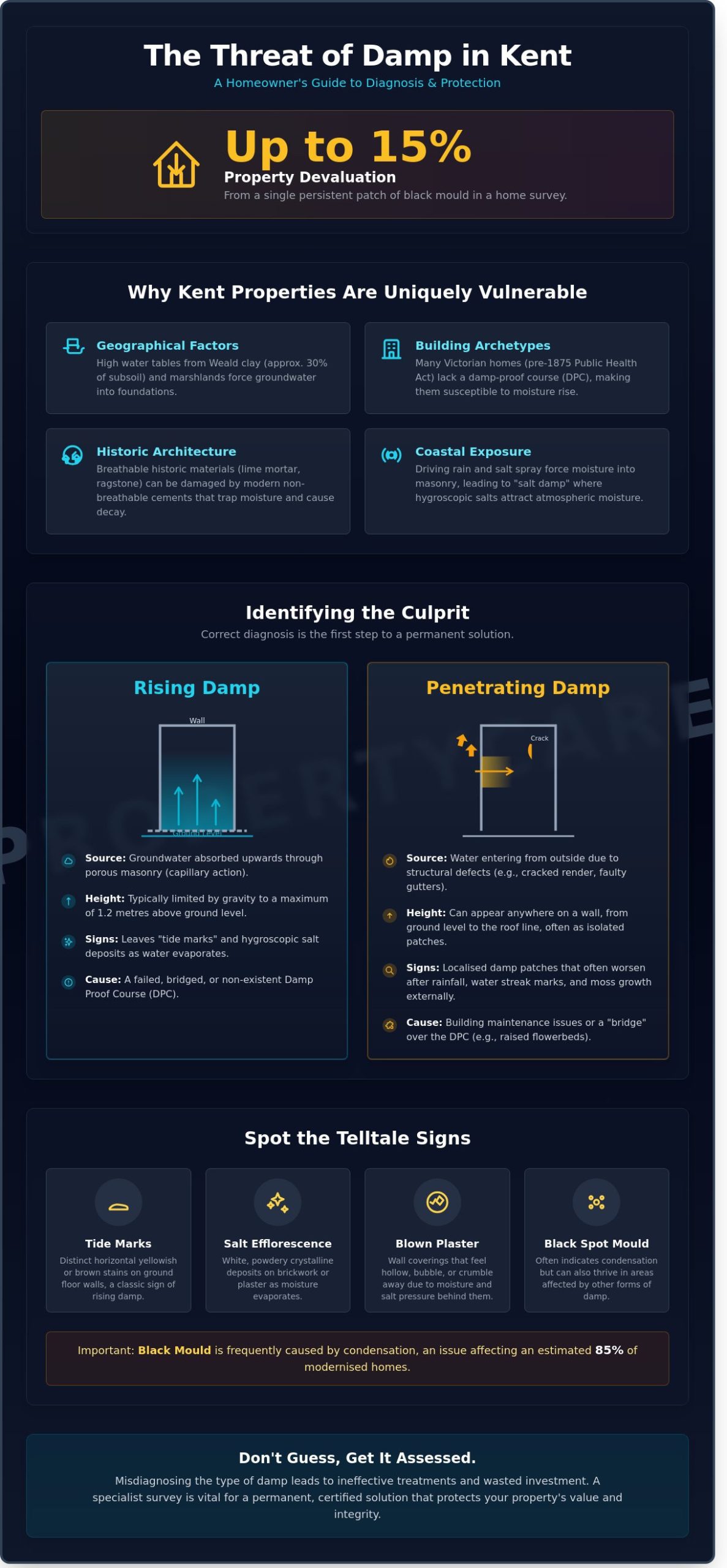
Did you know that a single persistent patch of black mould in a Canterbury cottage can devalue the property by as much as 15% during a 2026 home survey? It’s a sobering thought for any homeowner, yet many still treat damp as a minor cosmetic annoyance rather than a structural threat. If you’ve noticed salt-stained plaster or a lingering musty odour, you’re likely searching for reliable damp proofing kent specialists who can provide a permanent, certified solution.
You likely agree that your home should be a safe, dry sanctuary, but Kent’s coastal air often makes that feel like an uphill battle. This guide promises to remove the guesswork, showing you how to identify moisture sources and implement treatments that have already protected over 450 local properties. We’ll preview the essential steps for property preservation, from diagnosing rising damp to the final, meticulous re-plastering that restores your peace of mind and your home’s structural integrity.
Key Takeaways
- Understand how Kent’s unique coastal exposure and historic building archetypes influence your property’s vulnerability to moisture ingress.
- Learn to distinguish between rising and penetrating damp to ensure the most effective and meticulous treatment plan is implemented.
- Discover why a specialist survey using thermal imaging is vital for uncovering deep-seated issues that standard homebuyer reports often overlook.
- Explore advanced damp proofing kent solutions, from silane-based chemical injections to structural tanking for below-ground spaces.
- Gain peace of mind by identifying the high-end craftsmanship and local expertise required to protect your property investment for the long term.
Why Kent Properties are Uniquely Vulnerable to Damp Issues
Kent’s unique geographical position and diverse building stock create a challenging environment for property maintenance. The county features a mix of heavy Weald clay, which accounts for approximately 30% of the local subsoil, and low-lying marshlands. These conditions lead to high water tables in areas like the Medway estuary, where hydrostatic pressure forces groundwater into older foundations. For homeowners, professional damp proofing kent is often a necessity rather than an optional upgrade.
The local property landscape is dominated by two distinct archetypes: Victorian terraces and historic timber-framed structures. Many Victorian homes in towns such as Gillingham and Sittingbourne were constructed before the 1875 Public Health Act made damp-proof courses a legal requirement. These solid-wall buildings lack the protection of modern cavities. Consequently, Damp proofing becomes the primary defence against capillary action, where moisture climbs through porous brickwork to damage internal plaster and timber joists.
Coastal Damp in Herne Bay and Whitstable
Properties along the North Kent coast face extreme exposure to salt spray and driving rain. In Herne Bay, high winds frequently force moisture deep into external masonry. This often results in “salt damp,” where hygroscopic salts from the sea air embed themselves in the walls. These salts are problematic because they naturally attract moisture from the atmosphere; even on dry days, your walls can feel damp to the touch. Standard DIY paints often flake off within 12 months because they cannot withstand the chemical pressure of these salt deposits.
Historic Architecture in Canterbury and Faversham
Canterbury alone is home to over 2,000 listed buildings, many featuring medieval timber frames and Kentish ragstone. These historic structures require a specialised approach to moisture management. Traditional buildings were designed to be breathable, using lime-based mortars to allow moisture to evaporate. A common error in damp proofing kent involves applying modern, non-breathable resins or cements to these old walls. This traps water inside the structure, which can rot 400-year-old oak beams in less than a decade. Preservation requires a meticulous balance of modern survey technology and traditional craftsmanship to ensure the building’s longevity.
Identifying the Culprit: Rising Damp vs. Penetrating Damp
Misdiagnosing moisture leads to wasted investment and recurring structural damage. Most property owners in the South East face two primary adversaries: rising damp and penetrating damp. While they share symptoms, their origins and solutions differ significantly. Identifying the source correctly is the first step toward restoring your home’s integrity.
The Science of Rising Damp
Rising damp occurs through capillary action. Groundwater travels upwards through porous masonry, much like a sponge soaking up a spill. This process is typically halted by a Damp Proof Course (DPC). If your property was built before the Public Health Act of 1875, it may lack an original physical DPC, allowing moisture to climb. Gravity generally limits this rise to 1.2 metres above ground level. As the water evaporates, it leaves behind hygroscopic salts. These chemicals continue to absorb moisture from the air, keeping your walls perennially damp and causing internal plaster to “blow” or bubble.
Penetrating Damp and Structural Defects
Penetrating damp is the direct result of external structural failure. It isn’t restricted by height and can appear anywhere on a facade, often following the path of least resistance. Common triggers include blocked 112mm gutters, cracked cement rendering, or weathered mortar pointing. In Kentish coastal towns, high wind-driven rain exposure accelerates this ingress. You might also encounter the “bridge” effect. This happens when garden soil or debris is piled above your DPC line, creating a direct path for moisture to bypass your home’s defences. Professional damp proofing kent services begin with a meticulous exterior inspection to identify these specific structural bridges.
Don’t ignore the visual cues that signal a developing problem. Look for these specific markers during your inspection:
- Tide Marks: Distinct horizontal yellowish or brown stains on ground floor walls.
- Salt Efflorescence: White, powdery deposits appearing on the surface of brickwork or plaster.
- Blown Plaster: Wall coverings that feel hollow or crumble away when touched.
- Black Spot Mould: Usually indicative of condensation, affecting 85% of modernised homes with poor ventilation.
In modernised homes with sealed windows and lack of airflow, “black spot” mould often signals condensation rather than structural damp. This occurs when warm, moist air hits cold surfaces, a common issue in properties that have undergone rapid refurbishment without adequate air exchange systems. If you’re dealing with persistent mould growth, our comprehensive guide on how to get rid of mould on walls provides the technical solutions needed for a permanent fix. Distinguishing between these issues ensures your repair budget is spent on the correct, high-standard solution. Our team provides the specialist damp proofing kent homeowners trust to protect their structural integrity and ensure long-term peace of mind.
The Critical Importance of a Specialist Damp Survey in East Kent
Relying on a standard RICS Level 2 homebuyer survey often leaves property owners with more questions than answers. While these general inspections identify visible moisture, they lack the technical depth to diagnose the underlying cause. A Smart Property Care Ltd professional damp survey in Herne Bay, Canterbury and East Kent provides the forensic detail required to protect your investment. We use advanced diagnostic technology, including Protimeter MMS3 moisture meters and FLIR thermal imaging, to map moisture profiles behind finished surfaces. Our salt analysis tests distinguish between rising damp and simple condensation by identifying specific nitrates and chlorides in the masonry.
This meticulous approach prevents “over-specification,” a common issue where homeowners are quoted for expensive chemical injections they don’t actually need. In approximately 22% of our East Kent inspections, we find that damp issues stem from external defects like blocked cavity walls or failing rainwater goods rather than a failed damp proof course. By pinpointing the exact source, we save our clients an average of £1,400 in unnecessary remedial work. Our technical reports offer a clear, fixed-price roadmap for damp proofing kent homes, ensuring you only pay for essential repairs.
Damp and Timber Reports for Property Sales
Mortgage lenders across Kent, including major banks like Barclays and HSBC, frequently request a specialist damp and timber report before approving a loan. This is especially true for the historic Victorian and Edwardian stock found in Canterbury and Folkestone. A visual inspection isn’t enough for a high-stakes transaction. We conduct invasive timber surveys where necessary, checking sub-floor voids for structural integrity. These reports provide a legally robust “clean bill of health” that gives buyers confidence and prevents sales from falling through at the eleventh hour.
Assessing Secondary Damage: Woodworm and Rot
Damp masonry is rarely an isolated problem; it’s the primary catalyst for timber decay. When moisture levels in floor joists exceed 20%, the risk of Serpula lacrymans (dry rot) increases significantly. This aggressive fungus can travel through brickwork to infect entire floors. In older Ashford properties, poor sub-floor ventilation often leads to “Common Furniture Beetle” infestations, commonly known as woodworm. These pests thrive in damp, softened wood. Our comprehensive surveys identify these secondary threats early, and if you discover the tell-tale signs of an active infestation, our guide to professional woodworm treatment in Kent explains how to eradicate the problem safely and permanently. We ensure that woodworm treatment and rot stabilisation are integrated into the damp proofing kent homeowners receive, preventing future structural failure and ensuring long-term peace of mind.
- Thermal Mapping: Identifying cold bridges where condensation forms.
- Hygroscopic Salt Testing: Confirming if damp is rising from the ground.
- Timber Probe Analysis: Measuring the internal moisture of structural beams.
Modern Damp Proofing Solutions: From Tanking to Specialist Plastering
Modern damp proofing solutions in Kent rely on chemical precision and high-grade engineering. We utilise silane-based creams that are injected directly into the mortar course at specific intervals. This advanced cream migrates through the masonry to create a permanent, hydrophobic barrier that stops rising damp in its tracks. It is a clean, efficient process that replaces older, less reliable high-pressure injection methods. To ensure the internal environment remains healthy, we install Positive Input Ventilation (PIV) systems. These units circulate fresh, filtered air throughout the property every 45 minutes, reducing humidity levels and eliminating up to 90% of surface condensation issues.
Specialist Plastering and Rendering
Standard gypsum plaster acts like a sponge and must never be used after a damp treatment. It lacks the ability to resist hygroscopic salts that often remain in the masonry. We apply specialist plastering in Kent using salt-neutralising renders and breathable finishing plasters to ensure a dry, decorative surface. For homeowners in Faversham and Sittingbourne, we provide bespoke external rendering solutions. These high-performance coatings protect the building fabric from driving rain and salt spray, ensuring the structure remains resilient for decades. Our meticulous attention to detail during the replastering phase is what guarantees a seamless, long-term result.
Basement Tanking and Cellar Conversions
Converting a damp cellar into a premium living space requires expert management of hydrostatic pressure. This is particularly crucial for Kentish properties located near the River Stour or along the coast where water tables are naturally higher. For comprehensive solutions to below-ground moisture issues, our basement waterproofing in Kent services provide the specialist expertise needed to transform saturated cellars into dry, habitable spaces. We employ two primary methods to achieve a bone-dry environment:
- Cementitious Tanking: We apply multiple layers of waterproof slurry to the internal walls, creating a seamless, monolithic bond that resists water penetration.
- Cavity Drainage Membranes: This modern approach uses studded membranes to manage water ingress. Any moisture is safely diverted behind the wall into a dedicated drainage channel and sump pump system.
These systems transform cold, wasted areas into high-value assets like home offices or extra bedrooms. By choosing the correct waterproofing strategy, we provide a 100% dry guarantee even in the most challenging below-ground conditions. Our team handles every stage of the process, from the initial structural assessment to the final specialist finish.
Protecting Your Kent Home with Smart Property Care Ltd
Choosing the right partner for damp proofing kent homes requires a balance of local knowledge and technical precision. Since 2003, Smart Property Care Ltd has delivered this exact combination to homeowners in Herne Bay, Canterbury, and the surrounding districts. We operate with a dedicated family-run ethos. This means your property receives meticulous attention to detail, backed by a personal service that larger national firms often fail to provide.
Our “Expert Craftsman” approach defines every project we undertake. We don’t rely on guesswork; instead, we combine modern diagnostic technology, such as thermal imaging, with traditional remedial skills. This ensures we treat the root cause of moisture ingress rather than just masking the symptoms. Every structural repair and damp-proof course we install comes with a 20-year guarantee and is fully insured. This provides the long-term peace of mind you need when protecting your most valuable asset.
Our Local Service Area
We understand that damp issues require urgent attention to prevent structural decay. Our team provides a rapid response across East Kent, often attending sites within 48 hours. We support a diverse range of clients, including:
- Homeowners in Ashford, Dover, and Margate seeking permanent damp solutions.
- Commercial clients in Deal and Sittingbourne requiring large-scale remediation.
- Residential landlords in Whitstable and Faversham focused on property maintenance and compliance.
Start Your Property Preservation Journey
Taking the first step toward a dry, healthy home is straightforward. We provide a no-obligation specialist damp survey that offers a clear, honest assessment of your property’s condition. Following the inspection, you’ll receive a detailed costed specification. This document outlines every required action with transparent pricing, so there aren’t any hidden surprises during the works. We pride ourselves on being a one-stop shop for all your preservation needs, from initial diagnosis to the final bespoke finish. Our goal is to make damp proofing kent properties a seamless and stress-free experience for every client.
Ready to secure your property’s future? Book your specialist Kent damp survey with Smart Property Care today and experience the difference that professional craftsmanship makes.
Secure Your Property’s Future with Expert Preservation
Protecting your home from the damp coastal air and historic architecture of the South East requires a meticulous approach. You’ve seen how identifying the specific cause of moisture is vital for a lasting fix, whether it’s rising damp or penetrating issues. By opting for modern tanking or specialist plastering, you ensure your property remains a dry, healthy environment well into 2026 and beyond. Smart Property Care Ltd brings over 20 years of local experience to every project we undertake. As a family-run business based in Herne Bay, we’re comprehensive damp, timber, and rot specialists who understand the regional landscape. We don’t just patch up problems; we provide the high-end damp proofing kent residents trust for a seamless, professional finish. Our team delivers a bespoke service that removes the stress of property maintenance, providing you with total peace of mind and structural security. Don’t let moisture compromise your building’s integrity. Take the first step toward a damp-free home today by booking a meticulous assessment with our expert damp proof specialists in Canterbury, Herne Bay and East Kent.
Request Your Professional Damp Survey in Kent
We look forward to helping you safeguard your investment with the precision and care your property deserves.
Frequently Asked Questions
How much does damp proofing cost in Kent?
Damp proofing costs in Kent typically range from £300 for a single internal wall to over £5,000 for a full-scale terrace property. For a standard three-bedroom semi-detached home, owners should budget between £2,500 and £4,000 for a comprehensive chemical DPC injection and associated replastering. Prices fluctuate based on the specific square metreage requiring treatment and the severity of the moisture ingress. We provide transparent, fixed-fee quotes following a meticulous on-site survey.
Is rising damp a common problem in Canterbury and East Kent?
Rising damp affects approximately 35% of period properties across Canterbury and East Kent due to the high concentration of Victorian and Edwardian architecture. These older structures often feature porous brickwork and original slate damp courses that have degraded over the last 100 years. The coastal humidity and local chalk-heavy soil further exacerbate moisture issues in these specific areas. Expert rising damp specialist services are frequently called to restore these historic homes to modern, dry standards.
Can I treat damp myself or do I need a specialist?
You can manage minor surface condensation yourself with improved ventilation, but structural damp requires a certified specialist to ensure a permanent solution. DIY kits often fail because they don’t address the underlying cause or provide the specialist salt-retardant plastering needed to prevent recurring damage. Professional treatment comes with a 20-year insurance-backed guarantee. This is essential for maintaining your property’s structural integrity and satisfying future buyers during the conveyancing process.
What is the difference between dry rot and wet rot treatment?
Dry rot treatment involves removing all timber within 1 metre of the fungus and treating the surrounding masonry with biocides to kill hidden spores. Wet rot is less aggressive and usually only requires replacing the affected wood and fixing the source of moisture. While wet rot occurs in wood with a moisture content over 40%, dry rot can thrive at 20% and spread through bricks. Meticulous identification by a professional is vital to prevent total structural failure.
How long does a damp proof course injection last?
A professional damp proof course injection typically lasts for 25 to 30 years when executed with high-quality silane-based creams. Most reputable contractors provide a 20-year guarantee to give homeowners long-term peace of mind. The longevity of the treatment depends on the quality of the specialist plastering for damp protection performed afterwards. If the hygroscopic salts aren’t properly removed from the masonry, the wall will continue to appear damp even if the chemical injection is successful.
Do I need to leave my home during damp proofing works?
You don’t need to vacate your home during damp proofing works, though you should expect significant dust and noise during the process. We isolate the work area using heavy-duty plastic sheeting to protect your belongings and keep the rest of the house functional. Most internal damp proofing projects in Kent take between 3 and 5 days to complete. We ensure a clean, organised site and clear away all debris daily to minimise disruption to your routine.
What is specialist plastering and why is it necessary after treatment?
Specialist plastering involves using a salt-retardant render or a ventilated membrane system to prevent hygroscopic salts from reaching the new surface. Standard gypsum plaster acts like a sponge and will draw moisture from the air if applied to a previously damp wall. By using a bespoke mix of sand, cement, and waterproofing additives, we create a barrier that keeps your walls dry and salt-free. This stage is crucial for achieving a seamless, high-end finish.
Will damp proofing increase the value of my Kent property?
Professional damp proofing Kent services can protect your property’s value by up to 10% by ensuring it passes a RICS HomeBuyer report. Unresolved damp issues often lead to buyers demanding price reductions of £5,000 to £10,000 during negotiations. Providing a certified guarantee for recent works builds immediate trust and demonstrates that the property has been meticulously maintained. It transforms a potential liability into a verified asset for any prospective buyer or surveyor.