
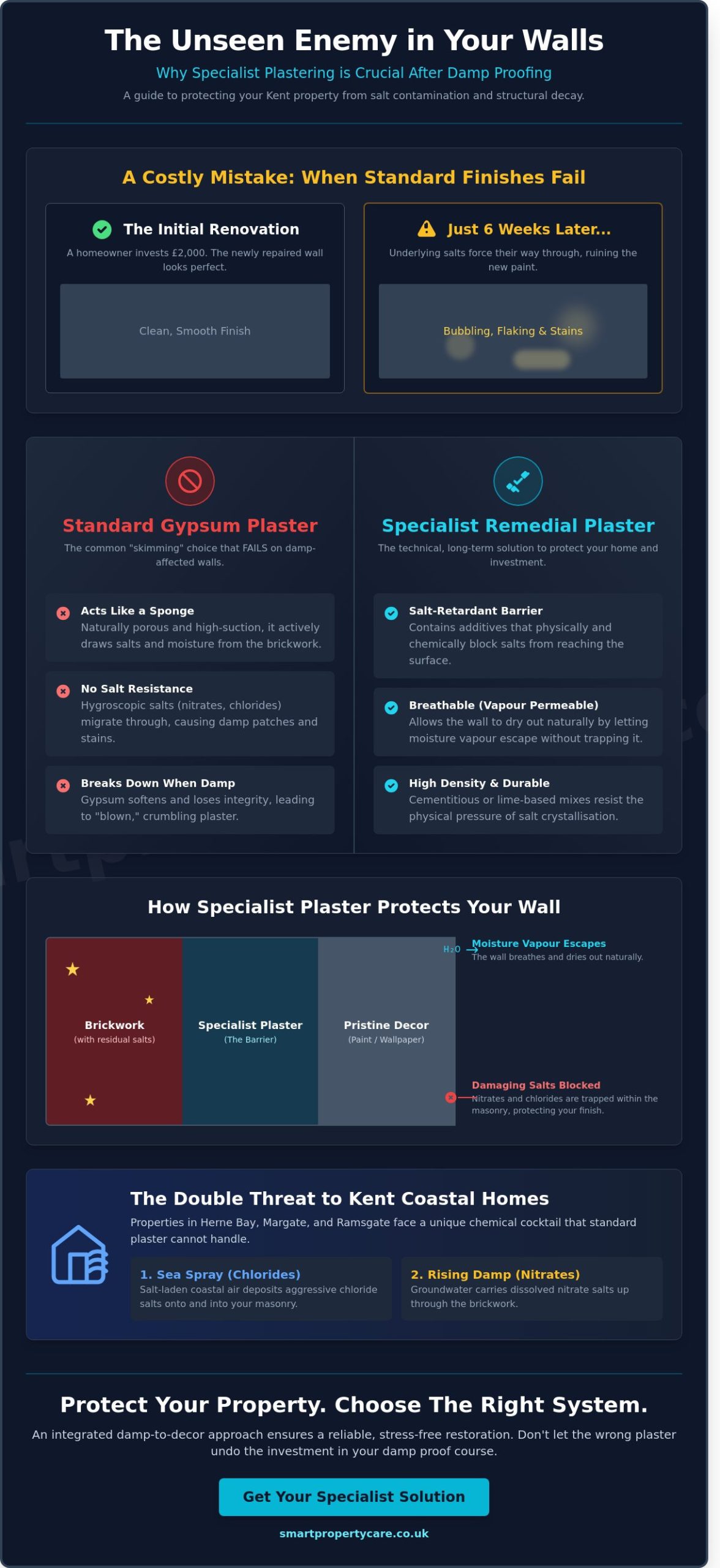
Last November, a homeowner in Kent watched in frustration as a £2,000 renovation began to bubble and flake just six weeks after completion. Despite the initial repair looking perfect, the underlying salt contamination from a previous damp issue forced its way through the fresh paint. This scenario is common across the county, where standard trade finishes fail to address the complex needs of older masonry. Investing in specialist plastering isn’t just about aesthetics; it’s a meticulous technical requirement for any property that has suffered from moisture ingress or salt damage.
You likely understand that a damp-proof course is vital, but you probably didn’t realize that the wrong plaster can undo all that hard work. At Smart Property Care Ltd, we’ll show you why specialist plastering acts as the definitive final barrier against salt contamination and structural decay in your Kent home. From preserving the breathability of 19th-century brickwork to ensuring a seamless finish that lasts decades, this guide covers the essential restoration standards for 2026.
Key Takeaways
- Understand why standard skimming fails on damp-affected walls and how remedial materials provide a permanent, protective barrier for your substrate.
- Learn how salt-retardant plasters safeguard Kent coastal properties from the destructive effects of hygroscopic salt contamination.
- Discover the meticulous science behind traditional lime plastering to preserve the breathability and structural integrity of historic timber-framed buildings.
- Identify the critical timelines for specialist plastering following a damp proof course injection to ensure a seamless, high-end finish.
- Explore the advantages of an integrated damp-to-decor approach for a more reliable, stress-free property restoration experience.
Understanding Specialist Plastering vs. Standard Skimming
Specialist plastering is a technical remedial application designed to protect your home’s interior after a damp proof course (DPC) has been installed. It’s not a cosmetic fix. While standard skimming focuses on providing a smooth surface for paint, specialist systems act as a functional barrier against residual ground salts. In many Kent properties, the brickwork remains saturated with groundwater even after the source of damp is stopped. Standard gypsum-based multi-finish is naturally porous and high-suction. It acts like a sponge, drawing out contaminants from the masonry and ruining your new decor within months. Specialist renovation plasters utilize a specific pore structure that allows the wall to breathe while blocking the movement of liquid water.
The Role of Remedial Materials
The materials used in this process contain salt-retardant additives that prevent mineral migration to the surface. While standard browning or bonding plasters are designed for dry, stable backgrounds, specialist renovation mixes manage the wall’s natural drying-out phase. This evaporation process is slow; a typical solid brick wall can take up to 12 months to dry completely. The technical difference lies in the binder and density. Unlike gypsum, which softens when damp, cementitious or lime-based specialist mixes maintain their structural integrity. These mixes are engineered to be breathable, ensuring that moisture vapour escapes without carrying damaging salts along with it.
- Salt-Retardant Additives: These chemicals create a barrier that keeps nitrates and chlorides trapped within the masonry.
- Vapour Permeability: The plaster allows the wall to “breathe,” preventing moisture from becoming trapped and causing structural decay.
- Density Control: High-density mixes provide a robust surface that resists the physical pressure of salt crystallisation.
When Standard Plaster Fails
You can often identify failed plaster by a hollow sound when tapped or visible crumbling near the skirting boards. This is known as “blown” plaster, where the bond between the material and the wall has snapped. Re-plastering with standard pink gypsum over a damp-affected area is a waste of money because it lacks the chemical resistance to withstand migrating minerals. Hygroscopic salts are minerals that pull moisture from the air. When these salts settle in standard plaster, they create damp patches that never dry, regardless of how high you turn up the heating. It is also worth noting that moisture ingress from external sources such as penetrating damp can introduce entirely different salt profiles into your masonry, compounding the problem further. Investing in specialist plastering ensures a meticulous, long-term solution that protects your refurbishment and provides genuine peace of mind.
Why Salt-Retardant Plaster is Crucial for Kent Coastal Homes
Living in Herne Bay, Margate, or Ramsgate offers stunning views, but the coastal air presents a unique challenge for your property’s structure. Salt-laden winds combined with rising damp create a chemical cocktail within your masonry. When moisture rises through brickwork, it carries dissolved nitrates and chlorides. Once the water evaporates, these salts remain. They’re hygroscopic, meaning they actively draw moisture from the atmosphere. Even after a new damp proof course is installed, these residual salts will continue to ruin your wallpaper and paint unless you invest in specialist plastering.
Managing Hygroscopic Salts in Herne Bay Properties
Coastal properties face a double threat. Sea spray increases chloride concentrations, while ground moisture introduces nitrates. These salts crystallise within the pores of the brickwork, expanding with enough force to blow the face off bricks or crumble standard gypsum plaster. Ordinary plaster acts like a sponge, pulling in moisture on humid days and leaving those familiar, unsightly brown stains. This is why professional rising damp specialists always specify a salt-neutralising treatment. It isn’t just about aesthetics; it’s about chemically isolating the contamination to protect your interior finish. Our meticulous approach ensures that these aggressive minerals are blocked before they can migrate to your new decorations.
Renovation Plaster: The Breathable Barrier
Modern specialist plastering techniques utilise renovation plasters designed specifically for older Kentish homes. Unlike traditional waterproof rendering, which can trap moisture and lead to interstitial condensation, renovation plasters are highly breathable. They create a seamless “buffer zone” that allows moisture vapour to escape while trapping liquid salts safely behind the surface. This creates a dry, healthy environment for your family.
- Vapour Permeability: Facilitates the natural drying of the masonry without trapping damp.
- Salt Inhibition: Prevents nitrates and chlorides from reaching the decorative surface.
- Condensation Control: Improves surface temperature to reduce the risk of black mould growth.
- Long-term Resilience: Maintains its integrity even during the harshest Kent winters.
During cold, humid months, this breathable barrier is vital. It ensures your walls stay dry and your indoor air quality remains high. If you’re planning a refurbishment, you can request a free, no-obligation quote to ensure your home receives the bespoke protection it deserves. We provide a clean, organised service that transforms contaminated walls into pristine, durable surfaces, giving you total peace of mind.
Traditional Methods: Lime and Lath & Plaster in Heritage Properties
Canterbury and Faversham host a high density of Grade II listed and timber-framed buildings that require a meticulous approach to renovation. Protecting these historic assets requires more than just a standard finish; it demands specialist plastering techniques that respect the original construction methods. Traditional lime plaster operates through carbonation. This is a slow, natural process where the material absorbs carbon dioxide from the air to harden over time. The result is a flexible, porous surface that allows the building to manage moisture effectively without structural stress.
Modern gypsum is often the enemy of solid-walled Victorian and Georgian homes. It functions like a non-porous skin, sealing moisture inside the masonry. When water cannot evaporate, it migrates into the timber frame or the core of the brickwork. This leads to accelerated decay and structural instability. Our expert craftsmen avoid these modern shortcuts, ensuring your heritage property remains dry, breathable, and structurally sound for decades to come.
The Importance of Breathability in East Kent
Historic structures across East Kent move naturally with seasonal temperature shifts. Lime plaster is inherently flexible, meaning it accommodates this movement without the brittle cracking seen in modern alternatives. Using rigid materials traps moisture against the cold face of the brickwork, which often triggers wet rot in floor joists or wall plates. You can identify when your property requires a traditional lime-based damp proofing solution by looking for salt efflorescence or “sweating” walls in any pre-1919 building. We provide bespoke assessments to ensure the right materials match your specific wall type.
Restoring Lath and Plaster
True restoration begins with the structural laths. We meticulously repair riven oak or softwood laths, ensuring they’re spaced with precision to allow the plaster to form a secure “key” behind the timber. To increase tensile strength, we incorporate horsehair or high-performance synthetic fibres into the scratch and float coats. This prevents the common issue of sagging ceilings or detached partitions in older properties. These traditional thick-coat systems offer superior thermal mass compared to modern plasterboard. They regulate internal humidity and provide a seamless, authentic finish that preserves the soul of a heritage home while meeting modern standards of comfort.
- Flexibility: Lime allows for structural movement without surface cracking.
- Vapour Permeability: Moisture escapes naturally, preventing timber decay.
- Durability: Correctly applied lime plaster can last for centuries.
- Aesthetics: Provides a soft, traditional finish that modern materials cannot replicate.
The Specialist Plastering Process: What Homeowners Should Expect
Achieving a bone-dry finish requires more than a standard skim. When we undertake a project in Kent, we follow a meticulous sequence to ensure the damp never returns. You can’t simply apply plaster immediately after a damp proof course injection. We typically allow a 14-day window for the initial chemical reaction to take hold before the specialist plastering begins. This patience prevents moisture from becoming trapped behind the new surface, ensuring the structural integrity of the masonry remains intact during the drying phase.
Timing is everything in remedial work. While the chemical injection creates a horizontal barrier, the wall itself may still contain litres of residual moisture. Rushing the process is the most common cause of secondary failure. We monitor the moisture levels closely, ensuring the substrate is ready to receive the heavy-duty renders required for a permanent fix. Our craftsmen prioritise long-term results over a quick, superficial finish.
Substrate Preparation and Salt Neutralisation
Our team begins by stripping away every trace of contaminated material. We remove old plaster to a minimum height of 1 metre, or at least 500mm above the highest visible damp line. This is a non-negotiable standard because hygroscopic salts often migrate further than the water itself. Once the masonry is bare, we apply high-strength salt-neutralising washes. This chemical barrier stops residual salts from leaching into your new finish and causing efflorescence. We then ensure the masonry has a sufficient mechanical key to support the weight of remedial renders, often requiring 10mm to 15mm of depth to provide adequate protection.
Application and Finishing
We utilise a robust two-coat system designed for longevity. The first layer is a dense, salt-retardant scratch coat that acts as a primary shield against moisture. We follow this with a breathable finish coat, applied with the precision required to create a seamless transition between the remedial zone and your original walls. Our experts ensure the thickness is consistent, as uneven application can lead to cold spots or salt bridging. Before any plastering work begins, it is essential to correctly diagnose whether your moisture problem stems from rising damp or penetrating damp in Kent homes, as each condition demands a different remedial specification. Specialist plaster can take up to 4 weeks to fully cure. You must wait for this period to pass before applying any decorative finishes, as premature painting will trap moisture and cause the new surface to fail.
If you’re concerned about salt damage or need a professional assessment of your walls, book your free, no-obligation quote with Smart Property Care today.
Choosing Smart Property Care for Specialist Plastering in Kent
Choosing the right partner for your property’s recovery is about more than just finding a tradesman. It’s about securing a legacy of quality. Smart Property Care Ltd brings over 20 years of dedicated experience to every project across the county. As a family-run business, we’ve built our reputation on a foundation of trust and meticulous attention to detail. We don’t settle for “good enough.” Every member of our team operates under our “Expert Craftsman” standards, which means you can expect a professional, clean, and disciplined presence in your home or commercial space from start to finish.
Integrated Damp and Plastering Solutions
Dividing a damp proofing project between two different companies is a gamble that rarely pays off. If the plaster fails, the damp proofer blames the plasterer, and the cycle continues. We remove this uncertainty by providing a seamless, end-to-end service. Our process begins with a comprehensive damp proofing Kent survey. This diagnostic phase ensures we aren’t just covering up symptoms but fixing the source of the moisture. By controlling both the damp treatment and the subsequent specialist plastering, we provide a unified guarantee on the entire repair.
We combine modern technological solutions with traditional carpentry skills to deliver results that last. Whether it’s using salt-neutralising additives or advanced breathable membranes, our methods are designed for the long term. This integrated approach gives you total peace of mind, knowing that the materials used are chemically compatible and applied by the same expert hands. We manage the timelines, the materials, and the quality control so you don’t have to coordinate multiple trades.
Local Experts Serving Herne Bay, Canterbury, and Beyond
Our deep roots in East Kent give us a unique advantage. We understand the specific environmental factors that affect properties in this region, from the salt-heavy air of coastal cottages in Herne Bay to the unique structural needs of historic city terraces in Canterbury and Sandwich. Every building style requires a different touch, and our team has seen them all. We don’t apply a one-size-fits-all solution; we tailor our specialist plastering to the specific age and construction of your building.
We serve both residential and commercial clients with the same level of rigour. Our local presence means we’re responsive, reliable, and invested in the community. We’ve spent two decades transforming damp, damaged spaces into pristine, healthy environments. Don’t leave your property’s structural integrity to chance. Contact our specialists for a no-obligation quote today and experience the difference that genuine craftsmanship makes for your Kent property.
Secure Your Kent Property for 2026 and Beyond
Investing in your home’s structural integrity requires more than a quick cosmetic fix. Whether you’re managing a salt-exposed coastal cottage or a Grade II listed heritage building, specialist plastering is the only way to ensure your walls remain dry and breathable through 2026. Standard skimming often fails when faced with Kent’s unique damp challenges. Salt-retardant mixes and traditional lime renders are essential for long-term protection against the elements.
Smart Property Care brings over 20 years of property preservation experience directly to your doorstep in East Kent. Our family-run team consists of certified local craftsmen who combine meticulous attention to detail with a fully insured service you can trust. We don’t just hide damp; we eliminate the root cause and restore your property to its original glory. It’s time to trade temporary repairs for a permanent, bespoke solution that safeguards your investment for the future.
Book Your Specialist Damp & Plastering Survey in Kent Today
Your property deserves the expert touch that only decades of local knowledge can provide.
Frequently Asked Questions
Why do I need specialist plastering after a damp proof course?
Specialist plastering is essential because it acts as a permanent barrier against hygroscopic salts left behind by rising damp. Standard gypsum plaster absorbs these salts from the masonry, which causes walls to feel damp and decorations to fail even after a new damp proof course is active. Our specialist application ensures a salt-retardant finish that protects your internal walls and provides long term peace of mind.
How long does specialist plaster take to dry before I can paint?
You should typically wait 4 to 6 weeks for specialist plaster to dry completely before applying permanent decorations. Painting too early traps residual moisture and risks blistering the new finish. For the best results, you can apply a breathable mist coat or water based emulsion once the surface is dry to the touch, which usually occurs within the first 7 to 10 days of application.
Is specialist plastering much more expensive than regular plastering?
Specialist plastering generally costs 20% to 30% more than standard skimming because it requires advanced salt-inhibiting materials and a meticulous multi-stage application process. While the initial investment is higher, it prevents the recurring expense of repairing salt-damaged walls. Investing in the correct specification now saves you from the £1,500 average cost of stripping and re-doing a failed standard plastering job later.
Can I just use a damp-proof paint instead of re-plastering?
No, damp-proof paint is a temporary topical solution that fails to address the underlying salt contamination within your masonry. These paints often trap moisture behind the film, which leads to blown plaster or masonry decay within 12 to 18 months. Specialist plastering remains the only reliable way to isolate hygroscopic salts and ensure a bone-dry internal surface that lasts for decades.
Does specialist plastering stop salt stains from coming back?
Yes, specialist plastering is specifically engineered with salt-inhibiting additives to block nitrates and chlorides from reaching the decorative surface. Standard plaster acts like a sponge for these minerals, leading to unsightly white crystalline deposits. By using a dense, cementitious mix or a bespoke renovating plaster, we create a physical barrier that keeps your walls pristine for 20 years or more.
What is the difference between lime plaster and modern gypsum?
Lime plaster is a breathable, flexible material used in 90% of pre-1919 UK properties to allow moisture to evaporate naturally through the walls. Modern gypsum plaster sets hard and fast but lacks this breathability, often trapping moisture in older solid-walled buildings. Choosing the right material depends on your property’s age and construction method to prevent structural damp issues and maintain timber health.
Do you provide specialist plastering in Dover and Ramsgate?
We provide full specialist plastering services across Dover, Ramsgate, and the wider East Kent area. Our expert team manages damp remediation projects throughout the CT11 and CT17 postcodes, delivering meticulous results for coastal properties. Whether you own a Victorian terrace in Ramsgate or a commercial unit in Dover, we offer local, certified expertise and a professional, seamless service every time.
Can specialist plastering be used on timber-framed buildings in Canterbury?
Yes, we use specific breathable lime-based renders for timber-framed properties in Canterbury to ensure the structural frame doesn’t rot. Traditional timber structures require a flexible finish that moves naturally with the building. Our craftsmen apply bespoke solutions that protect the 15th-century heritage of Canterbury homes while providing modern moisture protection and the high-end finish your property deserves.