
Most homeowners in Sandwich believe a damp smell is just a quirk of coastal living, but ignoring that cotton-wool growth could lead to a structural repair bill exceeding £9,130. It’s a stressful realization when you spot the tell-tale orange dust or cracking timber that signals a serious fungal attack. You need a specialist for dry rot repair sandwich properties who understands the unique moisture challenges of our local architecture. It’s natural to worry about the escalating costs of remediation or to feel confused about whether you’re dealing with aggressive dry rot or less serious wet rot.
We’re here to provide the clarity and peace of mind you deserve. This guide explains how to identify, treat, and permanently resolve timber decay with expert local guidance. You’ll discover the average costs of professional surveys, which typically range from £150 to £500, and learn how we adhere to BS 6576 standards to ensure your home remains dry and structurally sound. We’ll also preview the repair timeline and the long-term guarantees that protect your investment, turning a property crisis into a meticulously managed solution.
Key Takeaways
- Learn why Sandwich’s unique coastal humidity and historic brickwork make local properties particularly vulnerable to Serpula lacrymans, the most aggressive form of fungal decay.
- Discover why a specialist damp survey is essential for mapping hidden mycelium growth that standard homebuyer surveys frequently overlook.
- Understand the meticulous “strip-back” and masonry sterilisation phases required for effective dry rot repair sandwich homeowners can rely on for permanent results.
- Gain insights into the role of specialist plastering in preventing residual moisture and salts from compromising your property’s structural integrity after treatment.
- Find out how partnering with an expert craftsman provides the long-term guarantees and peace of mind necessary to protect your home’s value.
Understanding Dry Rot in Sandwich: Why Local Properties are Vulnerable
Sandwich is a town defined by its architectural heritage, from medieval timber frames to Georgian brickwork. While these structures are beautiful, they face a specific biological threat that thrives in the unique conditions of East Kent. Dry rot, scientifically known as Serpula lacrymans, is the most aggressive form of timber decay. It’s a silent destroyer that can compromise the structural integrity of a building before it’s even visible on the surface. When homeowners seek dry rot repair sandwich solutions, they aren’t just looking for a tradesman; they’re looking for an expert craftsman who understands how moisture behaves in historic buildings. Generic, low-quality fixes often fail because they ignore the complex biology of the fungus and focus only on the visible symptoms.
The Sandwich Environment: Coastal Mist and Period Properties
The proximity to the River Stour and the English Channel creates a high-humidity environment that period properties aren’t always equipped to handle. Many historic Sandwich cottages were built without modern sub-floor ventilation, which traps moisture beneath floorboards and creates a perfect incubator for fungal growth. In the town centre, the density of timber-framed buildings means an outbreak in one area can quickly threaten the safety of the entire property. Our porous local brickwork often acts as a bridge; it absorbs coastal mist and sea spray, feeding the rot hidden deep within the walls and allowing it to bypass traditional barriers.
Dry Rot vs. Wet Rot: Identifying the Enemy
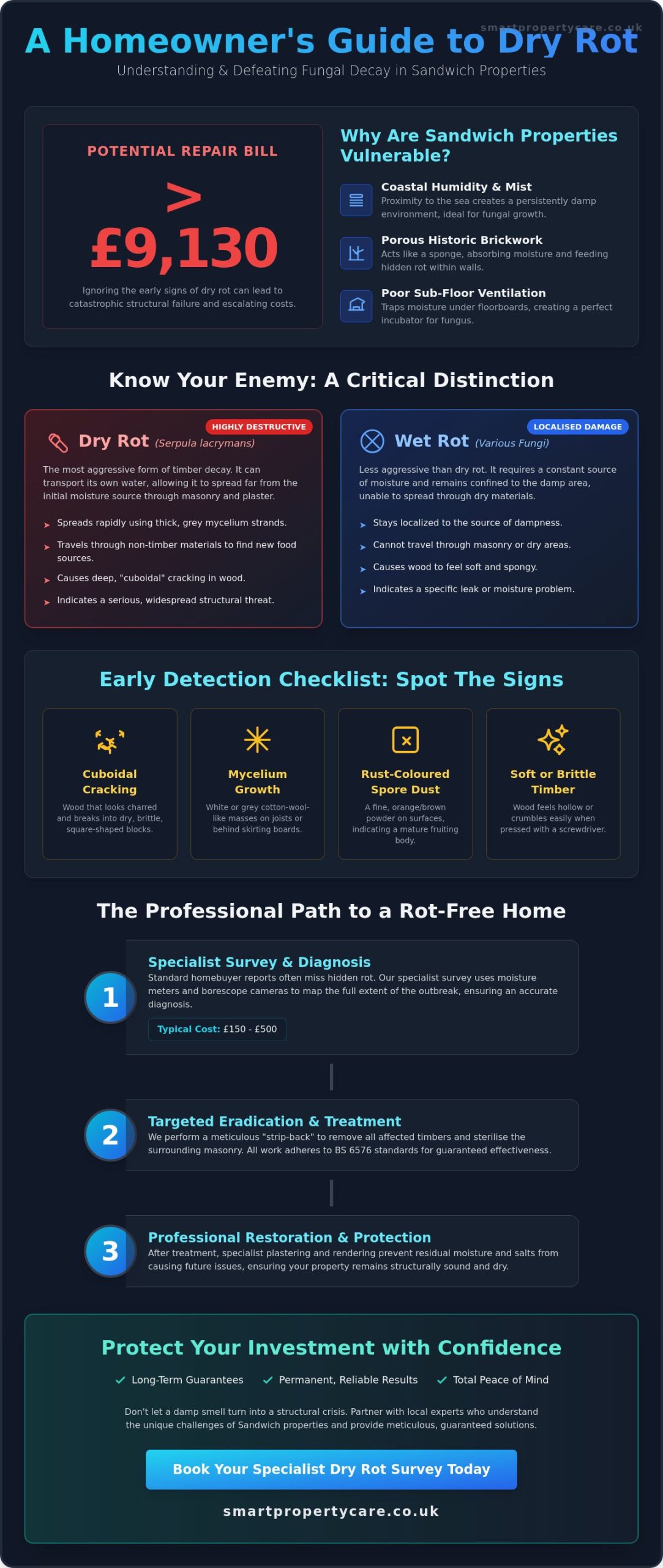
Distinguishing between different types of decay is the first step toward a successful treatment plan. What is dry rot? Essentially, it’s a fungus that can transport its own water through specialized strands. This makes it far more dangerous than wet rot. While wet rot remains localized to the immediate source of moisture, dry rot uses thick, grey strands called mycelium to travel through masonry, mortar, and even behind plaster. It’s searching for new, healthy timber to consume. You can spot the early signs by looking for “cuboidal” cracking, where the wood breaks into dry, brittle blocks. A heavy, earthy smell, similar to mushrooms, is often the first warning sign homeowners notice. Use this checklist to catch it early:
- Cuboidal Cracking: Wood that looks charred and breaks into deep, square-shaped cracks.
- Mycelium Growth: White or grey cotton-wool-like masses appearing on joists or behind skirting boards.
- Spore Dust: A fine, rust-colored powder settling on surfaces, which indicates a mature fruiting body is nearby.
- Soft Timber: Wood that feels hollow or gives way easily when pressed with a screwdriver.
Early detection is the only way to prevent total structural failure. We focus on a meticulous “strip-back” process to ensure every trace of the fungus is eradicated before restoration begins. This disciplined approach is the hallmark of professional dry rot repair sandwich services, ensuring your home remains a safe, dry environment for years to come.
The Importance of a Specialist Dry Rot Survey in Sandwich
Many homeowners in Sandwich rely on a standard homebuyer’s report when purchasing a property. While these are useful for general valuations, they often lack the depth required to uncover hidden fungal outbreaks lurking behind historic timber panelling or beneath floorboards. A specialist damp survey is a critical first step for any period home. It allows us to map the full extent of the mycelium, which often extends far beyond the visible damage. Effective dry rot repair sandwich homeowners can trust depends entirely on the accuracy of this initial diagnosis. We use precision moisture meters and borescope cameras to inspect wall cavities and sub-floor voids non-invasively. This technical approach provides you with a costed specification, ensuring you have total transparency before any work begins.
Professional surveys in the UK typically cost between £150 and £500, depending on the property’s size. This investment is small compared to the risk of an undiagnosed outbreak. Understanding the biological methods of prevention and control is essential for any long-term solution. Our reports don’t just identify the rot; they provide a clear, actionable blueprint for permanent preservation. If you’ve noticed suspicious growth, you can book a specialist timber inspection to secure your home’s future.
What to Expect During Your Timber Inspection
Our inspection process is thorough and disciplined. We start by lifting specific floorboards to examine joist ends, as these are the most common points of failure where timber meets damp masonry. We aren’t just looking for the fungus; we’re hunting for the “source” of moisture. Whether it’s a hidden pipe leak, rising damp, or poor sub-floor ventilation, the moisture must be stopped to prevent the rot from returning. The resulting report serves as a technical manual for the repair phase, detailing exactly which timbers need replacement and which masonry sections require sterilisation.
The Risks of DIY Identification
Misidentifying timber decay is a common and costly mistake. Homeowners often confuse the exit holes of a beetle infestation with the structural cracking caused by fungi. You might find it helpful to read our guide on woodworm treatment to understand the differences in appearance and treatment. Applying the wrong chemicals or failing to remove enough infected material can lead to rapid re-infestation. Dry rot is incredibly resilient; if even a small fragment of the mycelium remains active within the brickwork, the decay will simply restart once the area is covered back up. Professional intervention ensures the treatment is meticulous and final.
The Professional Dry Rot Repair Process: A Step-by-Step Guide
Once the specialist survey has mapped the extent of the outbreak, the physical work begins with a disciplined, multi-stage approach. Effective dry rot repair sandwich properties require more than just a surface fix; they demand the complete eradication of the biological threat followed by meticulous structural restoration. Understanding wood decay is essential at this stage. It’s not enough to simply replace a rotten board if the underlying moisture and fungal strands remain active within the building’s fabric. We focus on a solution that addresses both the symptoms and the root cause.
Eradication: Removing the Infection Source
The first phase is the “strip-back,” where we follow a strict 1-metre rule. This involves removing all infected timber at least 1 metre beyond the last visible sign of decay to ensure no microscopic mycelium strands are left behind. We also strip away any plaster that has been contaminated by hygroscopic salts. These salts are a byproduct of the rot and act like a sponge, pulling moisture from the atmosphere and keeping the masonry damp. Our team then performs a meticulous cleaning of all surfaces to remove fungal spores, ensuring a sterile environment before any new materials are introduced. We then apply a high-performance fungicidal masonry biocide to the brickwork, creating a chemical barrier that prevents the fungus from traveling through the walls.
Reconstruction: Restoring Structural Integrity
Restoring your home’s strength requires a blend of traditional carpentry and modern preservation techniques. We replace all structural timbers with high-grade, pre-treated alternatives that are resistant to future fungal attacks. This phase often involves the installation of new joist hangers and wall plates to ensure the floor system is robust and perfectly level. Our goal is a seamless repair that integrates perfectly with the existing structure. To prevent any recurrence, we prioritise re-establishing sub-floor ventilation. This might involve clearing blocked air bricks or installing new ones to ensure a constant flow of dry air. This comprehensive approach transforms a compromised space back into a dry, structurally sound environment, backed by the peace of mind that only an expert craftsman can provide.
Specialist Plastering and Rendering After Dry Rot Treatment
The structural phase of dry rot repair sandwich properties is only half the battle. Once we replace the infected timbers and sterilise the masonry, the focus shifts to the wall surfaces. Standard gypsum plaster is unsuitable for these environments. It is highly hygroscopic, meaning it acts like a sponge for residual moisture and the destructive salts left behind by the fungal outbreak. If you use a generic plastering product, you’ll likely see damp patches and peeling paint return within months, even if the fungus is dead. We employ a high-end, specialist plastering system designed to block salt migration while allowing the masonry to dry safely.
Our process involves using salt-retardant additives and bespoke rendering mixes that provide a durable, high-quality finish. This isn’t just about utility; it’s about restoring the aesthetic value of your home with the precision of an Expert Craftsman. We ensure that the final surface is seamless and ready for decoration, providing an immediate sense of relief and progress for the homeowner. A professional finish is essential for maintaining the property’s market value and ensuring the repair is invisible to the naked eye.
Why Breathability Matters in Sandwich Homes
Sandwich’s historic cottages and coastal terrace houses require a specific approach to moisture management. Modern, non-breathable materials often trap dampness within the walls, leading to long-term structural decay and cold spots. We use breathable renders that allow the building to “breathe,” ensuring that any ambient moisture from the coastal environment doesn’t become trapped behind the plaster. This meticulous approach to internal rendering is far superior to a quick-fix skim. It guarantees the longevity of the repair and protects the newly installed timbers from secondary damp issues that can arise in older Sandwich properties.
Preventing Future Mould and Damp
A comprehensive restoration plan must address the entire property environment. Effective dry rot treatment is often the starting point for broader mould remediation and damp proofing. By applying professional rendering to external walls, we create a robust barrier against penetrating damp, which is a common trigger for fungal growth in East Kent. This holistic preservation strategy ensures your home remains healthy, warm, and structurally sound for decades. If you want to ensure your restoration is handled with meticulous attention to detail, request a specialist plastering consultation today to protect your property’s value.
Choosing Smart Property Care for Your Sandwich Property
Choosing Smart Property Care means partnering with a team that views property preservation as a specialized craft rather than just another trade. With over 20 years of experience across Kent, we’ve developed a deep understanding of the unique structural challenges faced by coastal towns. Our family-run business is built on a foundation of trust and accountability, ensuring that every homeowner receives a personal, dedicated service. We operate as a comprehensive one-stop shop, managing the entire lifecycle of your dry rot repair sandwich project. From the initial specialist survey to structural carpentry and the final specialist plastering, our team handles every detail in-house. This seamless approach eliminates the stress of coordinating multiple contractors and ensures a consistent, high standard of execution throughout the process.
We understand that property repairs are a significant investment. That’s why we lead with transparent pricing and provide fully insured services backed by long-term guarantees. Our goal isn’t just to fix a problem temporarily; it’s to provide the permanent peace of mind that comes from knowing your home is structurally sound and protected against future decay. We take immense pride in our disciplined, punctual approach, ensuring that every project is completed to a meticulous standard without unnecessary delays.
Bespoke Solutions for Sandwich Homeowners
Our team is intimately familiar with the specific streetscapes and building styles of Sandwich. Whether you own a medieval timber-framed property on Strand Street or a Georgian townhouse near the High Street, we understand the nuances of local masonry and timber construction. This local expertise allows us to provide bespoke solutions tailored to your property’s specific needs. We combine traditional craftsmanship with modern preservation technology to deliver results that are both effective and sympathetic to the building’s history. We invite you to book a free, no-obligation quote, where we provide a meticulous breakdown of the required works with no hidden costs.
Ready to Protect Your Home?
Dry rot is a progressive issue that only becomes more expensive and dangerous the longer it’s left untreated. Protecting your home requires swift, professional intervention from a partner you can trust. Don’t let a small outbreak turn into a major structural failure that could cost upwards of £20,000 in the most severe cases. Our expert craftsmen are ready to restore your property to its full potential, ensuring it remains a dry and safe environment for years to come. Book Your Specialist Dry Rot Survey in Sandwich Today and take the first step toward permanent timber preservation.
Securing Your Property’s Structural Integrity
Protecting a period home in Sandwich from the aggressive spread of Serpula lacrymans requires more than just a quick fix. It demands a meticulous, multi-stage process that addresses the unique coastal humidity and historic masonry of East Kent. By prioritising a specialist timber survey and following a disciplined “strip-back” methodology, you ensure that every trace of the infection is eradicated. This authoritative approach, combined with specialist rendering, transforms a vulnerable space into a dry, structurally sound home.
At Smart Property Care, we bring over 20 years of local Kent experience to every project. As a family-run business, we pride ourselves on transparent pricing and high-end craftsmanship that provides immediate peace of mind. All our remedial timber works come with comprehensive guarantees, ensuring your investment is protected for the long term. Don’t wait for the damage to escalate. Contact Smart Property Care for a meticulous Dry Rot Survey in Sandwich and let an expert craftsman restore your home’s safety. Your property is your most valuable asset; we’re here to help you preserve it with confidence.
Frequently Asked Questions
Is dry rot repair covered by standard home insurance in the UK?
Most standard home insurance policies in the UK do not cover the cost of repairing damage caused by dry rot. Insurance providers typically categorize fungal decay as a maintenance issue resulting from gradual wear and tear rather than a sudden, accidental event. While some specialist policies are available, they are not standard. You should check your specific policy wording, but generally, homeowners must fund the remediation and structural repairs themselves.
How much does it typically cost to fix a dry rot outbreak in Sandwich?
The average cost for a professional dry rot repair sandwich project is approximately £4,603, with minor localized treatments starting between £500 and £1,500. For more extensive structural wood rot repair, costs typically average £8,000 but can exceed £20,000 in the most severe cases affecting multiple floors. A specialist survey, which usually costs between £150 and £500, is necessary to provide an accurate, transparent quote based on the specific extent of the mycelium spread.
Can I stay in my house while dry rot treatment is being carried out?
You can usually remain in your property during the treatment, although access to specific rooms will be restricted for safety and efficiency. The “strip-back” phase is a disciplined process that involves removing floorboards and plaster, which naturally creates noise and dust. Furthermore, treated areas must be vacated during the application of fungicidal biocides to allow for proper drying. Our team works in an organized manner to ensure the rest of your home remains a comfortable environment.
How long does the professional dry rot repair process take?
A professional remediation project typically takes between one and two weeks from the initial preparation to the final reconstruction. This timeline depends on the scale of the infection and the amount of structural timber that requires replacement. If your project includes specialist plastering, you’ll need to allow additional time for the materials to cure before final decoration. We provide a clear, logical schedule at the start of every project to ensure you understand the repair timeline.
Will dry rot come back after a professional treatment?
Dry rot will not return if the underlying moisture source is eliminated and the treatment follows BS 6576 standards. Our expert craftsmen focus on the root cause, such as leaking pipes or poor sub-floor ventilation, to ensure the environment is no longer hospitable to fungal growth. We provide comprehensive, long-term guarantees on all remedial timber works, giving you the reassurance that your home’s structural integrity is permanently protected against future outbreaks.
What is the main difference between dry rot and wet rot?
The primary difference is that dry rot can transport moisture and travel through masonry, whereas wet rot is confined to the immediate damp area. Dry rot is far more aggressive because its mycelium strands can penetrate brickwork to find new timber sources. While wet rot requires a higher moisture content to survive, dry rot is more resilient and can cause widespread structural failure if it isn’t identified and treated by a specialist with meticulous attention to detail.
Can dry rot spread through brickwork and masonry?
Dry rot is uniquely capable of spreading through brickwork and mortar to reach healthy timber in other parts of a building. It uses specialized grey strands to extract nutrients and moisture, allowing it to bypass traditional barriers that would stop wet rot. This is why our professional dry rot repair sandwich service includes the sterilization of masonry using high-performance biocides. We create a chemical barrier within the walls to ensure the fungus cannot migrate back into newly installed timbers.
How do I know if the smell in my cellar is dry rot?
A heavy, mushroom-like or earthy scent is a signature indicator of an active dry rot outbreak, especially in poorly ventilated cellars. This smell is often accompanied by the appearance of rust-colored spore dust or white, cotton-wool-like growth on joists. If you notice these signs alongside “cuboidal” cracking in your timber, the rot is likely advanced. We recommend an immediate specialist inspection to confirm the diagnosis and prevent the decay from spreading into the ground-floor structures.