
Why does that unsightly yellowish stain on your chimney breast keep returning, even after you’ve paid a roofer to fix the lead flashing? It’s a common frustration for owners of period properties across Kent who find themselves caught between conflicting advice from general builders and roofing contractors. You’ve likely watched expensive wallpaper peel and plaster bubble, feeling like you’re fighting a losing battle against the elements. Fixing damp in chimney breast Faversham homes is rarely as simple as stopping a leak; it’s often a complex chemical issue hidden deep within the masonry.
We understand how disheartening it is to see your home’s character marred by persistent dampness. This guide promises to reveal why traditional repairs often fail and how professional remediation can eliminate these stains for good. We’ll explore the critical difference between penetrating moisture and hygroscopic salts deposited by decades of fossil fuel use. By the end of this article, you’ll have a clear roadmap to a dry, stain-free chimney and the confidence to choose a local expert who treats the root cause rather than just the symptoms.
Key Takeaways
- Identify the specific visual cues of chimney damp, such as “tea-stain” marks and white efflorescence, which often persist even during dry weather.
- Understand the science of hygroscopic salts and how these historic deposits from fuel combustion pull moisture directly from the air into your masonry.
- Learn why a comprehensive approach is vital for fixing damp in chimney breast Faversham properties, addressing both external structural defects and internal chemical contamination.
- Discover how advanced diagnostic tools, including thermal imaging and moisture mapping, pinpoint the exact source of moisture for a targeted and effective repair.
- Explore the professional remediation techniques that provide a permanent, dry finish, ensuring your expensive decor is never ruined by recurring damp again.
Identifying the Signs of Damp on a Chimney Breast in Faversham Homes
Residents in historic Faversham often face a recurring nightmare: a damp patch on the chimney breast that refuses to disappear. You might have already called a roofer to inspect the tiles, yet the staining persists. Identifying the correct symptoms is the first step toward fixing damp in chimney breast Faversham properties for good. These marks differ significantly from standard leaks, often appearing as stubborn, localized discolouration that defies traditional repairs.
Watch for these primary indicators in your home:
- Yellowish-Brown Staining: Often described as “tea-stains,” these unsightly marks are caused by tar and hygroscopic salts leaching through the masonry from years of soot accumulation.
- Efflorescence: This appears as white, fluffy crystals or a salty crust pushing through your paintwork, indicating that minerals are migrating to the surface.
- Hollow-Sounding Plaster: When you tap the affected area, a dull, hollow sound suggests the plaster has “blown” or detached from the brickwork due to moisture damage.
- Persistent Odours: A damp, soot-heavy smell that often intensifies during humid Kent summers or when your central heating is first turned on in the autumn.
Why Faversham’s Period Properties are High Risk
Faversham is renowned for its stunning Victorian and Georgian terraces, but these architectural gems present unique challenges for moisture control. Many of these properties feature shared chimney stacks. If a neighbour has an uncapped pot or failing flaunching, moisture can migrate across the shared masonry into your living room. Centuries of coal fires in these homes have also left deep chemical residues within the porous brickwork. Understanding Structural Damp reveals that these historic residues act like a sponge, ensuring the masonry never truly dries out without specialist intervention.
The “Ghost Patch” Phenomenon
Homeowners often report that their damp patches appear to grow and shrink almost overnight. This “ghost patch” is a classic sign of salt contamination rather than an active roof leak. Because the salts are hygroscopic, they literally pull moisture out of the air. In East Kent, atmospheric humidity can be high; when the moisture levels in the room rise, the salts absorb that water and the stain darkens. Simply painting over these marks is a costly mistake. The salts will eventually push through even the most expensive “stain-blocking” paints. Truly fixing damp in chimney breast Faversham homes requires a professional approach that neutralises these contaminants at the source.
The Science of Hygroscopic Salts: Why Your Chimney Stays Wet
Many Faversham homeowners are baffled when a chimney remains saturated months after a successful roof repair. The culprit is rarely a missed leak. Instead, it’s the invisible presence of hygroscopic salts, specifically nitrates and chlorides, embedded deep within the masonry. These chemicals are the byproduct of decades of fossil fuel combustion. They don’t just sit on the surface; they become a permanent part of the brick’s chemical makeup.
During the 19th century, Faversham’s Victorian and Georgian houses were heated by constant coal fires. This long history of heating produced a significant chemical legacy. As smoke rose, it deposited these salts into the porous bricks. Today, these salts act as permanent magnets for atmospheric moisture. Even if your roof is perfectly sealed and bone dry, these salts will continue to draw moisture from the humidity inside your room. This chemical change in the brickwork is permanent. It explains why fixing damp in chimney breast Faversham properties is such a specialized task that goes beyond simple building maintenance.
Soot, Tar, and Chemical Contamination
Soot is more than just harmless dust. It contains oily tars that are incredibly mobile when they come into contact with moisture. These tars leach through standard gypsum plaster, creating those stubborn, brownish stains that ruin expensive wallpaper and paintwork. Because these substances are acidic and oily, they resist standard decorative finishes. A specialist barrier is the only way to prevent these chemicals from migrating back to the surface. If you are concerned about persistent staining, arranging a professional damp survey can help identify the specific contaminants at play.
The Failure of DIY Damp-Proof Paints
It’s tempting to grab a tin of damp-proof paint from a local hardware store to mask the problem. However, these products usually create a non-porous film that traps moisture behind the wall. This leads to spalling, where the brick face actually crumbles under the pressure of trapped water and salt expansion. Salt-neutralising treatments are essential before any re-plastering occurs. Without this vital step, any new plaster will simply absorb the remaining salts and fail within months. Professional remediation focuses on creating a breathable yet salt-resistant environment that protects your interior decor for the long term.
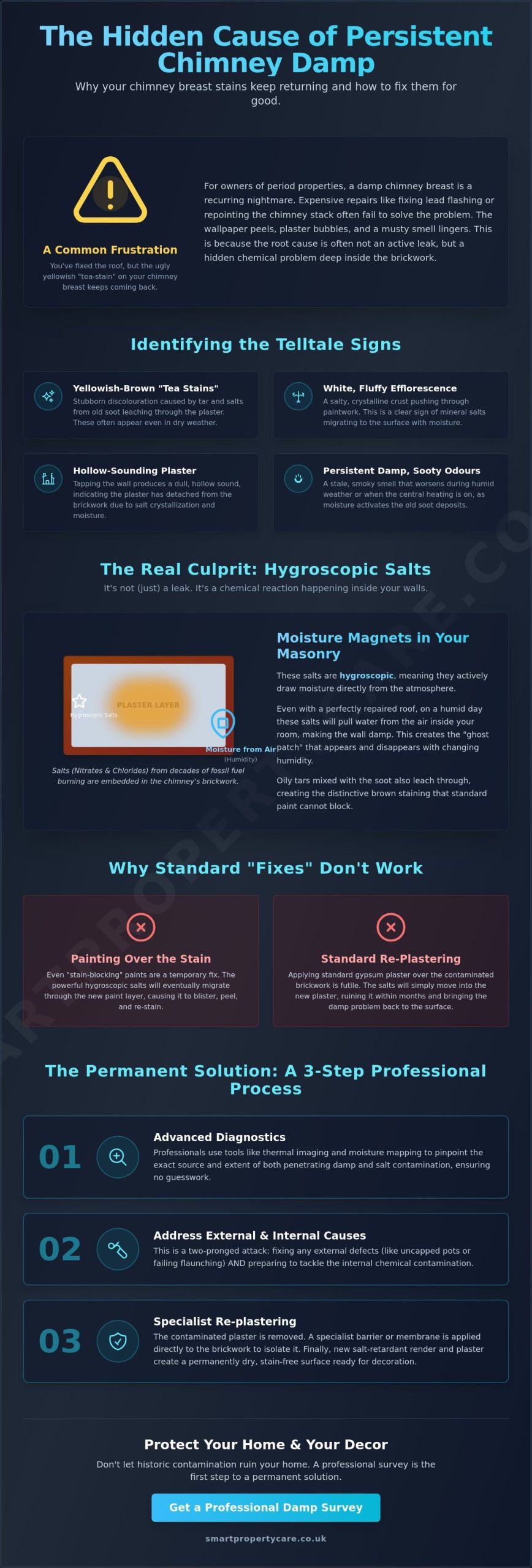
External Defects vs. Internal Contamination: A Comparison
Achieving a permanent result when fixing damp in chimney breast Faversham projects requires a dual perspective. You must distinguish between penetrating damp, which is moisture entering from the outside, and the internal chemical contamination discussed previously. Many homeowners make the mistake of only addressing the visible roof issues. While fixing a leak is essential, it’s only half the battle. A truly professional remediation strategy treats the chimney as a single system where external protection and internal barriers work in unison.
The external components of your chimney stack, including the pots, cowls, and the cement “flaunching” that holds them in place, are your first line of defence. If these are cracked or weathered, rainwater will saturate the masonry. However, if you stop the water but leave the salt-contaminated plaster inside, the wall will stay damp. This is why a combined approach is the only way to achieve a 20-year fix that provides genuine peace of mind. Our surveyors evaluate the condition of Faversham brickwork and mortar joints to ensure every potential entry point is sealed.
Common External Culprits on Kent Chimneys
Faversham’s proximity to the coast means its period properties face accelerated masonry erosion. Salty coastal air and high winds take a toll on traditional lime mortar and leadwork. Cracked lead flashing remains the most frequent cause of chimney leaks in East Kent. When flashing fails, water bypasses the roofline and tracks directly down the chimney breast. Perished mortar joints also allow driving rain to soak into the brickwork. Additionally, many local chimneys have been capped to prevent heat loss; however, doing so without a ventilated cowl traps moisture inside the flue, leading to rapid internal dampness.
The Internal Remedy: Specialist Plastering
Once external defects are rectified, the internal masonry requires a specialist barrier. Standard gypsum plaster is highly porous and acts like a sponge for hygroscopic salts. If you apply normal plaster over salt-contaminated bricks, the moisture will return within months. We use salt-retardant additives in our remedial mortar mixes to create an impermeable shield. This process of specialist plastering is a critical component of the restoration. It ensures that any remaining deep-seated moisture or chemicals are blocked from reaching your decorative surfaces, keeping your home dry and your wallpaper pristine.
The Professional Process for Fixing Chimney Damp for Good
Fixing damp in chimney breast Faversham homes requires a methodical, disciplined approach. We don’t guess; we diagnose. Our multi-stage process ensures that every contributing factor is addressed, from the highest pot on the stack to the plaster in your living room. This systematic restoration is designed to provide a permanent solution rather than a temporary cover-up, giving you total peace of mind regarding your home’s structural integrity. At Smart Property Care Ltd, we treat the property as a whole system to ensure moisture is managed effectively.
Our Expert Craftsmen follow a rigorous five-step protocol to ensure a dry result:
- Step 1: Comprehensive Survey. We employ thermal imaging and moisture mapping to visualize moisture patterns invisible to the naked eye.
- Step 2: External Audit. A thorough inspection of the chimney stack, flashing, and pots identifies every potential external entry point for water.
- Step 3: Plaster Removal. We strip away all salt-contaminated plaster back to the original masonry to remove the chemical reservoir.
- Step 4: Barrier Application. We apply advanced salt-neutralising agents to the brickwork or install high-grade waterproof membranes.
- Step 5: Specialist Finishing. Our team applies specialist remedial plastering followed by a high-breathability finish to protect your decor.
What Happens During a Smart Property Care Ltd Survey?
Our experts check for rising damp and timber health simultaneously to ensure no secondary issues are overlooked. We use calibrated moisture meters to distinguish between simple condensation and deep-seated salt damp. This precision allows Smart Property Care Ltd to provide a costed specification tailored to Faversham’s unique building regulations and architectural heritage. If you want a definitive diagnosis of your property’s issues, you can book a specialist damp survey today to get started.
Membrane Systems vs. Chemical Barriers
Choosing the right technology is crucial for long-term success. Slimline damp-proof membranes are an excellent choice when you need immediate re-decoration, as they provide a physical gap between the contaminated brick and your new plaster. Alternatively, breathable rendering systems allow older chimney breasts to manage moisture naturally without trapping it. Our goal is to ensure the chimney can still breathe; this is vital for preventing future rot in adjacent floor timbers and maintaining the health of your period property’s masonry.
Why Faversham Homeowners Trust Smart Property Care Ltd
Homeowners in Faversham require more than just a general builder when it comes to fixing damp in chimney breast Faversham homes. They need a partner who understands the local geology, the specific brick types used in East Kent, and the historical heating methods that created today’s chemical challenges. Smart Property Care Ltd brings over 20 years of dedicated experience in property preservation across Kent. As a family-run business, we take immense pride in our reputation for high-end craftsmanship and approachable, local reliability. We don’t just fix walls; we restore the comfort and value of your most significant investment.
We provide a comprehensive, end-to-end service that removes the stress of managing multiple contractors. Instead of juggling roofers and plasterers who might offer conflicting advice, our clients benefit from a single, authoritative point of contact. Smart Property Care Ltd handles everything from the initial diagnostic survey using thermal imaging to the final application of specialist plastering. This holistic approach ensures that no detail is missed and that the remediation is executed to the highest professional standards. Our work provides the long-term peace of mind that comes with robust guarantees on all remedial works, ensuring your home remains a dry, healthy environment for years to come.
Expertise in Period Property Restoration
Faversham’s heritage properties, from the Victorian terraces near the station to the Georgian houses in the town centre, have specific conservation needs. We balance traditional building skills with modern damp-proofing technology to ensure your home’s character is preserved while its structural health is restored. Our versatile team at Smart Property Care Ltd handles a broad range of preservation tasks, including woodworm treatment and structural repairs. This breadth of expertise allows us to spot and rectify secondary issues like timber decay or beetle infestation that often accompany persistent chimney damp.
Start Your Property Recovery Today
A damp chimney breast is more than an aesthetic nuisance; it can devalue your property and impact the air quality within your home. Ignoring the problem only leads to more extensive and expensive repairs in the future. By choosing a specialist who understands the nuances of fixing damp in chimney breast Faversham properties, you are investing in the longevity of your home. Don’t let recurring stains ruin your decor or your peace of mind. Take the first step toward a dry, healthy living environment by booking a definitive assessment. Contact Smart Property Care Ltd for a professional damp survey in Faversham and let our expert craftsmen provide the permanent solution your property deserves.
Restore the Integrity of Your Period Home
Resolving persistent chimney damp is a complex challenge that requires more than a standard repair. We have explored how the interplay between external defects and the invisible chemical legacy of coal-burning creates stubborn moisture issues that defy traditional building methods. Only by integrating precise diagnostic surveys with advanced salt-neutralising treatments can you achieve a lasting result. Fixing damp in chimney breast Faversham properties is a specialized undertaking that Smart Property Care Ltd executes with the discipline and pride of a true craftsman.
Our family-run business offers local Kent specialists with over 20 years of experience, providing the comprehensive technical reports and high-end craftsmanship necessary for a dry, healthy home. You don’t have to tolerate the frustration of recurring stains or the worry of structural decay. Take the definitive step toward property recovery and long-term peace of mind. Book Your Specialist Damp Survey in Faversham Today with Smart Property Care Ltd and restore the comfort your home deserves.
Frequently Asked Questions
Why does my chimney breast get damp when it isn’t raining?
Your chimney breast remains damp during dry spells because of hygroscopic salts embedded in the masonry. These chemical deposits, left behind by years of coal fires, attract moisture directly from the internal atmosphere. When the humidity in your room rises, the salts absorb water. This causes characteristic dark patches to appear even in the height of summer when there is no active rainfall or roof leak.
Can I just use damp-proof paint on a chimney breast?
Using damp-proof paint is a temporary measure that often leads to more significant damage. These coatings trap moisture behind a non-porous film, which can lead to “spalling” where the brick face crumbles. For permanent results when fixing damp in chimney breast Faversham properties, you must remove the contaminated plaster and apply a specialist salt-neutralising barrier before re-plastering with salt-retardant materials.
How much does it cost to fix a damp chimney breast in Faversham?
The cost depends entirely on the root cause and the complexity of the remediation required. A comprehensive survey is necessary to determine if you need external masonry repairs, internal salt treatment, or a combination of both. While general building work varies in price across Kent, specialist remediation is an investment that prevents the repeated cost of ruined decor and failed DIY attempts.
Will removing the chimney stack solve my damp problem?
Removing the external stack might stop new rainwater from entering, but it won’t remove the salts already present in the internal chimney breast. If the internal masonry is contaminated, it will continue to pull moisture from the air. Additionally, removing a stack in a Faversham period home requires structural support and often building regulations approval, making it a complex and often unnecessary solution.
What are hygroscopic salts and how do they get into my walls?
Hygroscopic salts are chemical compounds, such as nitrates and chlorides, produced during the combustion of fossil fuels like coal and wood. Over decades of use, these salts migrate from the soot in the flue deep into the porous brickwork. They are “hygroscopic” because they possess a natural affinity for water, meaning they actively draw moisture into the wall from the surrounding air.
Do I need a damp specialist or a roofer for a chimney leak?
A roofer is essential for fixing external defects like failed flashing, while a damp specialist is required to treat internal salt contamination. Since most chimney damp issues involve both factors, choosing a comprehensive provider ensures both the entry point and the chemical residue are addressed. This dual approach is vital for fixing damp in chimney breast Faversham homes permanently and effectively.
How long does it take to dry out a chimney breast after treatment?
Traditional masonry can take months to dry out naturally, typically at a rate of one inch of wall thickness per month. However, our specialist plastering and membrane systems provide an immediate barrier. This technology allows you to redecorate your room shortly after the treatment is complete, without waiting for the deep-seated moisture in the brickwork to evaporate fully through the new finish.
Can chimney damp cause dry rot in my floorboards?
Yes, persistent dampness in a chimney breast can lead to dry rot if the moisture migrates into adjacent floor joists or skirting boards. Dry rot thrives in damp, unventilated spaces. If the masonry remains saturated, it creates the perfect conditions for fungal spores to germinate. This can lead to significant structural damage to your home’s timber frame if the moisture source isn’t eliminated.