
A cheap damp treatment that ignores the coastal salt legacy in your masonry isn’t a saving; it’s a ticking clock on your next repair bill. You likely already know that “cowboy” builders often provide low quotes that fail to address the underlying structural issues, leading to more mess and wasted money. When you look into the cost to fix rising damp margate, you aren’t just buying a chemical injection. You’re investing in the long-term health and structural integrity of your property.
We believe every homeowner deserves a dry, salt-free environment without the stress of recurring moisture. This guide breaks down the real factors driving professional remediation costs in 2026, from specialist plastering to expert surveys. You’ll discover how to secure a transferable guarantee that protects your property’s value for a future house sale. We will provide a clear breakdown of the restoration process, helping you move from confusion to a definitive, professional solution that brings lasting peace of mind.
Key Takeaways
- Understand why Margate’s unique coastal environment and historic masonry make properties in Cliftonville and the Old Town particularly vulnerable to capillary moisture.
- Identify the critical structural variables, including wall thickness and Victorian-era construction, that determine the total cost to fix rising damp margate.
- Learn why standard DIY solutions often trap moisture and how professional damp proofing prevents secondary issues like floor joist rot.
- Discover why specialist plastering is an essential second stage of remediation to manage residual ground salts and protect your interior decor.
- Gain clarity on the specialist survey process, ensuring every moisture source is accurately mapped before any works begin.
Understanding Rising Damp in Margate’s Coastal Environment
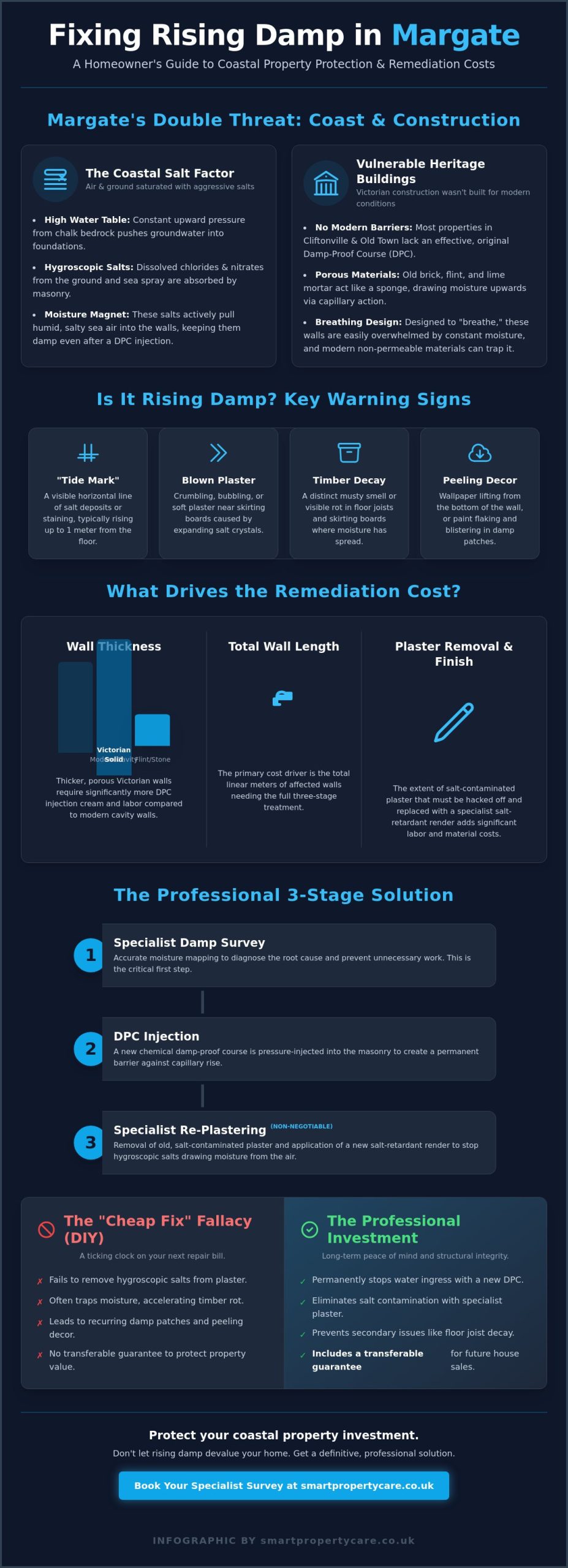
Margate’s architectural heritage is defined by its stunning Victorian terraces and flint-knapped cottages. However, these historic structures often lack modern moisture barriers, making them susceptible to groundwater ingress. To understand the cost to fix rising damp margate, you must first understand the mechanics of the building itself. What is rising damp? It’s the process where groundwater travels upwards through porous masonry via capillary action, much like liquid soaking into a sponge. In the Thanet district, the high water table within the chalk bedrock exerts constant pressure on foundations. This makes properties in low-lying areas like the Old Town or the exposed streets of Cliftonville uniquely vulnerable to structural saturation.
Rising damp is fundamentally different from penetrating damp or condensation. While condensation is often a result of poor ventilation in seaside apartments, and penetrating damp usually involves water entering through cracked rendering or faulty guttering, rising damp comes from the earth. It’s a relentless upward movement that bypasses original, degraded damp-proof courses. Because Margate’s masonry is often composed of highly porous brick and lime mortar, the moisture can climb significantly higher than in modern builds, directly affecting the structural integrity of your ground floor.
The “Salt Factor”: Why Margate Air Changes the Equation
Stopping the water is only half the battle in a coastal environment. When groundwater rises through your walls, it carries dissolved nitrates and chlorides into the masonry. Hygroscopic salts are minerals that actively pull moisture from the atmosphere. In Margate, the air is naturally humid and saturated with sea spray. Even if a new damp-proof course is injected, these salts remain embedded in the brickwork. They act like a chemical sponge, drawing moisture from the sea air and keeping your walls damp to the touch regardless of the weather. This is why specialist plastering is a non-negotiable part of a professional remediation strategy.
Signs You Are Dealing with Rising Damp, Not Just Condensation
Correct diagnosis is essential to avoid wasting money on ineffective treatments. Rising damp has distinct characteristics that set it apart from other moisture issues. You should look for specific indicators that signal a breach in your property’s defenses:
- The Tide Mark: A visible horizontal line of salt or staining on ground-floor walls, typically peaking at one meter above the floor.
- Blown Plaster: Crumbling or bubbling plasterwork near the skirting boards where salt crystals have expanded.
- Timber Decay: A sharp, musty smell often indicates that moisture has reached the floor joists, creating an environment for wood-rotting fungi.
- Peeling Decor: Wallpaper that lifts at the bottom or paint that flakes away in large, damp patches.
Recognizing these signs early allows for a targeted intervention. Addressing the problem before it reaches the floor timbers is the most effective way to manage the overall cost to fix rising damp margate while preserving the value of your coastal home.
Factors Influencing the Cost to Fix Rising Damp in Margate
Generic national estimates often fail to account for the specific architectural challenges found in East Kent. When calculating the cost to fix rising damp margate, we look beyond the simple square footage of a room. The primary drivers of your investment include the total length of the affected walls and the sheer thickness of the masonry. A standard terraced home in Cliftonville often features solid brickwork that is significantly more porous and thicker than modern cavity walls. These structures require a higher volume of specialist damp-proofing creams and more intensive labor to ensure the barrier is contiguous and effective.
Property age plays a decisive role in the remediation strategy. Victorian and Edwardian builds were designed to breathe, and using modern, non-permeable materials can actually worsen the situation by trapping moisture. Understanding the nuances of managing damp in traditional buildings is essential for preserving heritage masonry while stopping moisture ingress. If your property features the flint or stone common in certain older Kent districts, the remediation requires specialist remedial techniques that differ from standard brick injections. These precision-heavy methods are necessary to navigate the irregular mortar lines found in historic coastal homes.
Wall Construction and Material Requirements
The type of wall dictates the treatment method and the volume of materials required. Solid brick walls, typical of older Margate stock, require a deep-fill chemical injection to create an effective horizontal barrier. In contrast, modern cavity walls might only need treatment on the inner leaf if the outer leaf is properly drained. While cream-based injections are the modern standard for efficiency, some severe cases in heritage properties may require traditional mortar replacements or physical membranes. For homeowners dealing with complex structural issues, seeking a professional damp proofing specialist ensures the right materials are used from the start, preventing the need for expensive “do-over” repairs later.
Internal vs. External Remediation Costs
The budget for rising damp isn’t just about the injection; it’s about the restoration. We typically remove internal plaster to a height of at least one metre. This is necessary because the hygroscopic salts embedded in the wall can’t be washed out; they must be physically removed along with the contaminated plaster. Externally, the “envelope” of your home may need attention. If the external rendering is cracked or bridging the damp-proof course, it must be repaired to prevent moisture from bypassing your new defenses. In high-density areas like Margate’s Old Town, accessibility can influence the price. Logistical factors like these are why a site-specific survey is the only way to accurately determine the total cost to fix rising damp margate for your specific property.
Professional Treatment vs. DIY: The True Cost of Failure
The temptation to pick up a tin of “damp-proof paint” or a tub of tanking slurry from a local DIY store is understandable. Homeowners often hope to reduce the initial cost to fix rising damp margate by tackling the work themselves. However, these surface-level solutions are often counterproductive. While they might temporarily mask a stain, they create a non-permeable seal that traps moisture deep within the masonry. This trapped water has nowhere to go but sideways or upwards, often saturating floor joists and accelerating timber decay. Professional-grade chemical damp-proof courses (DPCs) are engineered to penetrate the full thickness of the wall, creating a permanent hydrophobic barrier that retail products simply cannot match.
Professional remediation is a structural investment, not a cosmetic patch. When we install a chemical DPC, we use high-concentration silane-based creams that migrate through the mortar bed to form a contiguous moisture-proof layer. This process is backed by a 20-year guarantee, a document that holds significant weight with insurers and mortgage providers. Without this professional certification, any work performed is essentially invisible during a property survey, leaving you vulnerable to future financial losses. It’s the difference between a temporary fix and a permanent restoration of your home’s integrity.
The Risk of Misdiagnosis
Misidentifying the source of moisture is the most common pitfall for the amateur. If you treat for rising damp when the issue is actually a leaking gutter or poor ventilation, your investment is wasted. In the older building stock of East Kent, moisture issues rarely exist in isolation. Saturated masonry often invites secondary infestations. It’s often necessary to consult a Professional Woodworm Treatment in Kent guide to understand how these problems overlap. A specialist survey ensures you aren’t just throwing money at a symptom, but solving the root cause before it compromises the structural timbers of your ground floor.
Long-term Property Value and Surveying
Mortgage lenders and surveyors are notoriously cautious about moisture in coastal properties. If you plan to sell your home, an uncertified DIY repair is often flagged as “active damp.” This can lead to significant price retentions or even mortgage refusals for your buyer. A professional certificate can add thousands to a property’s resale value. By securing a long-term guarantee from a recognized specialist, you provide future buyers with tangible evidence of structural health. This peace of mind is an essential component of the overall cost to fix rising damp margate, as it protects your equity and ensures a smooth transaction when the time comes to move.
The Restoration Phase: Why Specialist Plastering is Essential
Removing the source of the moisture is only the first part of the structural recovery. Many homeowners are frustrated when damp patches reappear after a treatment, but this is often due to using standard gypsum plaster rather than a specialist system. Gypsum is highly absorbent and will continue to pull moisture from the sea air if it has been contaminated by residual ground salts. If you attempt to lower the cost to fix rising damp margate by using general building materials, the finish is likely to fail as the salts migrate back to the surface. This creates a cycle of redecoration that only stops once the contaminated plaster is replaced with a salt-retardant barrier.
Specialist salt-retardant systems are engineered to act as a permanent shield between the masonry and your interior decor. These renders are designed to be dense enough to block salts while remaining breathable enough to allow the wall behind them to dry naturally. You’ll need to be patient during the curing phase. It’s vital to wait until the plaster is fully dry before applying final finishes. We always suggest using breathable paints to ensure the wall doesn’t trap residual moisture, which preserves the high-end aesthetic of your restored rooms.
Smart Property Care Ltd’s Specialist Rendering and Plastering
Our restoration team focuses on the long-term preservation of your building’s interior. Smart Property Care Ltd uses high-specification renders that are specifically matched to the needs of historic Kentish brickwork. In many Cliftonville properties, maintaining this moisture equilibrium is the only way to protect adjacent structural elements from decay. For a detailed breakdown of our full restoration process, you can view our Ultimate Guide to Damp Proofing in Kent. We ensure that every repair is technically sound and visually seamless.
Managing Condensation Post-Treatment
A dry wall can sometimes reveal ventilation issues that were previously hidden by the saturation of the masonry. As your home dries out, “cold spots” in Margate’s iconic bay windows can become focal points for atmospheric moisture. We provide integrated solutions to ensure that your property preservation is complete and lasting. If you notice new moisture patterns after your walls have been treated, Smart Property Care Ltd can provide expert condensation control advice to keep your environment healthy. This comprehensive approach ensures that your initial cost to fix rising damp margate covers every aspect of a dry, comfortable home.
Securing Your Quote: The Role of a Specialist Damp Survey
A professional quote is only as reliable as the diagnostic data that supports it. Many homeowners receive generic estimates that fail to account for the structural nuances of coastal masonry, which often leads to project delays and rising expenses. To accurately determine the cost to fix rising damp margate, a specialist survey is the non-negotiable first step. This isn’t a casual walkthrough; it’s a technical forensic investigation designed to separate surface symptoms from root structural causes. Without this data, any quote you receive is merely a guess that could lead to significant budget creep once the work begins.
The diagnostic process at Smart Property Care Ltd follows five critical stages to ensure total accuracy:
- Step 1: Visual Inspection and Moisture Mapping: We use calibrated electronic moisture meters to create a profile of the ground floor, identifying exactly where the capillary rise peaks across different wall sections.
- Step 2: Identifying the Source: We determine if the issue is a genuine failure of the damp-proof course or “bridging” caused by high external ground levels or faulty rendering.
- Step 3: Salt and Timber Assessment: We test for the hygroscopic salts mentioned earlier and carefully check floor joists for signs of wet or dry rot caused by long-term saturation.
- Step 4: Detailed Specification: You receive a transparent, line-by-line breakdown of the required remedial works, including the chemical injection and specialist plastering.
- Step 5: Guarantee Review: We outline the long-term, insurance-backed options that protect your investment and satisfy mortgage lenders.
What’s Included in a Smart Property Care Ltd Survey?
Our team brings over 20 years of local expertise to properties across Herne Bay, Margate, and Ramsgate. The surveyors at Smart Property Care Ltd use advanced technical equipment, such as thermal imaging and hygrometer probes, to see “behind the walls” without causing unnecessary disruption. This precision allows us to prescribe the exact treatment needed, ensuring you don’t pay for work that isn’t required. You can book your Professional Damp Survey online to secure a definitive assessment of your home’s structural health.
Transparency in Pricing
We understand that the fear of hidden costs often stops homeowners from starting essential repairs. That’s why Smart Property Care Ltd provides fixed-fee quotes based on our technical findings. There’s a significant difference between a “free estimate” from a general builder and a professional technical report from a preservation specialist. A technical report provides a legally robust specification that mortgage lenders trust. It ensures the cost to fix rising damp margate remains predictable and manageable from start to finish. Ready to protect your home? Book your specialist damp survey in Margate today and gain the peace of mind that comes from a dry, healthy property.
Secure Your Home’s Future with Expert Restoration
Managing the cost to fix rising damp margate is an investment in the longevity and safety of your property. As we have explored, stopping the capillary rise of moisture is only part of the solution; managing the coastal salt legacy through specialist plastering and professional surveys is what ensures a permanent result. By moving away from temporary DIY fixes and choosing a certified remediation plan, you protect your home from the structural decay and devaluation that moisture causes.
Smart Property Care Ltd brings over 20 years of local Kent experience to every project we undertake. As a family-run business, our craftsmen are dedicated to the highest standards of property preservation, providing the approachable reliability that local homeowners value. Every remedial work we perform is backed by a comprehensive 20-year guarantee, offering you and any future buyers complete peace of mind. Secure your home with a professional damp survey from Smart Property Care Ltd today. We are ready to help you restore a dry, healthy environment to your coastal property.
Frequently Asked Questions
Is rising damp expensive to fix in Margate?
The total cost to fix rising damp margate depends on the length of the affected walls and the thickness of your property’s masonry. While it’s a significant structural investment, it’s far less expensive than replacing rotten floor joists or dealing with a devalued property. Professional remediation provides a permanent solution that protects your home’s equity and structural health.
How much does a professional damp survey cost in Kent?
Industry data indicates that a professional damp survey in Kent typically ranges from £126 to £325, depending on the size of the building. This fee ensures you receive a technical moisture map and a detailed specification for any necessary works. It’s a vital step to avoid the high cost of misdiagnosis and ineffective DIY “fixes.”
Can I sell my house in Margate if it has rising damp?
You can sell your home, but active damp often causes mortgage lenders to insist on a price retention or a professional damp and timber report. Most buyers will expect a significant reduction in the sale price if the issue isn’t resolved. Providing a 20-year insurance-backed guarantee from a specialist firm is the most effective way to secure a sale at full market value.
How long does it take to fix rising damp in a typical terrace?
Remediating a ground floor in a standard terrace usually takes between 2 and 5 days to complete. This timeframe includes the removal of salt-contaminated plaster, the precision injection of the chemical damp-proof course, and the application of specialist salt-retardant plaster. Our craftsmen work efficiently to ensure your home is restored to a high standard with minimal daily disruption.
Does home insurance cover the cost of rising damp repairs?
Standard home insurance policies generally don’t cover the cost to fix rising damp margate because it’s considered a gradual maintenance issue. Insurance is typically designed for sudden, accidental damage like a burst pipe or a fire. You should review your policy documents, but most homeowners find that damp proofing is an out-of-pocket investment in property preservation.
Can I stay in my house while the damp proofing is being done?
You don’t need to move out during the treatment, though the process is naturally noisy and creates some dust. We use professional dust-extraction equipment and protective screening to isolate the work area from the rest of your living space. Our goal is to maintain a clean, organized environment so you can continue your daily routine while we restore your walls.
What happens if I ignore rising damp in a coastal property?
Ignoring the problem in a coastal environment leads to rapid structural deterioration. The sea air reacts with groundwater salts, causing them to pull even more moisture into your masonry through the atmosphere. This constant saturation eventually causes plaster to crumble and creates the damp conditions required for dry rot to destroy your floor timbers.
How do I know if my damp proof course has failed?
Signs of a failed damp-proof course include a visible “tide mark” on ground floor walls, usually appearing about a metre above the floor. You might also see white, powdery salt crystals on the surface or notice that your wallpaper is peeling away from the skirting boards. If your skirting boards feel soft or smell musty, it’s a strong indicator that moisture is bypassing your original defenses.