
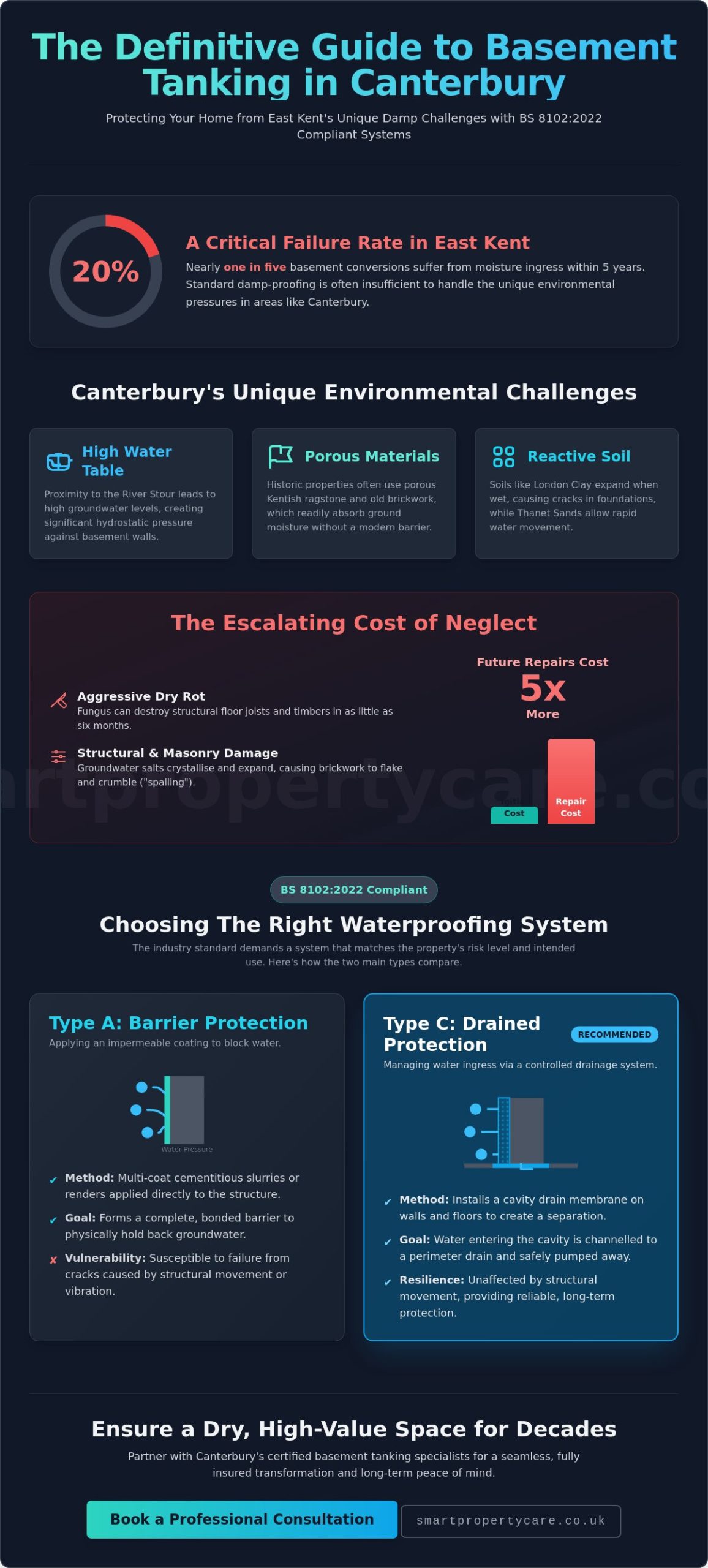
Why do nearly 20% of East Kent basement conversions suffer from moisture ingress within the first five years of completion? In a city like Canterbury, where the high water table and historic soil compositions present unique challenges, a standard damp-proofing approach simply won’t suffice. You’ve likely felt the frustration of conflicting advice regarding Type A versus Type C systems, or perhaps you’re concerned that a rising water table might compromise your meticulous investment.
We agree that protecting your home shouldn’t be a gamble. This guide provides the definitive roadmap for basement tanking Canterbury residents need to achieve a seamless, bone-dry result. You’ll discover how to navigate the complexities of structural waterproofing, from preserving historic 18th-century cellars to installing advanced cavity drainage systems that meet BS 8102:2022 standards. We’ll outline the exact steps to transform a damp void into a bespoke, high-value living space while ensuring your property remains fully protected against the elements for decades to come.
Key Takeaways
- Learn how hydrostatic pressure impacts local soil and why specialized barrier methods are essential for protecting the structural integrity of your property.
- Master the differences between Type A and Type C systems under the BS 8102:2022 benchmark to ensure your project meets the highest industry standards.
- Discover the 2026 cost drivers for basement tanking canterbury and why investing in professional-grade application prevents expensive future failures.
- Understand the importance of bespoke moisture profiling to tailor a meticulous waterproofing strategy for East Kent’s diverse architectural styles.
- Find out how partnering with a certified expert craftsman ensures a seamless, fully insured transformation that delivers long-term peace of mind.
Understanding Basement Tanking in Canterbury’s Unique Environment
Basement tanking serves as a robust barrier method designed to block groundwater ingress before it compromises your home’s integrity. Tanking is the application of an impermeable coating or membrane to the internal or external surfaces of a structure. While many homeowners confuse this with basic damp proofing, basement tanking canterbury professionals recognise that below-ground spaces require structural waterproofing to withstand significant hydrostatic pressure. This pressure occurs when groundwater builds up against the foundation, forcing moisture through even the smallest pores in masonry. Without a professional barrier, this force leads to seepage, flooding, and structural weakening.
Choosing the correct Basement waterproofing techniques depends on understanding the difference between moisture control and structural protection. Damp proofing typically resists capillary action, often referred to as rising damp, but it fails under the weight of external water pressure. Structural waterproofing provides a continuous, sealed environment that remains dry even when the water table rises during heavy Kentish winters. It’s a technical discipline that transforms a vulnerable cellar into a dry, habitable room.
Why Canterbury Properties Face Unique Damp Challenges
Canterbury’s geography creates specific risks for cellar health. The River Stour meanders through the city, maintaining a high local water table that fluctuates seasonally. Historic properties often feature porous brickwork or Kentish ragstone foundations, which lack modern damp-proof courses. The local soil composition adds another layer of complexity. Areas sitting on London Clay experience high water retention and swelling, while Thanet Sands can lead to rapid runoff and localised pressure points against subterranean walls. These factors make bespoke basement tanking canterbury solutions essential for long-term property stability.
The Risks of Neglecting Structural Waterproofing
Ignoring moisture ingress leads to more than just a musty smell. Persistent dampness creates the perfect conditions for timber decay, including the aggressive spread of dry rot. This fungus can destroy structural floor joists in as little as six months. Moisture also brings dissolved ground salts into your masonry. As the water evaporates, these salts crystallise and expand, causing “spalling” where the brick surface flakes away. Understanding the full tanking meaning is the first step toward preserving your home’s value. Failure to act often results in secondary damage that costs five times more to repair than the initial waterproofing installation.
- High water table levels near the River Stour increase hydrostatic pressure.
- Porous Kentish ragstone requires specialised breathable yet impermeable coatings.
- London Clay expansion can cause hairline cracks in untreated basement walls.
- Salt contamination leads to hygroscopic damp, where walls attract moisture from the air.
Comparing Type A Tanking and Type C Cavity Drain Systems
Every professional basement tanking Canterbury project begins with the British Standard BS 8102:2022. This industry benchmark serves as the definitive code of practice for protecting below-ground structures against water from the ground. To achieve full compliance with BS 8102 regulations, homeowners must choose a system that matches the environmental risk and the intended end-use of the space. Whether you’re planning a simple dry storage area or a high-end bespoke cinema room, the distinction between Type A and Type C protection is fundamental to the longevity of your home.
Type A protection, often referred to as barrier protection, involves applying an impermeable layer directly to the internal or external structure. In contrast, Type C protection focuses on drained protection. Instead of attempting to block water out entirely, it manages water ingress through a controlled drainage path. Choosing the correct approach ensures a seamless transition from a damp cellar to a meticulous living space.
Type A: Cementitious Tanking and Slurries
Type A systems rely on the application of multi-coat renders and waterproof slurries. Our specialists apply these cementitious coatings directly to the masonry to create a physical barrier. This method is exceptionally effective for smaller cellars, historic vaults, and areas where space is at a premium. Because the coating is thin, it doesn’t significantly reduce the internal dimensions of the room.
The primary advantage of Type A tanking is its permanent bond to the substrate, providing a robust shield against damp. However, these systems are rigid. In older Canterbury properties where minor structural movement is common, this rigidity can lead to cracking. If the barrier cracks, the system’s integrity is compromised. We typically recommend this for Grade 1 or Grade 2 environments where the risk of hydrostatic pressure is lower.
Type C: Cavity Drain Membranes and Sump Pumps
Type C systems are widely considered the gold standard for modern basement cellar conversions in Kent. This method uses studded high-density polyethylene membranes to create a bespoke air gap between the wall and the new internal finish. This gap depressurises water ingress, allowing moisture to trickle down into a dedicated perimeter drainage channel.
A reliable Type C system requires two critical components:
- Perimeter Drainage: A hidden conduit that directs water to a collection point.
- Sump Pump System: A mechanical pump that automatically discharges collected water away from the foundations.
This approach is favoured because it’s maintainable and far more forgiving of structural movement than cementitious slurries. It provides total peace of mind for homeowners investing in high-value refurbishments. If you want to ensure your property remains dry regardless of external ground conditions, you can book a professional site survey to discuss a tailored Type C solution.
Assessing Your Property: Why Canterbury Soil and Structure Matter
Canterbury’s architectural landscape spans centuries. You can’t apply the same waterproofing method to a medieval cellar near the Cathedral as you would to a modern basement in a 2026 new build. A one-size-fits-all approach often fails in East Kent because it ignores the specific geological and structural nuances of the site. We start every project with a meticulous site assessment. This involves moisture profiling to identify the exact source of dampness. You need to know if you’re dealing with standard rising damp or true hydrostatic water ingress before committing to a basement tanking canterbury solution.
Professional assessments typically include:
- Detailed moisture mapping of all subterranean surfaces using electronic meters.
- Analysis of local soil composition, focusing on the chalk and clay deposits common in East Kent.
- Inspection of existing drainage and guttering systems to identify external pressure points.
- Evaluation of structural joints and potential points of failure in the original masonry.
A bespoke design is essential. We don’t just apply a generic product; we engineer a system that matches the specific porosity of your masonry and the local groundwater conditions. This ensures your investment is protected by a solution that meets the high standards of UK Building Regulations for basements.
Historic Homes vs. Modern Basements in Canterbury
The city centre contains a high concentration of Grade II listed buildings. These properties often feature Victorian or Edwardian cellar construction using porous bricks and lime mortar. Traditional basement tanking canterbury projects must respect these “breathing” materials. Applying a modern, non-permeable barrier directly to historic masonry can trap moisture and cause structural decay. We adapt our techniques, often utilizing cavity drainage membranes that allow the structure to remain stable while keeping the internal space bone-dry and habitable.
The Role of Hydrostatic Pressure and Drainage
The depth of your basement and local water table data determine the level of protection required. In Canterbury, water pressure can reach several tonnes per square metre in saturated ground. This force pushes water through the smallest cracks in a foundation. We calculate this likely pressure to design a system that manages water rather than just trying to block it. Effective external drainage significantly reduces the load on internal tanking. Our designs focus on seamless execution to provide the peace of mind you expect from a professional refurbishment. We ensure every pump, drain, and membrane works in harmony to keep your home protected for decades.
The Cost of Basement Tanking in Canterbury: What to Expect in 2026
Investing in basement tanking canterbury requires a clear understanding of what drives the final invoice. It’s not just about the square footage of the floor. The age of your Canterbury home and the current state of its masonry play huge roles in determining the scope of work. Professional waterproofing isn’t a surface fix; it’s a structural necessity that protects your building’s integrity. While every property is unique, the cost usually reflects the complexity of the moisture problem and the desired end-use of the space.
Opting for a “budget” solution often results in catastrophic failure within 24 to 36 months. We frequently see homeowners paying twice because an initial contractor lacked specialist knowledge or used inferior materials. Conversely, a professional conversion can increase your property’s market value by up to 15%. This makes the initial outlay a savvy financial move rather than just an expense. Smart Property Care provides a detailed, costed specification only after conducting a thorough damp survey to ensure every penny is allocated correctly to the right solution.
Investment Breakdown: Preparation to Finishing
The process starts with meticulous preparation. You’ll need to factor in the cost of removing old, salt-contaminated plaster and preparing the underlying masonry. Slurry-based systems (Type A) are often more labour-intensive than modern cavity drain membranes (Type C). While membranes might have a higher material cost, their long-term reliability often makes them the preferred choice for basement tanking canterbury projects in 2026. Finally, specialist breathable plastering and bespoke decoration ensure the space is habitable and seamless.
- Preparation: Stripping walls to the original substrate and clearing debris.
- System Choice: Comparing the cost of cementitious tanking versus high-density polyethylene membranes.
- Drainage: Incorporating perimeter channels and sump pump systems where necessary.
- Finishing: Specialist “damp-proof” plastering and final aesthetic touches.
Guarantees and Insurance: Protecting Your Investment
A quote is only as good as the protection behind it. You should always demand a 10 or 20-year company guarantee on all structural waterproofing. However, a company guarantee is worthless if the business ceases to trade. This is why Guarantee Protection Insurance (GPI) is vital. It provides an extra layer of security, ensuring your basement remains protected regardless of the contractor’s future status. Always verify that your surveyor holds the CSSW (Certified Surveyor in Structural Waterproofing) accreditation. This qualification is the industry gold standard for technical competence and professional accountability.
Choosing a Specialist: Why Smart Property Care is Canterbury’s Trusted Partner
Selecting a contractor for basement tanking canterbury isn’t just about finding a competitive quote; it’s about securing your home’s structural integrity for decades. Smart Property Care brings over 20 years of family-run experience to every project across East Kent. We treat your property with the respect it deserves, maintaining a clean, efficient, and professional site from the moment we arrive until the final specialist render is dry. Our reputation is built on being more than just a service provider; we act as a dedicated partner in your home’s preservation.
Our “Expert Craftsman” approach to basement waterproofing means we handle the entire project lifecycle. You won’t have to juggle different contractors for the initial survey, the structural work, and the final renovation. We operate as a comprehensive one-stop shop, ensuring that the transition from a damp, unusable cellar to a pristine, high-value living space is seamless. This end-to-end accountability eliminates the communication gaps that often lead to delays or technical errors in complex waterproofing projects.
Our Meticulous Waterproofing Process
We follow a rigorous three-step framework designed to provide total protection against groundwater ingress. Every project is executed with discipline and technical precision.
- Step 1: Comprehensive damp and structural survey. We perform a deep-dive assessment of your property’s specific hydrogeological conditions and existing masonry health.
- Step 2: Bespoke system design compliant with BS 8102:2022. Our designs aren’t generic. We create custom solutions that meet the 2022 British Standard for protecting below-ground structures against water from the ground.
- Step 3: Skilled execution by our local, insured team. Our technicians manage the entire installation, from substrate preparation to the application of advanced tanking slurries or cavity drainage membranes.
Ready to Transform Your Canterbury Basement?
A damp basement is a liability that devalues your property, but a dry, professionally tanked space is a significant asset. We provide the peace of mind that comes from knowing your home is protected by the latest industry standards and two decades of local expertise. Our team is punctual, fully insured, and committed to delivering a finish that exceeds expectations.
Don’t let moisture compromise your home’s foundations or your family’s health. We invite you to experience the difference that professional craftsmanship and transparent communication make. Book your specialist basement survey in Canterbury today and take the first step toward a permanent solution for your property.
Secure Your Canterbury Home’s Future Today
Protecting your property from water ingress requires more than a quick fix; it demands a bespoke engineering solution tailored to Kent’s unique geology. Selecting the right system, whether it’s a Type A barrier or a Type C cavity drain, ensures your home remains dry and structurally sound well beyond 2026. Investing in professional basement tanking canterbury services doesn’t just prevent damp; it adds significant market value and provides total peace of mind for years to come. You’re not just buying a service; you’re securing your investment.
Smart Property Care brings over 20 years of local Kent experience to every project. Our PCA-trained specialists deliver meticulous results backed by full 10-year insurance-backed guarantees. We understand the specific challenges of local soil structures and provide the high-end craftsmanship your home deserves. Our team handles the technical complexity so you don’t have to worry about the details. We’ve built our reputation on being a dependable partner for homeowners who value quality and transparency.
Get a Professional Basement Tanking Quote in Canterbury
Take the first step toward a drier, healthier home today.
Frequently Asked Questions
Is basement tanking the same as waterproofing?
Basement tanking is a specific form of internal waterproofing, technically known as Type A barrier protection. While waterproofing is a broad term covering various methods, tanking specifically involves applying a physical waterproof coating or slurry directly to the walls and floor. This creates a meticulous, impermeable seal that stops water from entering the structure. It differs from Type C systems, which manage water entry through internal drainage.
How much does basement tanking cost in Canterbury?
Professional basement tanking in Canterbury typically costs between £80 and £120 per square metre according to 2024 industry benchmarks. For a standard small cellar of 20 square metres, homeowners should expect total project costs to range from £3,000 to £6,000. These figures include surface preparation and professional application of waterproof membranes. Factors like the current state of masonry and local labor rates in Kent will influence the final quote.
Can I tank a basement myself or do I need a professional?
You should hire a certified professional to ensure the system is seamless and fully insured. While DIY kits exist, the British Standard 8102:2022 requires a specialist design to prevent catastrophic failure. Professional installers provide a long-term guarantee that protects your property value. Improper application often leads to hydrostatic pressure build-up, which causes the tanking to blow off the wall within 12 months.
How long does a basement tanking system last?
A professionally installed basement tanking system generally lasts between 10 and 25 years before requiring a maintenance review. The longevity depends on the specific product used and the level of hydrostatic pressure behind the walls. We provide bespoke solutions that often include a 10-year insurance-backed guarantee. Regular inspections of the structural integrity ensure the barrier remains effective against the damp soil conditions common across Canterbury.
Will tanking my cellar stop the smell of damp?
Yes, professional tanking eliminates the musty odor by creating a total barrier against moisture ingress. This process stops the growth of mold and mildew, which are the primary sources of that distinct damp smell. By sealing the masonry, you transform a humid cellar into a dry, breathable environment. It’s a vital step for any refurbishment project aiming to create a healthy living space or storage area.
Do I need planning permission for basement tanking in Canterbury?
Planning permission is rarely required for internal basement tanking in Canterbury as it falls under Permitted Development. However, you’ll need approval if you’re changing the usage from a storage cellar to a habitable room or if the property is a Grade II listed building. Canterbury City Council mandates that all structural waterproofing must comply with current Building Regulations. We always recommend checking with local authorities before starting major works.
What happens if my sump pump fails in a Type C system?
If a sump pump fails in a Type C cavity drainage system, water will accumulate behind the membrane and eventually flood the floor. This is why we install dual-pump systems with battery backups as a standard safety measure. A 2023 study showed that 95 percent of basement floods in managed systems occur due to power outages or pump mechanical failure. High-level alarms are essential trust signals that provide immediate peace of mind.
Can you tank a basement that is already leaking?
You can tank a leaking basement, but the active water ingress must be stopped using plugging compounds before the main slurry is applied. Our expert craftsmen use fast-setting hydraulic cements to seal cracks in under 60 seconds. Once the active leaks are controlled, the full basement tanking Canterbury system is applied to provide a durable, dry finish. This meticulous approach ensures the new barrier bonds perfectly to the substrate.