
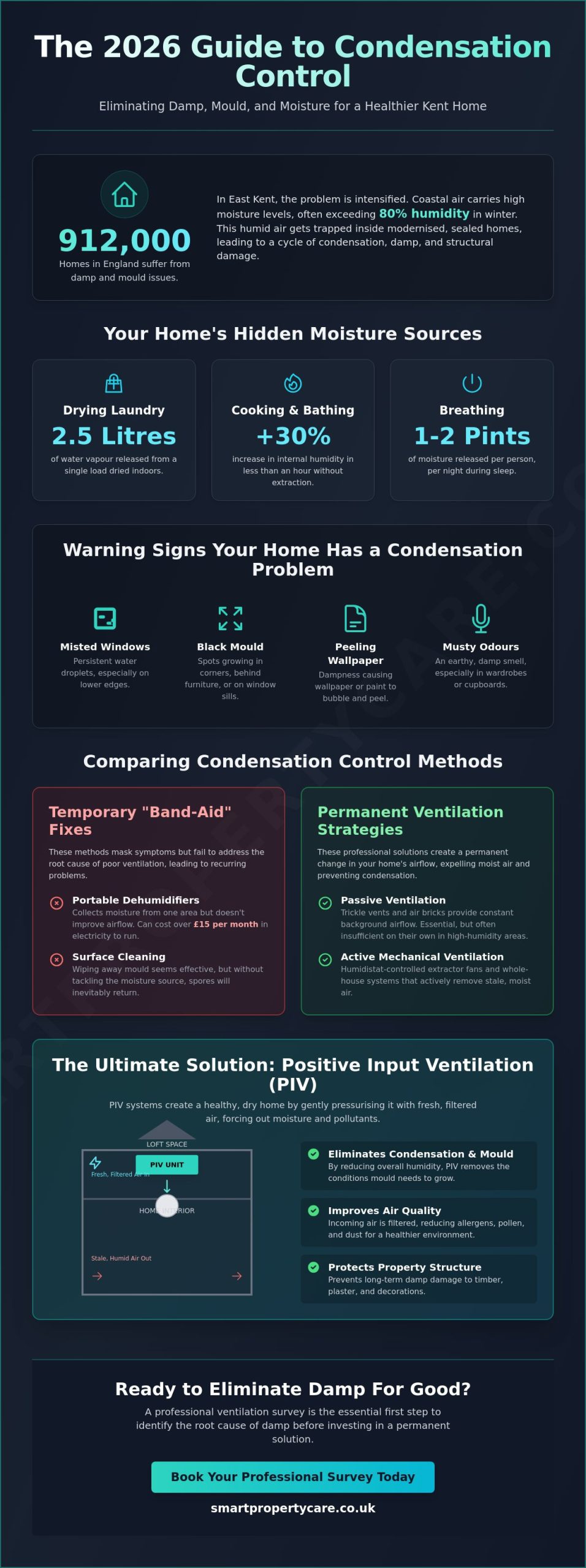
According to the English Housing Survey 2023, approximately 912,000 homes across England suffer from damp and mould issues, often caused by inadequate airflow. You’ve likely spent far too many winters wiping windows and watching expensive wallpaper peel, only to find that basic DIY dehumidifiers don’t solve the underlying problem. It’s exhausting to deal with musty smells and the health worries that come with black mould spores, especially when you’re trying to maintain a high-quality home in Herne Bay or Canterbury.
Professional condensation control is about more than just clearing misted glass; it’s a meticulous process of balancing your home’s internal climate. We’ll show you exactly how to eliminate damp for good using advanced mechanical and passive ventilation strategies tailored for Kent properties. This 2026 guide provides a clear roadmap to achieving a dry, mould-free environment, lower heating bills, and the lasting peace of mind that comes with a healthy, breathable home.
Key Takeaways
- Understand how East Kent’s coastal humidity accelerates moisture buildup and why surface cleaning fails to stop recurring mould.
- Master the difference between passive and active systems to implement a permanent condensation control strategy that outperforms temporary dehumidifiers.
- Discover how Positive Input Ventilation (PIV) creates a filtered, allergen-free environment while protecting your property’s structural integrity.
- Implement a targeted, room-by-room ventilation plan to safeguard high-risk zones like kitchens, bathrooms, and built-in wardrobes.
- Learn why a professional ventilation survey is essential to identify the root cause of damp before investing in specialist remediation.
Understanding the Condensation Crisis in Kent Properties
Condensation is more than a minor seasonal inconvenience; it’s a significant structural challenge for homeowners across East Kent. What is condensation? In simple terms, it occurs when warm, moisture-heavy air encounters a cold surface, causing the water vapour to revert into liquid droplets. In Herne Bay and Canterbury, our coastal proximity means relative humidity levels often exceed 80% during the winter months. This high external moisture load makes effective condensation control a critical priority for maintaining property health and occupant comfort.
The geography of East Kent plays a silent role in this struggle. Coastal air carries a higher moisture content, and when this humid air enters a property, it requires robust ventilation to escape. Without it, the moisture remains trapped, seeking out the coldest points in your home to settle. This isn’t just about wet windows; it’s about the long-term integrity of your building fabric.
The Physics of Dew Point and Thermal Bridging
Dew point is the temperature where air can no longer hold water vapour. When the temperature of a wall or window drops below this specific threshold, liquid water forms instantly. In many Canterbury terraces, this happens at “thermal bridges.” These are specific cold spots, such as a concrete lintel above a window or a corner where two external walls meet, that lose heat faster than the surrounding structure. When indoor humidity is high, these cold spots trigger localized condensation, often leading to the rapid growth of black mould in areas with restricted airflow.
Why Traditional Kent Homes Struggle with Modern Living
Most Victorian and Edwardian properties in Herne Bay were designed to breathe. Originally, open fireplaces and sash windows provided a constant, natural exchange of air. Modern renovations have disrupted this equilibrium. We’ve introduced the “Modern Window Trap” by installing airtight uPVC windows and blocking up chimneys without providing alternative ventilation paths. While these upgrades improve thermal efficiency, they effectively hermetically seal moisture inside the building.
Our modern lifestyle habits exacerbate the issue significantly:
- Drying a single load of laundry indoors releases approximately 2.5 litres of water vapour into the atmosphere.
- Cooking and bathing without adequate extraction can raise internal humidity levels by 30% in less than an hour.
- The salt-laden air in coastal East Kent can make masonry more hygroscopic, meaning it naturally attracts and retains more moisture than inland brickwork.
Homeowners in Herne Bay and Canterbury should remain vigilant for specific warning signs. Look for persistent misting on the lower edges of double glazing or damp patches on North-facing walls. Musty odours in built-in wardrobes or peeling wallpaper in the corners of rooms are clear indicators that your current condensation control measures are failing. Addressing these signs early prevents the transition from a simple moisture issue to a costly mould remediation project.
Comparing Condensation Control Methods: A Roundup of Solutions
Managing moisture isn’t about a single fix; it’s about a strategic approach to airflow. While many homeowners reach for a portable dehumidifier, these units often act as a temporary sticking plaster. A standard 20-litre dehumidifier consumes approximately 480 watts. At current energy rates, running one for eight hours a day can add over £15 to your monthly electricity bill without addressing the root cause of damp air. Effective condensation control requires a permanent shift in how air moves through your property. Professional solutions move beyond masking symptoms to provide a meticulous, long-term cure for damp environments.
Passive Solutions: Trickle Vents and Air Bricks
Trickle vents are the small slots at the top of window frames designed to provide constant, low-level background ventilation. Under 2022 updates to Building Regulations Part F, these are mandatory for most replacement windows. However, in high-occupancy households or coastal Herne Bay properties, passive airflow often fails to combat the sheer volume of internal water vapour. You should also inspect air bricks at the damp proof course level. A 2023 industry survey found that 15% of older Kent properties had blocked air bricks due to new paving or garden debris. This restriction of sub-floor airflow is a leading cause of joist rot and rising damp symptoms.
Active Solutions: Extractor Fans and PIV Systems
Standard bathroom fans often lack the power to clear steam before it settles on cold surfaces. We install humidistat-controlled models that trigger automatically when moisture levels hit a specific threshold, typically 60%. For a comprehensive, whole-house condensation control strategy, Positive Input Ventilation (PIV) is the premier professional choice. These units sit in the loft and gently push filtered, dry air into the hallway. This creates a slight positive pressure that forces stale, moist air out through natural leakage points. It’s a seamless way to control moisture in your home while improving indoor air quality. For basement conversions or bespoke high-end refurbishments, Mechanical Ventilation with Heat Recovery (MVHR) offers a sophisticated alternative that retains up to 90% of internal heat.
Investing in a professional PIV installation typically pays for itself within three to five years through energy savings and reduced maintenance. Contrast this with the recurring cost of DIY mould sprays and repainting, which can easily exceed £200 annually. Beyond the financial ROI, the emotional peace of mind from a dry, healthy home is invaluable. If you want to end the cycle of damp walls, you can request a free, no-obligation quote to see which system suits your property’s architecture.
The Benefits of Positive Input Ventilation (PIV) for East Kent Homes
Positive Input Ventilation (PIV) systems represent a definitive shift in how we approach condensation control in the damp coastal climates of East Kent. These units, typically installed within a loft space, work by drawing in fresh, external air and passing it through high-grade filters before introducing it into the property at a continuous, low rate. This process creates a slight positive pressure. It effectively forces stale, moisture-laden air out through natural leakage points such as window trickles or air bricks, ensuring the air in your home is replaced up to 20 times per day.
For residents in Herne Bay or Canterbury suffering from respiratory issues, the air filtration benefits are transformative. Modern units utilise G4 grade filters to capture 95% of airborne pollutants, including pollen, radon gas, and fine dust. It’s a clinical-grade solution for a domestic environment. The energy efficiency of these systems is equally impressive. They consume as little as 1.5 watts, which translates to a running cost of approximately £5 to £10 per year based on current energy price caps. By redistributing the warmer air that naturally pools at ceiling level, PIV can actually help lower heating demands in traditional builds. Modern units operate at whisper-quiet levels, often below 15dB, and require minimal maintenance with filter changes typically needed only every 60 months.
Why PIV is the “Gold Standard” for Kent Terraces
Canterbury and East Kent are famous for narrow, multi-storey Victorian and Edwardian terraces. These properties often struggle with vertical airflow, leading to damp pockets in upper bedrooms. A single PIV unit strategically placed on the central landing can serve an entire three-storey home effectively. We consistently see a 90% reduction in visible window condensation within 48 hours of the system being activated. It’s a bespoke, non-invasive fit for the specific architectural challenges found in our local historic streets.
Installation Logistics and Property Suitability
To install a standard PIV system, your property generally requires a ventilated loft space. For homeowners in flats or properties with converted lofts, we install specialised wall-mounted variants that achieve the same high standard of condensation control. Maintaining a consistent flow of dry air is the most effective way to prevent mould mites, which are microscopic pests that thrive in humidity levels above 60%.
- Standard PIV: Best for houses with traditional pitched roofs and adequate loft ventilation.
- Solar-Gain PIV: These models utilise the natural heat generated by the sun on your roof tiles to pre-warm the incoming air, further increasing thermal efficiency during winter months.
- Wall-Mounted PIV: The ideal solution for apartments or homes where loft access is unavailable.
Smart Property Care provides meticulous installation services across East Kent, ensuring every unit is calibrated to the specific volume of your property. Our experts handle the entire process, from the initial damp survey to the final electrical certification, providing a seamless path to a drier, healthier home.
A Room-by-Room Strategy for Permanent Humidity Management
Effective condensation control isn’t a one-size-fits-all fix. Every room in your East Kent property has a unique moisture profile. Bathrooms generate rapid bursts of high-intensity steam, while bedrooms produce steady, low-level humidity overnight. A successful strategy requires a room-by-room assessment to eliminate cold spots and stagnant air. Smart Property Care approaches these challenges with a meticulous eye for detail, ensuring your home remains dry and healthy.
Kitchens and Bathrooms: The Primary Moisture Sources
These zones are the engines of domestic humidity. When you install high-performance extractor fans, ensure they include an over-run timer set for at least 15 minutes after the light switch is deactivated. This ensures the fan continues to clear lingering moisture long after you’ve left the room. You shouldn’t rely on “steam-free” mirrors as a solution. While they offer convenience, they’re a cosmetic fix that masks the underlying mildew risk caused by water vapour settling on other cold surfaces. To reduce steam at the source, keep lids on pans while cooking and keep the bathroom door closed during showers to prevent moisture from migrating to colder parts of the house.
Bedrooms and Basements: The Hidden Damp Zones
Bedrooms often suffer from poor airflow, particularly behind large furniture. When a wardrobe is pushed flush against a cold external wall, it creates a pocket of “dead air” where condensation thrives. We recommend maintaining a 50mm gap between furniture and walls to allow air to circulate freely. This simple adjustment prevents the damp conditions that lead to mould growth on fabrics and wall coverings.
For lower-ground levels in Canterbury or Herne Bay, specialized basement waterproofing and mechanical ventilation are essential. Basements naturally have lower surface temperatures, making them highly susceptible to condensation. Without professional-grade ventilation, even a waterproofed basement can feel damp. Our team ensures these spaces are equipped with robust airflow systems that manage humidity levels 24 hours a day.
Consistency is the final piece of the puzzle. Maintaining a steady background temperature of at least 18°C prevents surfaces from reaching the dew point. During property renovations, adopt a “ventilation first” mindset. Before upgrading insulation or windows, which can inadvertently seal moisture inside, consult a specialist to ensure your ventilation capacity matches the airtightness of your modernised home.
Stop moisture from damaging your property. Contact Smart Property Care today for a professional condensation control survey and a bespoke management plan.
Professional Mould Remediation and Ventilation Surveys in Kent
Cleaning visible mould with off-the-shelf sprays is a temporary fix that fails to address the underlying environmental imbalance. At Smart Property Care, we treat mould as a symptom of a wider ventilation or structural issue. Effective condensation control demands a systematic approach that moves beyond surface cleaning to provide a permanent, dry environment. Our process begins with a technical assessment and concludes with specialist restoration, ensuring your home remains healthy and aesthetically flawless.
We believe in fixing the cause, not just the symptom. Scrubbing walls might clear the black spots for a few weeks, but without structural or mechanical changes, the spores will return as soon as the temperature drops. Our Kent-based team uses a bespoke methodology that integrates scientific analysis with high-end craftsmanship to protect your property investment.
The Role of a Specialist Damp Survey
A professional damp survey is the only reliable method to identify the source of moisture. We use high-resolution thermal imaging cameras to locate cold spots where dew points are reached and calibrated moisture meters to map dampness within the masonry. This data allows us to distinguish between condensation, rising damp, and penetrating damp accurately. Misdiagnosing condensation as rising damp is a costly mistake for homeowners, often leading to unnecessary expenditure on chemical damp proof courses that fail to solve the actual problem. By identifying the specific moisture profile of your property, we ensure the solution is targeted and cost-effective.
Specialist Plastering and Final Restoration
Standard gypsum plaster often fails in damp-prone Kent properties because it is non-breathable and highly absorbent. It acts like a sponge, trapping moisture and providing a fertile ground for fungal growth. Once we’ve implemented how to get rid of mould on walls protocols, we restore the surface using breathable, salt-retardant plasters. These specialist materials allow moisture to evaporate naturally without damaging the finish or encouraging mould. This is a critical step in long-term condensation control for older buildings in Canterbury and Herne Bay.
Our restoration service provides a robust defense against future issues through a meticulous process:
- Application of fungicidal washes to sterilize the masonry at a microscopic level.
- Use of lime-based or salt-retardant plasters to manage moisture movement.
- Final decoration using premium paints infused with professional-grade anti-mould additives.
This approach delivers a seamless finish that looks bespoke while significantly upgrading your home’s resilience. We take pride in leaving every space transformed, dry, and safe for your family. If you’re ready to end the cycle of recurring mould, contact our expert team today for a comprehensive evaluation of your property.
Take Decisive Action Against Damp in Your East Kent Home
Effective condensation control is no longer a matter of guesswork; it’s a technical requirement for maintaining property value in Herne Bay and Canterbury. By integrating advanced PIV systems and following a room-by-step humidity strategy, you stop mould growth before it takes hold. Smart Property Care delivers this peace of mind through over 20 years of experience in Kent property preservation. We’re a family-run business that understands the specific challenges of East Kent’s coastal and rural architecture. Our team provides a meticulous one-stop shop for homeowners, handling everything from the initial diagnostic survey to specialist treatment and final plastering with absolute precision.
Don’t let damp compromise your living environment or your property’s structural integrity. We’re ready to restore your home to a dry, healthy, and comfortable state. Book your specialist damp survey in Kent today and benefit from our dedicated attention to detail. It’s time to breathe easier in a home that’s protected for the long term.
Frequently Asked Questions
Is condensation control expensive to install in an older Kent home?
No, professional condensation control is a cost-effective investment that protects your property’s long-term value. While initial installation costs depend on your home’s layout, they’re significantly lower than the £3,000 to £5,000 homeowners often spend remediating structural damp and timber rot. We provide transparent pricing and bespoke solutions tailored to the unique architecture of Kent’s period properties. This proactive approach ensures your home remains dry and healthy for years.
Can I stop condensation just by opening my windows every day?
Opening windows provides temporary relief but it’s rarely a permanent solution for modern living standards. Daily activities like showering and cooking generate approximately 12 litres of moisture in a typical UK household. Relying on open windows in winter leads to significant heat loss and increased energy bills. Our professional systems provide a seamless, automated solution that maintains air quality without compromising your home’s thermal efficiency or security.
What is the difference between a dehumidifier and a PIV system?
A dehumidifier extracts moisture from a single room, whereas a Positive Input Ventilation (PIV) system treats the entire property. Dehumidifiers require manual emptying and often consume more electricity than a permanent installation. A PIV system, meticulously installed in your loft, introduces filtered air to create positive pressure. This process pushes out moisture-laden air through natural leakage points. It’s a low-maintenance solution that addresses the root cause of damp.
Will a PIV system make my house feel cold or draughty?
Modern PIV units don’t create cold draughts because they use intelligent tempering heaters. These systems monitor incoming air temperatures and activate a heater if the air falls below 10°C. The air is introduced at ceiling level where it mixes with warm air gathered at the top of your rooms. You’ll notice a fresher atmosphere and improved air clarity without any perceptible drop in your home’s comfort or warmth.
Why do I have condensation on my new double-glazed windows?
Condensation on new double-glazing occurs because these high-performance windows create an airtight seal. While they improve energy efficiency, they prevent natural air exchange, trapping high humidity levels indoors. Without adequate ventilation, this moisture settles on glass surfaces as they’re the coldest points in the room. This indicates that your home requires a dedicated condensation control strategy to balance the insulation provided by your new windows.
Can condensation cause structural damage to my property if ignored?
Yes, ignored condensation leads to serious structural issues including wet rot and dry rot in floor joists. Persistent moisture weakens masonry and causes plaster to perish, necessitating expensive refurbishments. Industry data shows that 25% of timber decay cases in UK homes stem from unmanaged humidity levels. Addressing these issues early with professional systems ensures your property’s structural integrity remains intact, saving you from disruptive and costly future repairs.
How long does it take for a professional ventilation system to work?
You’ll typically see a visible difference within 24 to 48 hours of installation. Humidity levels in a standard three-bedroom house often drop by 15% during this initial period. Streaming windows will clear, and the heavy, damp smell associated with poor ventilation will dissipate quickly. Our meticulous installation process ensures the system operates at peak efficiency from the moment it’s switched on, providing immediate peace of mind and a healthier environment.
Does a condensation control system require a lot of electricity to run?
Professional ventilation systems are designed for high efficiency and very low running costs. A standard PIV unit typically costs less than £10 per year to operate, which is roughly the same as a single low-energy LED bulb. Even with the tempering heater active during colder months, the cost remains minimal compared to the expense of heating damp air. It’s a sustainable, cost-effective way to maintain a dry home throughout the year.