
Trying to hold back the Kent water table with a rigid barrier is often a losing battle that leaves homeowners with failing walls and a mounting sense of frustration. You’ve likely noticed that persistent, earthy smell in your cellar or worried that traditional tanking will eventually crack under the relentless hydrostatic pressure common in our region. It’s a valid concern. With over 60% of UK basements experiencing some form of moisture, the stakes for your property’s structural health and overall value are incredibly high.
Investing in a professional cavity drain membrane system canterbury homeowners can rely on is the gold standard for achieving a Grade 3 dry environment. This approach follows the BS 8102:2022 code of practice, moving away from simply blocking water to a more sophisticated management strategy. You’ll discover how this Type C drained protection creates a habitable, high value space while providing the long term peace of mind you deserve. We’ll examine the technical superiority of membranes and how they transform damp, neglected voids into pristine, functional living areas that stand the test of time.
Key Takeaways
- Understand why modern water management is superior to traditional methods for protecting historic Canterbury properties from hydrostatic pressure.
- Discover how HDPE membranes and innovative drainage channels create a permanently dry, habitable environment in your basement or cellar.
- See why a professional cavity drain membrane system canterbury installation offers a faster and more reliable solution than invasive multi-coat tanking.
- Learn the importance of a specialist damp survey in designing a bespoke system that addresses specific local water table challenges in Kent.
- Gain peace of mind with a robust waterproofing strategy that protects your home’s structural integrity and adds significant property value.
Why Canterbury Properties Need Modern Cavity Drain Membrane Systems
Canterbury’s architectural heritage is a source of pride, yet its historic cellars often struggle with the realities of modern moisture levels. A cavity drain membrane system canterbury homeowners choose isn’t just a barrier; it’s a sophisticated water management solution. Unlike traditional methods that attempt to block water entirely, this system accepts that water will penetrate the structure and provides a controlled path for it to escape. It creates a “dry-envelope” within the basement, ensuring that even if external ground conditions change, the internal space remains habitable and secure.
While general Basement waterproofing methods often focus on external barriers, the Type C approach is uniquely suited for the UK’s historic architecture. It provides a sympathetic way to upgrade a property without altering its structural integrity. This method is particularly effective in East Kent, where older building stock often lacks the modern damp proof courses found in newer developments.
Canterbury’s Unique Geological Challenges
The local landscape in the Stour Valley presents specific risks for subterranean structures. Canterbury sits on a complex mix of chalk and clay. These soils behave differently under pressure. While chalk is porous, clay expands and contracts with moisture levels, creating a shifting environment that puts immense stress on basement walls. During heavy seasonal rainfall in Kent, the water table rises rapidly. This leads to intense hydrostatic pressure. This force pushes water through the smallest fissures in brickwork, turning a small damp patch into a significant flood within hours.
The Limitations of Traditional Basement Tanking
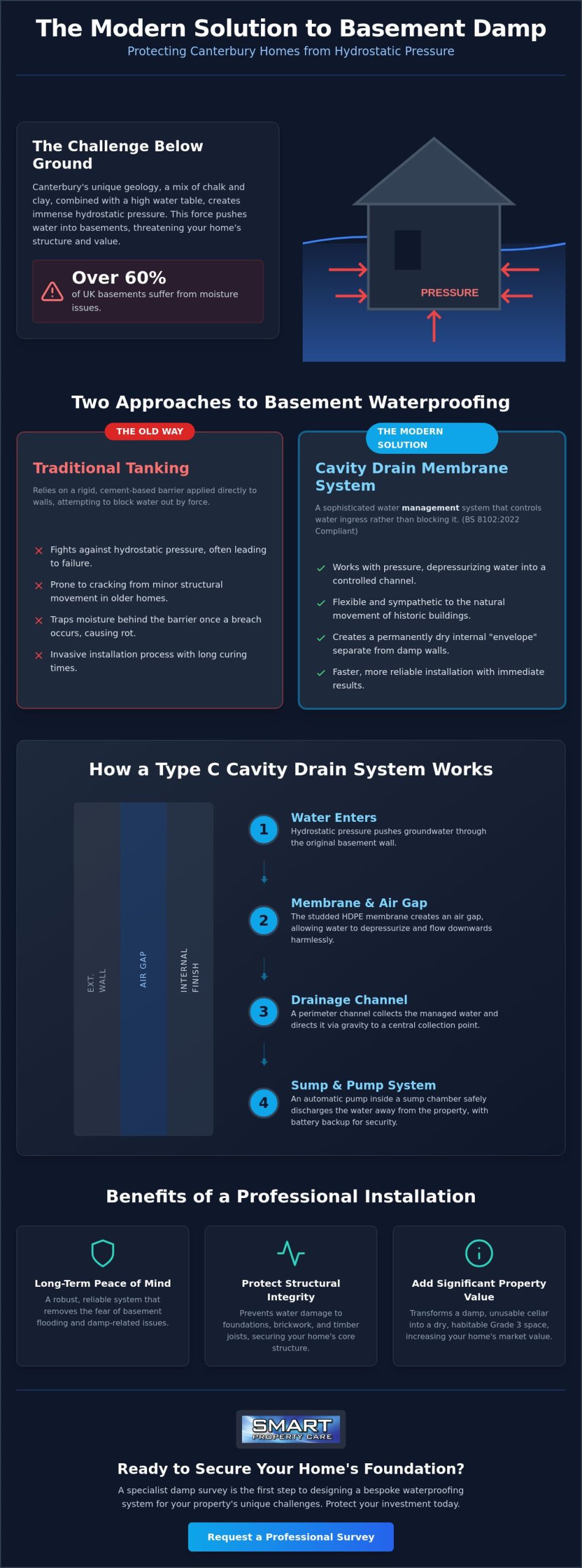
Traditional tanking relies on a rigid, cementitious coating applied directly to the internal walls. In many older Kent homes, this approach is fundamentally flawed. These properties were built to breathe and move slightly over time. When you apply a rigid barrier, any minor structural movement causes the tanking to crack. Once a crack appears, hydrostatic pressure forces water behind the coating, leading to catastrophic failure and trapped moisture that can rot floor joists.
A professional cavity drain membrane system canterbury provides a more sympathetic and durable alternative. Instead of fighting the immense pressure of the earth, the high-density polyethylene (HDPE) membrane creates a vital air gap. This gap allows water to depressurize and flow freely into hidden drainage channels. It respects the original building fabric while offering a modern, high-performance finish. This system removes the fear of failure, replacing it with the certainty of a dry, protected home.
How a Type C Cavity Drain System Protects Your Basement
A professional cavity drain membrane system canterbury property owners invest in works by creating an internal, impermeable skin. This isn’t just plastic sheeting; it’s a high-performance barrier engineered to manage water ingress safely. The system functions as a secondary internal skin that completely separates your living space from the damp external walls. It accepts that water will eventually penetrate the masonry but ensures it never reaches your interior finishes.
The anatomy of the system relies on High-Density Polyethylene (HDPE) membranes. These feature pre-formed “studs” that face the wall. These studs create a vital drainage air gap. This gap is the secret to the system’s success. It allows water to depressurize as soon as it enters. Instead of pushing against your walls with immense force, the water simply trickles down the back of the membrane into a perimeter drainage channel. This methodology aligns perfectly with the BS 8102:2022 code of practice. Industry experts consider Type C protection the most reliable form of waterproofing because it manages water rather than trying to stop it.
The Role of the Sump and Pump
Think of the sump and pump as the heart of the entire setup. Once water reaches the perimeter channels, it flows via gravity into a collection chamber. A mechanical pump then discharges this water to a safe external point. Because Kent occasionally suffers from power outages during heavy storms, we always recommend battery backup systems. This ensures your basement remains dry even when the local grid fails. Maintaining these channels is vital to prevent silt buildup over time. If you’re concerned about your current setup, a professional basement waterproofing assessment can identify potential vulnerabilities before they become problems.
HDPE Membrane Durability and Longevity
HDPE is the preferred material for property preservation specialists due to its exceptional longevity. It’s chemically inert, which means it won’t degrade when exposed to the alkaline salts and minerals common in Canterbury’s groundwater. It remains flexible for decades. This flexibility is crucial. As properties settle or experience minor structural shifts, the membrane moves with the building. Unlike rigid tanking, it won’t crack or lose its seal. It provides a permanent, high-value solution that protects your home’s structural integrity while adding significant living space.
Cavity Drain Membranes vs. Traditional Tanking: Which is Best for You?
When you’re deciding how to protect your home, you’re essentially choosing between resisting water or managing it. Traditional basement tanking involves applying a rigid, cementitious coating directly to the internal walls to create an impermeable seal. While this sounds effective, it’s often a high-risk strategy in Kent’s older properties. In contrast, a cavity drain membrane system canterbury professionals install focuses on controlled management. It accepts that water will penetrate the masonry and provides a safe, hidden path for it to exit the building.
Installation speed is a major differentiator. Traditional tanking is a labor-intensive process that requires multiple coats of slurry, with each layer needing significant time to cure. This can leave your basement a construction site for weeks. Membranes are fixed mechanically using specialized sealed plugs. Because there are no drying times involved, you can often begin the internal dry-lining and finishing work immediately after the membrane is secure. This efficiency makes it the superior choice for homeowners looking to minimize disruption.
Surface preparation is another area where membranes excel. Tanking requires you to hack off all existing plaster and sandblast the masonry to ensure a perfect bond. This is incredibly invasive and messy. A Type C membrane is far more sympathetic. It doesn’t require the substrate to be perfectly clean or dry. As noted by the Basement Health Association, managing moisture through drainage is often a more sustainable long-term solution than attempting to create a permanent, rigid seal that might eventually crack under pressure.
The Structural Impact on Historic Kent Buildings
Canterbury is famous for its listed buildings and historic flint or brickwork. These structures were designed to be breathable. When you apply a rigid tanking system, you block the natural movement of moisture. This often forces dampness higher up the walls into the ground floor, leading to secondary issues like rising damp or salt contamination. A cavity drain membrane system canterbury avoids this by allowing the original walls to remain in their natural state behind the HDPE skin. It maintains the building’s structural integrity while creating a modern, dry environment inside.
Cost-Benefit Analysis for Homeowners
While the initial investment for a Type C system is significant, the life-cycle costs are remarkably lower than traditional alternatives. Rigid tanking is notoriously difficult to repair. If a leak occurs, you have to strip back the entire finish to find the crack. With a membrane system, the primary components—like the drainage channels and sump pumps—are accessible for regular servicing. This manageability provides lasting peace of mind. By transforming a damp cellar into a Grade 3 habitable space, you aren’t just fixing a problem; you’re adding genuine market value to your Kent property.
The Installation Process: Professional Waterproofing Step-by-Step
Every successful project begins with a specialist damp survey. In Canterbury, where structural nuances vary from medieval brickwork to Victorian flint, a standard inspection isn’t enough. We identify the specific points of water ingress and the expected hydrostatic pressure. This data determines the layout of your cavity drain membrane system canterbury installation. Once the design is finalized, we prepare the basement by removing loose debris and ensuring the floor is level. A clean substrate is essential for the perimeter channels to sit correctly and function without blockages.
Next, we install the drainage infrastructure. We create a recessed channel around the floor perimeter. This acts as a conduit for any water entering behind the wall membrane. These channels lead directly to a sump pump chamber, which we typically locate at the lowest point of the basement. We then fix the HDPE membrane to the walls and floors. We use specialized, sealed fixing plugs to maintain the system’s integrity. Every joint is meticulously taped with butyl rubber sealant to create a continuous, water-tight barrier that protects your home’s interior from the damp external environment.
Specialist Plastering and Internal Finishes
Achieving a habitable, high-end finish requires more than just standard materials. You cannot apply traditional gypsum plaster directly over a waterproofing membrane. It won’t bond correctly and can lead to condensation issues. Instead, we employ specialist plastering techniques or independent dry-lining systems. For a premium aesthetic, we often recommend a metal-frame stud system. This allows for integrated insulation and electrical services while maintaining the vital air gap behind the membrane. This approach ensures your new room feels like a seamless extension of your home, rather than a converted cellar.
Testing and Commissioning the System
Before we apply any final finishes, we conduct rigorous flood testing. We pour water into the drainage channels to verify that the flow is unobstructed and the sump pump activates precisely as expected. We also check the telemetry and high-water alarms to ensure you have 24/7 monitoring. This final commissioning phase is where our precision as expert craftsmen shines. We provide you with a comprehensive maintenance schedule, ensuring you know exactly how to keep your system in peak condition for decades. If you’re ready to transform your damp basement into a valuable living space, you can book a specialist basement survey today to start the process.
Why Canterbury Homeowners Trust Smart Property Care Ltd for Waterproofing
Choosing a contractor for a cavity drain membrane system canterbury requires total confidence in their local reputation and technical proficiency. Smart Property Care Ltd brings over 20 years of dedicated experience to the Kent property preservation sector, specializing in the complex needs of our region’s varied building stock. As a family-run entity, we prioritize an “Expert Craftsman” ethos, ensuring that every project meets our rigorous internal standards for quality, punctuality, and structural integrity. We don’t just provide a service; we act as a specialized partner for homeowners who demand the highest level of protection for their structural investments.
Our approach is defined by its comprehensive nature, removing the stress of coordinating multiple trades. We manage the entire lifecycle of the project, from the initial diagnostic survey through to the final specialist plastering finishes that make your basement feel like a natural extension of your home. This vertical integration ensures that the high standard of execution remains consistent throughout every phase. By focusing on precision and clear communication, Smart Property Care Ltd transforms the often daunting process of basement remediation into a streamlined, professional experience with a guaranteed outcome.
Our Local Expertise in Canterbury & Herne Bay
We possess a deep understanding of the specific building regulations and planning requirements that affect historic and modern properties in East Kent. Whether you are in the heart of Canterbury or the coastal environment of Herne Bay, we tailor our designs to suit the local architectural nuances and geological pressures. Our team is grounded in the practicalities of Kent property maintenance, ensuring that your cavity drain membrane system canterbury is compliant, effective, and sympathetic to the original building fabric.
Long-Term Guarantees and Peace of Mind
Every installation we perform is backed by detailed technical documentation and robust guarantees that reflect our confidence in our craftsmanship. These reports are invaluable assets during future property transactions, providing concrete evidence to surveyors and buyers of professional-grade moisture management. We focus on providing a “belt-and-braces” solution that secures your home’s value for decades to come. If you are ready to secure your home’s structural future, Book your specialist damp survey in Canterbury today. Let Smart Property Care Ltd provide the long-term security and peace of mind your Kent home deserves.
Transform Your Basement into a Secure, Dry Asset
Protecting your subterranean space requires a strategic shift from simply blocking water to intelligently managing it. By choosing a professional cavity drain membrane system canterbury homeowners effectively neutralize hydrostatic pressure while preserving the delicate structural integrity of their historic masonry. This modern approach doesn’t just solve a recurring damp problem; it creates a habitable, high-value environment that enhances your entire property. You now understand how Type C systems provide the reliability and accessibility that traditional tanking simply cannot offer in Kent’s unique geological conditions.
Smart Property Care Ltd brings over 20 years of local Kent experience to every project. As specialists in historic property preservation, we apply expert craftsman standards to ensure your basement conversion is both technically sound and aesthetically finished. We’re a family-run business that understands the emotional and financial value of your home. We’re here to relieve the stress of damp issues with solutions designed to last a lifetime. Secure your home with a professional cavity drain system today and start enjoying the full potential of your property. Your dry, comfortable new living space is closer than you think.
Frequently Asked Questions
Is a cavity drain membrane system better than basement tanking?
It is generally considered superior for older properties because it manages hydrostatic pressure rather than fighting it. Rigid tanking often cracks if the building shifts, but a membrane remains flexible. This approach minimizes risk and provides a more durable, long term solution for Kent homeowners who want to avoid the failure rates associated with traditional cementitious barriers.
How long does it take to install a cavity drain system in a Canterbury home?
A professional installation usually takes between 5 and 10 working days for a medium sized basement. Because there are no drying times for cementitious slurries, we can move swiftly from fixing the membrane to internal finishing. This efficiency reduces the disruption to your daily life while ensuring the structural protection is in place as quickly as possible.
Can I use a cavity drain membrane in a listed building?
Yes, heritage specialists often recommend this method for listed structures across East Kent. It’s a sympathetic solution because it doesn’t require aggressive surface preparation or chemical bonding to the original flint or brickwork. It protects the historic fabric of your home while creating a modern, dry interior that is entirely reversible if required by future conservation needs.
Does a cavity drain system require a sump pump?
A mechanical sump pump is a critical component of a cavity drain membrane system canterbury property owners choose for total protection. While the membrane collects the water, the pump is what actually removes it from the building to a safe discharge point. Without a pump, water would simply sit in the drainage channels and eventually overflow, compromising the dry environment.
How much maintenance does a Type C waterproofing system need?
You should schedule a professional service for your pumps and drainage channels at least once a year. Regular maintenance involves cleaning the pump chamber and flushing the perimeter channels to remove any lime or silt deposits. This proactive care ensures your system remains fully operational and your basement stays dry regardless of seasonal rainfall levels.
Can I decorate directly onto a cavity drain membrane?
You cannot apply paint or wallpaper directly to the HDPE surface. Instead, we use independent metal stud frames or specialist plastering systems designed to work with the membrane. This creates a beautiful, decorated finish that looks exactly like any other room in your house while hiding the high performance waterproofing management system behind the scenes.
Will a cavity drain system increase the value of my Kent property?
Converting a damp cellar into a fully habitable room is one of the most effective ways to increase your home’s market value. It adds valuable square footage for a home office, gym, or bedroom. A certified cavity drain membrane system canterbury installation also provides technical reports that reassure future buyers about the property’s structural health and moisture management.
What happens if the pump fails in a cavity drain system?
If the primary pump fails, the water level in the sump will rise and trigger a high water alarm to alert you immediately. This is why we always recommend a dual pump system equipped with a battery backup. These safety features ensure the system continues to operate during power outages or mechanical issues, providing the reassurance you need during heavy storms.