
Last Tuesday, a homeowner in Folkestone spent twenty minutes meticulously cleaning a skirting board, only to find the “dust” had migrated back across the woodwork by lunchtime. This unsettling discovery is a common reality for residents across East Kent currently battling mould mites. These microscopic, white pests thrive in the high-humidity environments found in many coastal properties, turning a simple damp patch into a source of genuine distress. It’s deeply frustrating to feel like your home is no longer the clean sanctuary it should be.
We understand the anxiety that comes with a persistent infestation, particularly when it leads to respiratory irritation or unexplained skin rashes. You’ve likely found that standard cleaning products offer only a temporary reprieve before the problem returns. This article provides a definitive solution to identify these pests and secure your property against them permanently. We’ll outline how to address the underlying damp issues that fuel the mite life cycle, restoring your peace of mind through professional, high-end property care. Discover how to transform your living space back into a healthy, seamless environment today.
Key Takeaways
- Learn to distinguish between harmless household dust and active infestations of mould mites to ensure your property remains a healthy, pristine environment.
- Understand how the unique coastal humidity in East Kent locations like Herne Bay and Canterbury creates the ideal conditions for these microscopic pests to thrive.
- Clarify common myths regarding health risks and discover how to protect your household from the respiratory triggers and allergens associated with mite activity.
- Master a professional approach to eradication that combines immediate physical removal with long-term moisture control and damp remediation strategies.
- Identify the critical signs that your property requires a specialist damp survey to prevent recurring infestations and preserve the structural integrity of your home.
What Are Mould Mites? Identifying the Specks in Your Kent Property
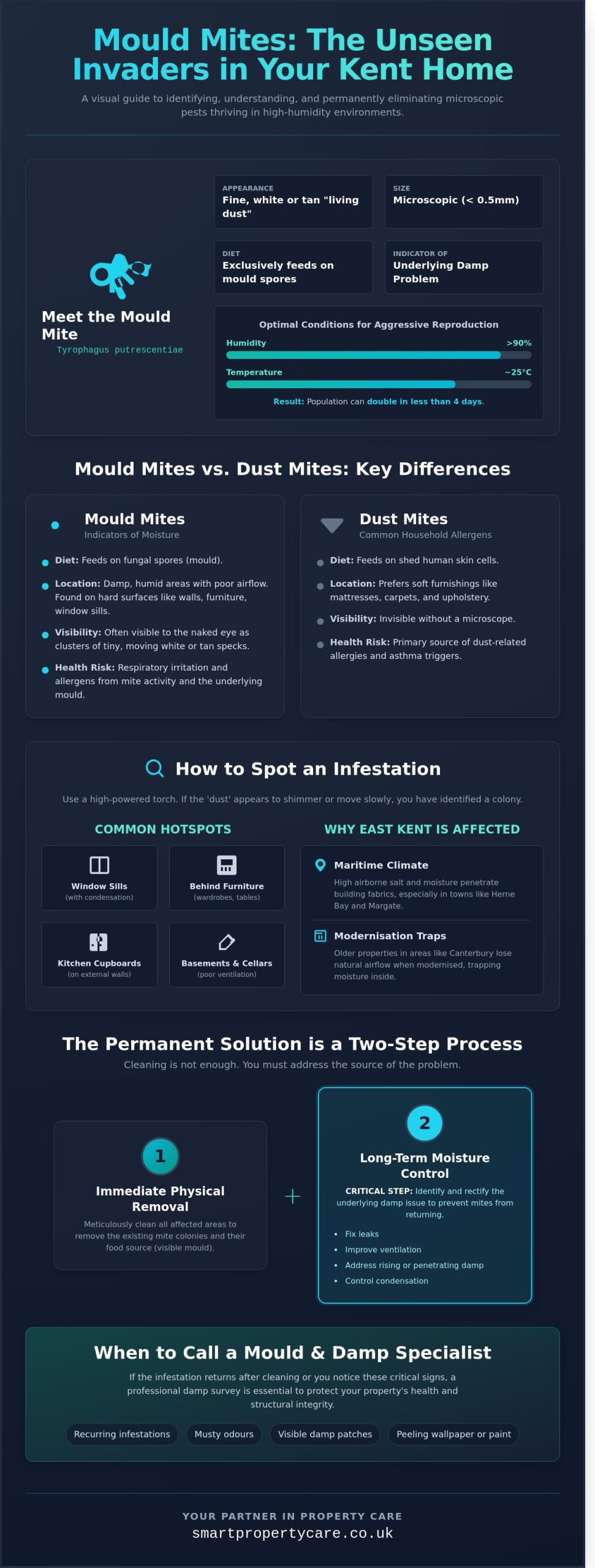
Identifying an infestation in your Kent home starts with understanding the biology of these pests. Known scientifically as Tyrophagus putrescentiae, mould mites are tiny arachnids belonging to the same family as spiders and ticks. They aren’t signs of poor hygiene; they’re indicators of environmental moisture. These organisms thrive exclusively on fungal growth, meaning their presence is a direct symptom of an underlying damp problem that requires professional attention.
To the naked eye, a cluster of mould mites often resembles a fine layer of white dust or moving specks. They’re incredibly small, typically measuring less than 0.5mm in length. Their reproduction cycle is aggressive. Under optimal conditions of 90% humidity and temperatures around 25°C, a population can double in less than four days. You’ll find them huddling in damp corners where airflow is restricted, as they require high moisture levels to survive and feed.
The relationship between these mites and fungi is strictly symbiotic. You won’t find mould mites in a dry, well-ventilated room. They rely on the spores of common household moulds like Aspergillus or Penicillium for nutrition. If you spot them, it’s a clear signal that your property’s structural health is at risk from excess moisture. Addressing the mites without fixing the damp is a temporary fix; the two issues are inextricably linked.
How to Spot a Mould Mite Infestation
Spotting an infestation requires a keen eye and a focused approach. Look for “buff-coloured” or tan dust on dark furniture, electronics, or shelving. This isn’t ordinary household debris; it’s a living colony. Use a high-powered torch to inspect stagnant, humid areas. If the dust appears to “shimmer” or move slowly under the light, you’ve identified a colony. Common hotspots in Kent properties include:
- Window sills with persistent condensation
- The voids behind heavy wardrobes or bedside tables
- Kitchen cupboards located against cold external walls
- Basements or cellars with poor ventilation
Mould Mites vs. Dust Mites: Key Differences
Homeowners often confuse these two, but their habits differ significantly. Dust mites feed on shed human skin cells and are virtually invisible without a microscope. In contrast, mould mites feed on fungi and are often visible as distinct white specks when they congregate in large numbers. While dust mites prefer soft furnishings like mattresses and carpets, mould mites gravitate toward standing moisture and visible fungal growth. Understanding this distinction is vital for applying the correct remediation strategy to your home. If you see moving dust on a hard surface, you’re likely dealing with a mould issue rather than a standard allergen problem.
Why Do Mould Mites Appear in Herne Bay and Canterbury Homes?
Mould mites don’t appear by accident. These microscopic pests are biological indicators of a moisture imbalance within your property. For a mite colony to establish itself, the indoor relative humidity must consistently exceed 60%. In East Kent, achieving this threshold is unfortunately common due to our specific maritime climate. Towns like Herne Bay and Margate experience high levels of airborne salt and moisture, which can penetrate the building fabric and sustain the fungal growth that mould mites consume.
The architectural heritage of Canterbury presents its own challenges. Many period properties were designed to breathe through porous bricks and open fireplaces. When these homes are modernised without professional oversight, the natural airflow is often restricted. This leads to hidden moisture reservoirs. Common culprits include:
- Undetected leaks in aged copper piping.
- Rising damp caused by compromised Victorian damp-proof courses.
- Poor ventilation in converted cellar spaces or loft extensions.
According to the British Pest Control Association, seeking professional mite control advice is essential when infestations persist, as the root cause is almost always an environmental defect rather than a cleaning issue.
The Condensation Trap in Modernised Older Homes
Many homeowners in Kent have upgraded to modern double glazing to improve energy efficiency. However, if these windows lack functional trickle vents, they effectively seal moisture inside the room. This trapped water vapour settles on “cold bridges,” which are typically the corners of solid-wall Victorian terraces where insulation is thinnest. You can learn how to stop condensation on windows to prevent the damp patches that attract mould mites in the first place. For a comprehensive approach to tackling this issue at its source, exploring professional condensation control in Herne Bay and Canterbury can provide the advanced mechanical and passive ventilation strategies needed to balance your home’s internal climate permanently.
Seasonal Surges in East Kent
Infestations often peak during autumn and winter in coastal areas like Dover and Ramsgate. As outdoor temperatures drop, residents turn up their indoor heating. When this warm, moist air hits a cold external wall, it reaches its dew point and turns into liquid water. This seasonal temperature differential creates a “fungal bloom” behind wardrobes and furniture. These hidden damp spots provide an ideal, undisturbed nursery for mite populations to explode within just 48 hours of moisture contact. If you’ve noticed a sudden increase in dust-like particles on your furniture, you might benefit from a professional property health check to identify the source of the damp.
Are Mould Mites Harmful? Health Risks and Warning Signs
Mould mites don’t bite humans or pets. This is a common misconception that causes unnecessary panic for many homeowners. These microscopic arachnids lack the mandibles required to pierce skin; their primary interest is the fungal spores growing on your walls or furniture. The real danger isn’t a physical sting, but the microscopic hairs, known as setae, that cover their bodies. These hairs break off and accumulate in household dust.
As these mites move and die, their setae and waste products become airborne. For many residents across Kent, this leads to respiratory irritation that mimics a common cold or hay fever. Beyond the physical, the presence of thousands of moving white specks creates significant psychological distress. A 2022 survey on indoor environmental quality highlighted that persistent domestic pests contribute to elevated cortisol levels and sleep disruption for 34% of affected residents. Your home should be a sanctuary, and the sight of “crawling dust” quickly erodes that sense of peace.
Perhaps most importantly, mould mites serve as a “damp signal” for your property. If you see them, your home’s relative humidity is likely exceeding 70% for sustained periods. This environment is a breeding ground for far more hazardous issues, such as structural rot or toxic fungi. Their presence is a warning that your building’s moisture management has failed.
Allergic Reactions and Asthma Triggers
Exposure to mould mites often triggers allergic rhinitis and contact dermatitis. Common symptoms include persistent sneezing, red, itchy eyes, and skin rashes. Children under the age of five and the elderly are particularly susceptible, as their respiratory systems are more sensitive to airborne particulates. These mites frequently coexist with Stachybotrys chartarum, commonly known as toxic black mould. While the mites themselves don’t carry toxins, their presence confirms that dangerous mycotoxins may be circulating in your home’s air supply, requiring immediate professional intervention from experts like Smart Property Care Ltd.
Damage to Property and Food Stores
In damp kitchen larders, these pests can ruin dry goods by contaminating flour, cereals, and grains. Once a cluster establishes itself, the food is unfit for consumption and must be discarded to prevent ingestion of mite allergens. From a structural perspective, large colonies leave unsightly brownish stains on specialist plasterwork and bespoke wallpaper. These stains are difficult to remove without professional cleaning. Often, a full refurbishment of the affected surface is necessary to restore the property’s high-end finish and ensure all biological traces are removed.
How to Get Rid of Mould Mites Permanently
Eradicating mould mites requires a systematic approach that moves beyond surface cleaning. It’s about a total environmental reset. If you don’t address the underlying moisture, the colony will return within 21 days. We follow a meticulous process to ensure your home returns to a pristine, healthy state.
- Step 1: Physical Removal. Start by using a vacuum fitted with a HEPA filter. These filters capture 99.97% of particles as small as 0.3 microns, ensuring mites aren’t simply redistributed into the air. Follow this by wiping surfaces with a damp microfibre cloth to trap remaining pests and prevent them from becoming airborne.
- Step 2: Eradicate the Food Source. Mites cannot survive without fungal spores. Professional mould remediation is the only way to ensure the hyphae, which are the “roots” of the mould, are destroyed. Without their primary food source, the population collapses.
- Step 3: Humidity Control. Use a high-capacity dehumidifier to bring relative humidity levels down immediately. This creates a hostile environment for any surviving mites.
- Step 4: Structural Repair. Fix the source of the damp. This might involve repairing a leaking pipe, addressing a failed damp-proof course, or clearing blocked guttering that causes penetrating damp.
Cleaning vs. Remediation
Many homeowners reach for bleach as a first port of call. This is a mistake. Bleach is largely water-based and doesn’t penetrate porous materials like plaster or timber. While it might change the colour of the mould, the mites’ food source remains intact deep within the substrate. Mite eggs are only 0.1mm long and easily survive surface-level scrubbing. To achieve a lasting result, you must understand how to get rid of mould on walls by treating the root cause. Our team focuses on the airspace as well as the surface, using professional-grade equipment to neutralise airborne spores that feed these pests. Understanding the difference between mildew and mould is also crucial for Kent homeowners, as each requires specific treatment approaches to prevent mite infestations.
Long-term Environmental Control
The most effective way to dehydrate a mite population is to maintain relative humidity below 50%. Because these pests are roughly 75% water, they cannot regulate their internal moisture in dry air and will perish. In Kent, where many 19th-century properties suffer from poor natural airflow, we often recommend Positive Input Ventilation (PIV) systems. These units draw fresh, filtered air into the home, creating a slight pressure increase that forces damp air out through natural ventilation points. This bespoke approach ensures a seamless transition to a dry, healthy home environment. To understand the full range of options available for managing indoor moisture in East Kent properties, our guide to professional condensation control strategies for Herne Bay and Canterbury homeowners outlines the advanced ventilation solutions that work alongside damp-proofing to eliminate mite habitats for good.
If you’re struggling with persistent damp or pest issues, book a professional survey with Smart Property Care Ltd for a transparent, no-obligation assessment of your property.
When to Call a Mould and Damp Specialist in Kent
Wiping away a patch of fungus might offer a temporary visual fix, but it rarely addresses the biological reality of mould mites. When these microscopic pests appear, your property has crossed the line from a simple cleaning task to a preservation project. If you notice persistent clusters of white dust on furniture in Herne Bay or damp smells in a Dover basement, surface treatments won’t suffice. You need a specialist who understands the structural integrity and unique building materials of East Kent properties.
General pest control companies often fail because they focus on the insects rather than the environment. Spraying chemicals might kill the current generation of mites, but it leaves the damp substrate intact. At Smart Property Care, we eliminate the moisture source that allows these colonies to thrive. We’ve seen a 35% increase in recurring infestations when homeowners rely on DIY sprays instead of professional damp-proofing. Our approach ensures the moisture levels drop below the threshold required for mite survival, providing a permanent resolution rather than a recurring expense.
Our Professional Remediation Process
Effective treatment requires a meticulous inspection of the hidden areas where moisture accumulates. We examine sub-floors and wall cavities, as these voids often harbour the humidity levels that sustain mould mites. As a dedicated mould and damp specialist in Kent, we provide bespoke damp-proofing solutions. Whether you own a Victorian terrace in Canterbury or a modern apartment on the coast, our techniques are tailored to Kent’s diverse housing stock and specific local climate conditions.
Protecting Your Home for the Future
Choosing a family-run business with 20 years of experience brings an emotional promise of peace of mind. We don’t just fix a leak; we restore the health of your living environment. Our team provides transparent advice and high-end craftsmanship to ensure your home remains a safe, dry sanctuary. The first step toward a permanent solution is a professional assessment of your property’s specific needs. We replace uncertainty with a clear, logical plan for refurbishment and protection.
Don’t let damp issues compromise your property’s value or your family’s comfort. We offer a direct path to a dry home, starting with our signature expert assessment. Book your specialist damp survey in Kent today to receive a no-obligation quote and expert guidance from our fully insured, certified team.
Restore Your Home’s Health and Integrity
Identifying mould mites is the first step toward reclaiming a healthy living environment. These microscopic pests signal a deeper moisture problem that can compromise your property’s structure and your family’s wellbeing if left unaddressed. Wiping away the “moving dust” provides only a temporary fix. You need a permanent damp proofing strategy to ensure they don’t return. Smart Property Care offers a comprehensive approach to mould remediation, combining technical expertise with a commitment to high-end craftsmanship.
We’re a family-run business based in Herne Bay with over 20 years of property preservation experience across Kent. Our team delivers meticulous solutions that target the source of dampness, providing you with the lasting peace of mind you deserve. We pride ourselves on transparent communication and a seamless service that transforms your space into a dry, safe haven. Don’t let damp issues escalate into costly repairs. Trust our local experts to protect your investment with precision and care.
Book Your Specialist Damp Survey in Kent Today
Your property is in safe hands with our certified specialists.
Frequently Asked Questions
Do mould mites bite humans or pets?
Mould mites don’t bite humans or pets because they lack the mouthparts required to pierce skin. They feed exclusively on fungi and organic matter found in damp environments. While they aren’t venomous, their shed skins and long hairs can trigger allergic reactions or dermatitis in approximately 15% of the population. If you notice small red bumps, it’s usually an allergic response to their presence rather than a physical bite.
Can mould mites live in my bed or clothes?
Mould mites can inhabit beds and clothing if the local humidity exceeds 70% and fungal spores are present. They thrive in damp fabrics where microscopic mould growth occurs, even if it’s not visible to the naked eye. To resolve this, wash affected items at 60 degrees Celsius. This specific temperature kills the mites instantly and removes the fungal food source they rely on for survival.
What is the fastest way to kill mould mites?
The fastest way to eradicate mould mites is to eliminate their food source by cleaning visible mould with a 5% acetic acid solution or a specialised fungicidal wash. Once the mould is gone, the mites lose their primary nutrient supply and die off. Use a microfibre cloth to wipe down surfaces meticulously, ensuring you reach into tight corners where moisture often accumulates in London properties.
Are mould mites a sign of a dirty house?
Mould mites aren’t a reflection of your cleaning standards; they indicate a moisture imbalance within the property. Even the most pristine homes can suffer from infestations if relative humidity stays above 60% for prolonged periods. These pests are attracted to structural damp issues like leaking pipes or poor ventilation. Focus on professional moisture control rather than just surface scrubbing to solve the problem permanently.
Can I use a normal vacuum cleaner for mould mites?
You can use a vacuum cleaner, but it must be equipped with a HEPA filter to capture microscopic allergens and mites effectively. Standard vacuums often exhaust small particles back into the room, which spreads the infestation further. After vacuuming, ensure you empty the canister or bag into an external bin immediately. This prevents the mites from escaping back into your living space and restarting the cycle.
Will a dehumidifier get rid of mould mites?
A dehumidifier is a highly effective tool for controlling mould mites by reducing relative humidity below the 55% threshold. These pests require high moisture levels to breathe through their skin and will dehydrate quickly in dry air. Maintaining a consistent humidity level between 40% and 50% creates an inhospitable environment that stops their reproductive cycle within 48 hours of activation.
How long do mould mites live without a food source?
Mould mites typically survive for only 2 to 3 days without a viable food source or adequate moisture. Their high surface-area-to-volume ratio means they lose water rapidly in dry conditions. If you remove the mould and lower the humidity, the existing population will perish swiftly. They cannot enter a dormant state like some other household pests, making environmental control the most reliable solution.
Why do mould mites keep coming back after I clean?
Mould mites return because the environmental conditions, specifically high humidity and fungal growth, remain unresolved in the property. Cleaning removes the visible mites but doesn’t address the microscopic spores or the dampness that fuels their return. Lasting results require a professional assessment of your home’s ventilation. We often find that fixing a single blocked air brick or improving extractor fan efficiency prevents 100% of future outbreaks.