
Rising Damp
We help property owners cure rising damp and fix the damage it causes
Damp Proofing Kent
What is rising damp?
Damp proofing information. True rising damp is quite rare these days, especially in relatively modern properties (built since the early 1960s) but it can arise and when it does, it can be one of the most worrying and complex forms of damp to deal with.
Especially, but not exclusively, in properties on or close to sea level (if you’re not sure this useful page will tell you) the natural water table sits somewhere below your property and through syphon action moisture can be drawn up into the walls and fabric of your building. To see an example of this, try dipping a corner of a piece of kitchen roll into a cup of water and watch as the water defies gravity!

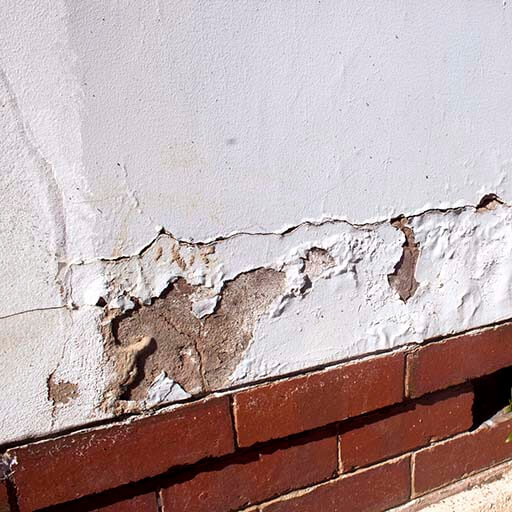
In reality, it’s not always the water ingress that causes the problems, rather it’s the dissolved salts and minerals contained in the water that get left behind once the moisture has evaporated. Salt, in particular, is highly corrosive and can very quickly weaken and damage steel structures, plaster, fixtures and fittings. The first thing you might notice is crumbling plaster close to the floor which may appear totally dry – that’s the effect of salt after the moisture has left. That doesn’t mean the rising damp has gone away, just that it’s able to evaporate at a rate exceeding that which is being drawn up.
Thankfully, since the 1960s, the fitting a damp proofing membrane (DPM) became part of building regulations and a mandatory requirement for new buildings. The DPM is usually installed above the second course of bricks and is typically made from polythene sheeting although there are a number of modern materials used today which are more resilient and robust but that doesn’t mean modern properties are immune. Rising damp in newer buildings is possible if the DPM has been ‘bridged’ or damaged or if the outside level of the ground has been raised above the DPM by, for example, the installation of a patio or other building works.

20+
Rising Damp Symptoms
Typical symptoms of rising damp on internal walls
- Flaking, crumbling plaster close to ground level
- Damp skirting boards in an otherwise dry environment
- Rotting skirting boards
- Visible damp patches
- Mould growth
- A powdery, rough feel to the wall close to the ground
20+
Signs of Rising Damp
Typical signs of rising damp on external walls
- Corrosion and crumbling of brick & mortar
- Discoloration of walls, usually green
- Efflorescence – the crystalline deposits of salts & minerals
- Visible damp patches which don’t disappear
Damp Proofing
Rising Damp - Finding a solution
Having discovered what you think is a case of rising damp, the important thing is to do is to find the root cause, which often can be difficult to pinpoint, especially to the untrained eye. It’s also unwise to try to “paper over the cracks” as the signs of damp will return very quickly and even though you may not be able to see it, damage will still be taking place behind the scenes. The best solution by far is to seek professional advice from damp specialists and that’s why we offer our FREE Damp Survey.
Some past projects


Free Damp Survey
If you believe you have a case of rising damp you can contact us to book a FREE, no obligation damp survey for your property using the adjacent form. Please note, this is only available to property owners living in Kent including CT and ME postcode areas.
What happens when you book a survey?
- We will contact you to arrange a mutually convenient date & time for our visit
- We will visually inspect damp areas
- We will take detailed measurements using our specialised equipment
- We will inspect the property inside and out for evidence of the damp source and cause
- We will produce a report detailing our findings
- We will include a detailed, no obligation quotation for remedial work