
Last Tuesday, a homeowner in Margate discovered that the dark patches they had meticulously scrubbed away just 14 days prior had already returned, accompanied by that unmistakable, heavy scent of damp. It’s a frustrating cycle that many East Kent residents face, particularly when dealing with the 80% average humidity levels often recorded in our coastal properties during the winter months. You’re likely tired of the temporary fixes and the constant worry about your family’s respiratory health or the potential for expensive structural damage to your masonry.
We believe your home should be a sanctuary, not a source of stress. This guide provides an authoritative blueprint on how to get rid of mould on walls by moving beyond surface-level cleaning to address the technical root causes. You’ll learn the vital difference between internal condensation and penetrating damp, alongside the professional techniques we use to deliver a seamless, permanent finish. We’re here to provide the bespoke advice you need to reclaim your space and ensure a dry, healthy environment for the long term.
Key Takeaways
- Identify the crucial difference between surface condensation and structural damp to pinpoint the exact source of moisture in your Kent home.
- Master the professional safety protocols on how to get rid of mould on walls, ensuring you protect your health and prevent spores from migrating.
- Understand when a simple clean is insufficient and why bespoke damp proofing is often the only way to achieve a permanent, cost-effective result.
- Explore advanced condensation control methods, such as PIV systems, designed to improve thermal performance and air quality in older East Kent properties.
- Access expert insights from two decades of local remediation experience to ensure your property remains a healthy, mould-free environment for years to come.
Identifying the Root Cause: Why Mould Appears on Kent Walls
Mould isn’t just an unsightly stain on your wallpaper. It’s a living fungal growth that colonises surfaces when excess moisture meets stagnant airflow. To truly understand comprehensive overview of indoor mould, you must recognise that spores require specific conditions to thrive. In Kent, our coastal geography plays a significant role. Towns like Herne Bay and Whitstable often experience average outdoor humidity levels exceeding 80% during the winter. This external moisture pressure makes internal climate control a constant challenge for local property owners.
From an expert craftsman’s perspective, the architectural heritage of Canterbury presents unique vulnerabilities. The city’s many Victorian and Edwardian terraces were originally designed to “breathe” through lime mortar and open fireplaces. When these properties are modernised with non-porous cements, blocked chimneys, and uPVC windows, moisture becomes trapped. This structural shift is often the hidden reason behind homeowners searching for how to get rid of mould on walls, as the building can no longer regulate its own internal atmosphere.
Condensation vs. Penetrating Damp
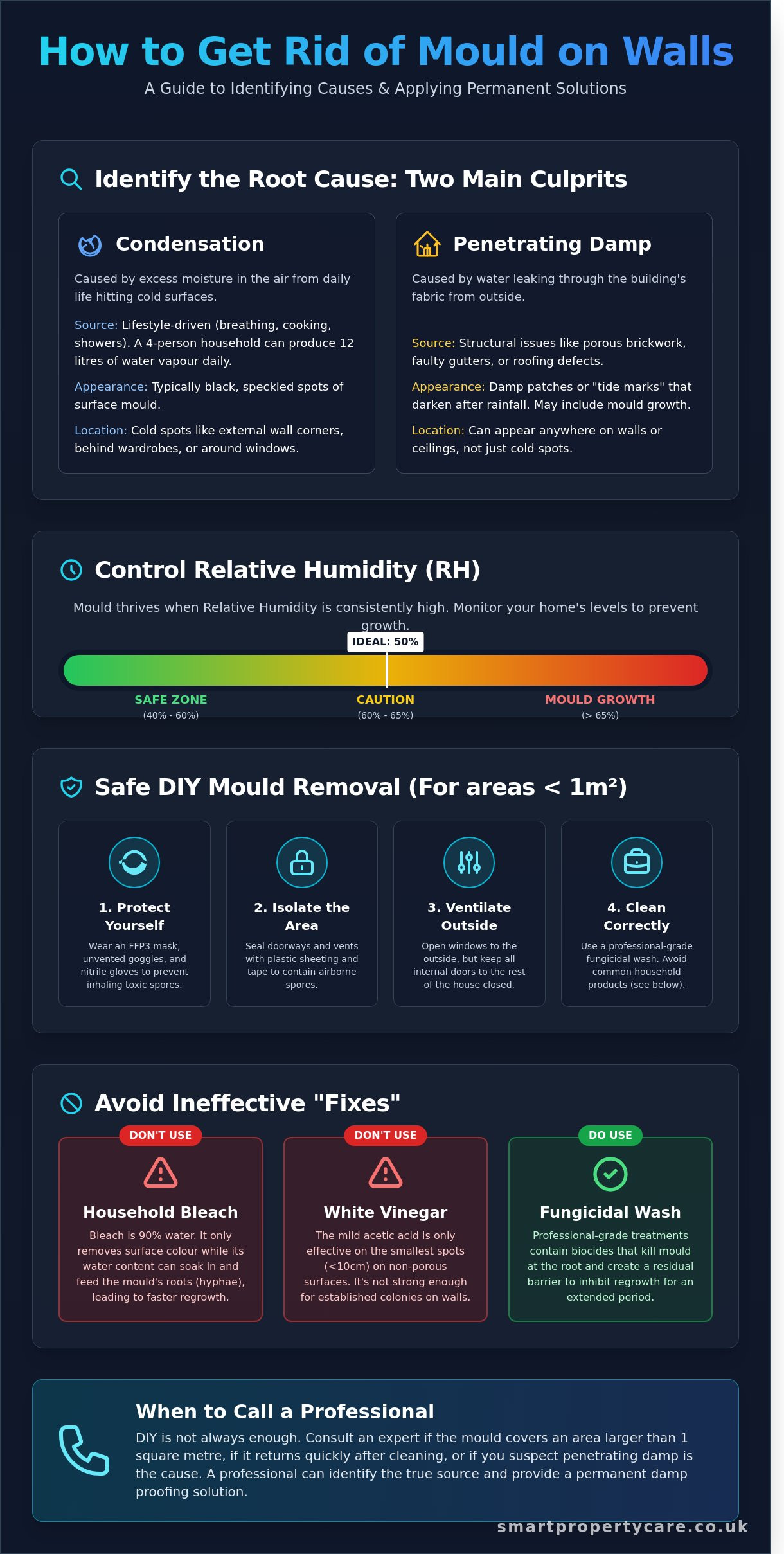
You must distinguish between lifestyle-driven moisture and structural failure to apply the right fix. Condensation mould typically appears as black spotting in room corners or behind wardrobes where air doesn’t circulate. It’s caused by daily activities; a four-person household adds roughly 12 litres of water to the air every day through breathing, cooking, and showering. Penetrating damp is different. It often manifests as “tide marks” or damp patches that darken specifically after rainfall. In coastal Kent, salt-laden winds can make brickwork porous over time, allowing rainwater to soak through the substrate and feed mould growth from the inside out.
The Role of Relative Humidity
Relative humidity (RH) is the measure of water vapour in the air relative to the temperature. When warm, moist air hits a cold external wall, it reaches the “dew point” and transforms into liquid water. This is why mould often starts on the coldest spots of a room. Many modern homes are too “sealed,” trapping this moisture without adequate exit points. We advise homeowners to use a digital hygrometer to monitor these levels. Maintaining an internal RH between 40% and 60% is vital. If your device consistently reads above 65%, you’re providing the perfect nursery for fungal spores. Controlling this number is the most effective way to learn how to get rid of mould on walls permanently.
How to Safely Remove Mould from Walls: A Step-by-Step DIY Guide
Learning how to get rid of mould on walls effectively starts with containment. Before you touch a single spore, you must seal the affected room. Use 4-mil plastic sheeting and painter’s tape to cover doorways and air vents, preventing microscopic spores from migrating to other parts of your property. Open a window to provide ventilation to the outside, but keep internal doors firmly shut.
Safety is the absolute priority during this process. You must wear an FFP3-rated respirator mask, which filters 99% of airborne particles, alongside unvented safety goggles and heavy-duty nitrile gloves. These precautions protect you from inhaling mycotoxins that are released the moment the mould is disturbed. If the affected area is larger than 1 square metre, you should stop and consult a professional, as this exceeds the safe threshold for DIY intervention.
The Problem with Bleach and Vinegar
Many homeowners reach for household bleach, but this often provides a false sense of security. Bleach contains 90% water; while the chlorine removes the surface colour, the water soaks into porous plasterboard, actually feeding the mould roots (hyphae) that remain deep inside the wall. White vinegar, with its 5% acetic acid content, is a mild alternative suitable for tiny spots under 10cm, but it lacks the strength for established colonies. For a permanent solution, we recommend professional-grade fungicidal washes. These specialist treatments contain biocides that kill the mould at the root and provide a residual barrier that prevents regrowth for up to 24 months.
Protecting Your Health During Removal
Disturbing Stachybotrys chartarum, commonly known as toxic black mould, can trigger respiratory issues or skin irritation in as little as 20 minutes. You can find practical advice on mould removal regarding the safe handling of contaminated materials to ensure your home environment remains healthy. Once the cleaning is finished, place all used cloths and protective gear into 50-micron thick refuse sacks. Double-bag them and seal them with tape before disposal to ensure no spores escape into your hallway.
The final, and most critical, step is the drying phase. A wall that feels dry to the touch might still hold 15% internal moisture, which is enough to invite mould back within days. Use a high-capacity dehumidifier for at least 48 hours to ensure the substrate is meticulously dry before applying any specialist primers. If you’re concerned about recurring dampness in your Kent home, our expert damp surveys can identify the hidden moisture sources that DIY cleaning can’t fix.
Surface Cleaning vs. Professional Remediation: Which Do You Need?
Homeowners often ask if a simple spray is enough to solve the problem or if they’re merely masking a structural disaster. Cleaning treats the symptom; remediation treats the source. While a £15 bottle of fungicidal wash provides a temporary visual fix, it won’t stop recurring damp. You need to understand if the spores are limited to the surface or if they’ve colonised the internal structure of your home. If mould has penetrated the plasterboard or reached the structural timber, scrubbing won’t help. You’re simply delaying the inevitable while the damage spreads.
The smart approach involves a calculated assessment of the property’s health. For residents in Faversham or Ashford, a professional survey often saves over £2,000 in long-term repair costs by identifying rising damp before it compromises the building’s integrity. According to EPA guidelines on mould remediation, porous materials like insulation or drywall that remain wet for more than 48 hours usually require complete removal rather than just a surface wipe. This distinction is vital when learning how to get rid of mould on walls permanently.
When DIY is Sufficient
You can usually handle minor mildew caused by condensation in bathrooms or kitchens yourself. If the affected area is less than one square metre and the wall feels dry to the touch, a DIY approach is appropriate. Clean the surface thoroughly and monitor the spot for 14 days. If the area remains clear after you’ve improved ventilation by installing a humidistat fan or using a dehumidifier, you’ve likely solved the issue. This basic maintenance is a standard part of responsible property care.
Signs You Need a Professional Damp Survey
If mould returns to the same spot within 21 days of cleaning, it’s a sign of a deeper failure. Recurring growth accompanied by peeling wallpaper, crumbling plaster, or a heavy “musty” smell indicates a moisture source behind the surface. Properties in Dover and Deal, particularly older Victorian terraces, often require a specialist chemical damp proof course to stop moisture from rising through the brickwork. We recommend a professional survey if you notice salt staining or “tide marks” on your ground floor walls. This ensures a meticulous, long-term solution that protects your investment and provides total peace of mind.
Preventing Recurrence: Long-Term Solutions for Kent Homes
Cleaning surfaces provides temporary relief, but it doesn’t solve the underlying issue. To master how to get rid of mould on walls for good, you must upgrade your property’s thermal performance and moisture management. In Kent, 85% of the damp issues we resolve stem from inadequate condensation control. We frequently install Positive Input Ventilation (PIV) systems in older properties to tackle this. These units replace damp, stagnant air with fresh, filtered air every 45 minutes. This constant circulation lowers the dew point, making it physically impossible for mould to colonise your surfaces.
Improving Ventilation and Airflow
Effective airflow prevents the cold spots where moisture settles. You should ensure your furniture sits at least 50mm away from external walls to allow air to circulate. We recommend the following practical steps for Kentish homeowners:
- Install Trickle Vents: These provide constant, background ventilation without compromising security.
- Upgrade Extractor Fans: Modern units should achieve a minimum flow rate of 15 litres per second in bathrooms.
- Breathable Finishes: For traditional properties in Sandwich or Deal, we avoid modern “washable” paints. These act like a plastic bag, trapping moisture. Instead, we use breathable silicate or lime-based paints that allow the building to respire.
Structural Damp Proofing and Rendering
Driving sea rain in East Kent requires a robust external defence. If your external masonry is porous, moisture will migrate inwards. We apply high-performance silicone renders that repel liquid water while remaining vapour-permeable. This protects the brickwork while allowing internal moisture to escape. When repairing internal damage, we never use standard gypsum plaster. Gypsum is highly hygroscopic and absorbs salt like a sponge. We utilise specialist salt-retardant plastering to create a dense, moisture-resistant barrier. This technical approach ensures that even if the wall becomes damp again, the finish remains pristine and mould-free for over 20 years.
Don’t settle for a temporary fix when you can secure a permanent result. Book your professional damp survey today to protect your Kent home from future mould growth.
Professional Mould Remediation with Smart Property Care
Smart Property Care Ltd provides bespoke mould remediation and damp proofing services across the Kent region. For over 20 years, our team has operated from Herne Bay, delivering permanent solutions to property owners who are tired of temporary fixes. Understanding how to get rid of mould on walls requires more than a surface-level wipe; it demands a forensic approach to moisture control. We combine traditional building skills with modern diagnostics to ensure your home remains dry and healthy. Choosing a professional service offers the peace of mind that only a guaranteed, long-term solution can provide.
Our Meticulous Survey Process
Every project begins with a comprehensive damp survey. We don’t guess; we investigate. Our technicians utilise high-precision moisture meters and thermal imaging cameras to detect hidden leaks or cold spots behind plasterwork. This technology allows us to identify the exact root cause of dampness in residential and commercial properties from Margate to Sittingbourne. Following the inspection, you’ll receive a detailed report with a transparent, costed specification. We’ve surveyed over 1,200 properties in the last decade, ensuring every client in Ramsgate or beyond understands the necessary steps for a total recovery.
- Advanced Diagnostics: Thermal imaging identifies thermal bridges where condensation forms.
- Transparent Reporting: You receive a full breakdown of costs with no hidden extras.
- Local Expertise: We serve the entire Kent coast, including Herne Bay and Margate.
Take the First Step to a Healthy Home
If you’ve spent years in a cycle of cleaning and repainting, it’s time to break the loop. Smart Property Care Ltd is a family-run business that understands the unique architectural challenges of Kent properties, from Victorian terraces to modern builds. We specialise in how to get rid of mould on walls by tackling the environmental factors that allow spores to thrive. Our work is fully insured and certified, providing a seamless experience from the initial call to the final sign-off. Don’t let damp compromise your building’s structural integrity or your family’s health. Book your specialist damp survey in Kent today and secure a moisture-free future for your property.
Secure a Mould-Free Future for Your Kent Property
Knowing how to get rid of mould on walls requires more than just a surface scrub; it demands a meticulous approach to moisture control and ventilation. You’ve learned that while DIY cleaning offers a temporary fix, permanent results depend on identifying the root cause, whether it’s rising damp or condensation. Smart Property Care brings over 20 years of local Kent experience to every project, applying an Expert Craftsman’s precision to property preservation. We provide comprehensive reports through our fixed-fee specialist surveys, ensuring you receive a bespoke solution with transparent pricing from the start. Don’t let damp compromise your home’s structural integrity or your family’s wellbeing. Our team delivers seamless remediation that restores your peace of mind and protects your investment for the long term. By addressing the environmental source rather than just the symptoms, you ensure your living space remains pristine and safe for years to come.
Request Your Professional Damp Survey in Kent
Your property deserves the highest standard of care, and a healthy, dry home is well within your reach.
Frequently Asked Questions
Is it safe to sleep in a room with mould on the walls?
It isn’t safe to sleep in a room with mould because spores trigger respiratory issues and allergic reactions. According to the NHS, mould exposure increases the risk of asthma by 40% in some demographics. Inhaling these toxins overnight leads to chronic coughing and sleep disruption. You must address the root cause of the damp before reoccupying the space to protect your long-term health.
Can I just paint over mould with anti-mould paint?
You can’t simply paint over mould because the fungus will continue to grow beneath the surface. While you might be looking for how to get rid of mould on walls quickly, anti-mould paint is a preventative measure rather than a cure for an active infestation. If you apply it over existing spores, the paint will likely peel within 6 months as the moisture remains trapped. You need a professional treatment to kill the roots first.
How much does a professional damp survey cost in Kent?
A professional damp survey in Kent typically costs between £150 and £400 for a standard residential property. This price varies based on the size of your home and the depth of the inspection required. At Smart Property Care, we offer meticulous assessments that identify the exact source of moisture. We provide a transparent, no-obligation quote so you understand the precise costs before any remedial work begins.
What is the fastest way to get rid of black mould on walls?
The fastest way to get rid of black mould on walls involves using a biocidal wash or a solution of one part bleach to four parts water for immediate surface removal. While this clears the visible stains in under 30 minutes, it doesn’t stop the spores from returning. To learn how to get rid of mould on walls permanently, you must combine this cleaning with improved mechanical ventilation or a PIV system.
Does a dehumidifier actually stop mould from growing?
A dehumidifier helps prevent mould by keeping indoor relative humidity levels below 50%. It won’t kill existing mould, but it creates an environment where spores cannot thrive. For a typical three-bedroom house, a unit capable of extracting 12 litres of water per day is standard. This is a secondary solution that doesn’t address structural issues like leaking pipes or failed damp-proof courses.
Why does mould keep coming back in my rented flat in Canterbury?
Mould often recurs in Canterbury flats due to a combination of high humidity in older Victorian conversions and inadequate ventilation. If you’ve cleaned the area and it returns within 14 days, the issue is likely structural, such as penetrating damp or cold bridging. Landlords are legally required under the Homes (Fitness for Human Habitation) Act 2018 to ensure properties are free from damp that affects tenant health.
Can rising damp cause mould to grow halfway up a wall?
Rising damp rarely causes mould halfway up a wall because capillary action typically limits moisture to 1 metre above ground level. If you see growth at chest height, it’s usually a sign of penetrating damp from a leaking gutter or internal condensation. Our team uses precision moisture meters to distinguish between these issues. This ensures we apply the correct bespoke treatment rather than an unnecessary damp-proof course.
Will removing mould improve my respiratory health?
Removing mould significantly improves respiratory health by eliminating airborne irritants that trigger inflammation. A 2023 study showed that remediating dampness in homes led to a 30% reduction in reported asthma symptoms among residents. Once the spores are gone and the air quality is restored, most people notice a decrease in sneezing and throat irritation within 48 hours. It’s a vital step for maintaining a healthy living environment.