
A single untreated damp patch can devalue a Canterbury home by as much as 10%, yet many property owners still risk their investment on uncertified “quick fixes” instead of professional damp proof specialists. You likely feel the weight of this risk, especially when the line between a minor condensation issue and serious rising damp seems so blurred. It’s exhausting to deal with the constant anxiety of “cowboy” tradesmen who might leave your brickwork in a worse state than they found it. You deserve a home that’s healthy, dry, and structurally sound.
Choosing the right partner is about more than just a bucket of sealant; it’s about protecting your biggest asset with a bespoke, long-term solution. This guide explains how to select an expert in Herne Bay or East Kent who offers the meticulous craftsmanship and technical expertise required to secure your property for 2026. We will examine the essential components of a comprehensive survey report and explain why a certified guarantee is the only way to achieve genuine peace of mind.
Key Takeaways
- Understand why Kent’s unique coastal climate and local geology demand a bespoke approach that generic national franchises often fail to provide.
- Learn how to identify qualified damp proof specialists by vetting essential certifications and local reputations across Canterbury and Herne Bay.
- Discover the critical difference between a temporary “patch and paint” fix and the meticulous removal of hygroscopic salts required for a permanent repair.
- Prepare for your professional survey by learning what to expect from external inspections and internal moisture profiling using non-destructive technology.
- Gain the peace of mind that comes with protecting your property’s structural integrity and market value through meticulous, expert-led maintenance.
Why You Need Local Damp Proof Specialists in East Kent
East Kent presents a unique set of environmental challenges that require more than a generic approach to property maintenance. Engaging local damp proof specialists ensures your home is assessed with an intimate understanding of the region’s specific geological and climatic profile. While national franchises often apply one-size-fits-all solutions, they frequently overlook the high water tables in the Stour Valley or the porous nature of the chalk foundations common in Dover. A local expert recognizes these nuances immediately, providing a diagnosis that is both accurate and sustainable.
Ignoring the early signs of moisture in Kentish brickwork is a risk that leads to rapid structural deterioration. In the historic suburbs of Canterbury and the exposed streets of East Kent, a small damp patch can evolve into a significant structural issue within 12 to 18 months. Local expertise allows for a meticulous identification of moisture ingress points, whether they stem from rising damp, lateral penetration, or internal condensation. We focus on delivering a seamless repair process that restores your peace of mind and protects your property’s long-term value.
- Accurate identification of local soil types including London Clay and Thanet Sands.
- Knowledge of regional building materials like Kentish Ragstone and yellow stock bricks.
- Proven strategies for managing the high humidity levels found across the Garden of England.
Coastal Damp Challenges in Herne Bay and Margate
Properties in Herne Bay and Margate face a relentless assault from the North Sea. Salt spray contains hygroscopic salts that settle deep within masonry, attracting moisture from the air even on dry days. High humidity levels, which frequently exceed 80% during coastal storms, force water through standard renders. Sea-front properties require bespoke rendering and protective coatings specifically engineered to withstand wind-driven rain. Without these specialized treatments, salt contamination will continue to cause internal plaster to blister and peel, regardless of how many times it is repainted.
Historic Architecture and Damp in Canterbury
Canterbury contains over 1,500 listed buildings, many featuring solid wall construction and traditional timber frames. These heritage structures rely on breathability to remain dry. Using modern, non-porous chemicals or cement-based tanking on these buildings often traps moisture behind the surface. This leads to the rapid development of dry rot, a fungus that can compromise structural timber in a matter of weeks. Our approach prioritises breathable materials and lime-based mortars, ensuring that historic Kentish homes are preserved using techniques that respect their original craftsmanship while providing modern protection against the elements.
How to Vet Damp Specialists in Canterbury and Herne Bay
Choosing the right expert is the difference between a permanent fix and a recurring nightmare. In East Kent, the damp proofing industry is crowded, yet only a small percentage of contractors hold the necessary professional accreditations required for mortgage-backed guarantees. You need a partner who understands the specific porous brickwork found in Faversham and the salt-laden air of Herne Bay. Vetting your contractor ensures you aren’t just paying for a cosmetic cover-up.
Every reputable specialist should provide proof of their credentials immediately. Look for membership in the Property Care Association (PCA) and ensure their surveyors hold the Certificated Surveyor in Remedial Treatments (CSRT) qualification. These aren’t just badges; they represent a commitment to rigorous industry standards. Additionally, verify that they carry a minimum of £2 million in Public Liability insurance to protect your property during the works.
What Makes a Technical Report “Specialist”?
A professional survey goes far beyond a cursory visual check. True damp proof specialists use moisture mapping and hygrometer tests to identify the exact source of ingress, whether it’s rising damp or lateral penetration. Your report should be a comprehensive document, including a costed specification for remedial works. This isn’t just for your peace of mind. Lenders often require a PCA-certified report before approving a mortgage on older Victorian or Edwardian properties in Canterbury. If a report doesn’t include a detailed floor plan and moisture readings, it’s likely insufficient for a property sale.
Local Trust Signals and Reviews
Local reputation carries immense weight in Kent. A family-run business with over 20 years of experience in the South East offers a level of accountability that national call centres cannot match. Look for case studies that cover the diverse property types in our region, from fisherman’s cottages in Whitstable to modern developments in Ashford. Word of mouth in tight-knit communities like Faversham is often the most reliable indicator of quality. If you’re unsure about a damp patch in your home, it’s wise to book a professional survey to get a clear, technical assessment.
Avoid “cowboy” red flags that compromise your home’s structural integrity. Be wary of contractors who:
- Offer instant quotes over the phone without visiting the site.
- Pressure you into a “one-day fix” for complex damp issues.
- Cannot provide a 10-year or 20-year insurance-backed guarantee.
- Demand full payment in cash before the work begins.
A meticulous specialist will always provide a written, transparent breakdown of costs. They’ll explain the technical process in plain English, ensuring you understand exactly why a specific treatment is recommended for your Kent home.
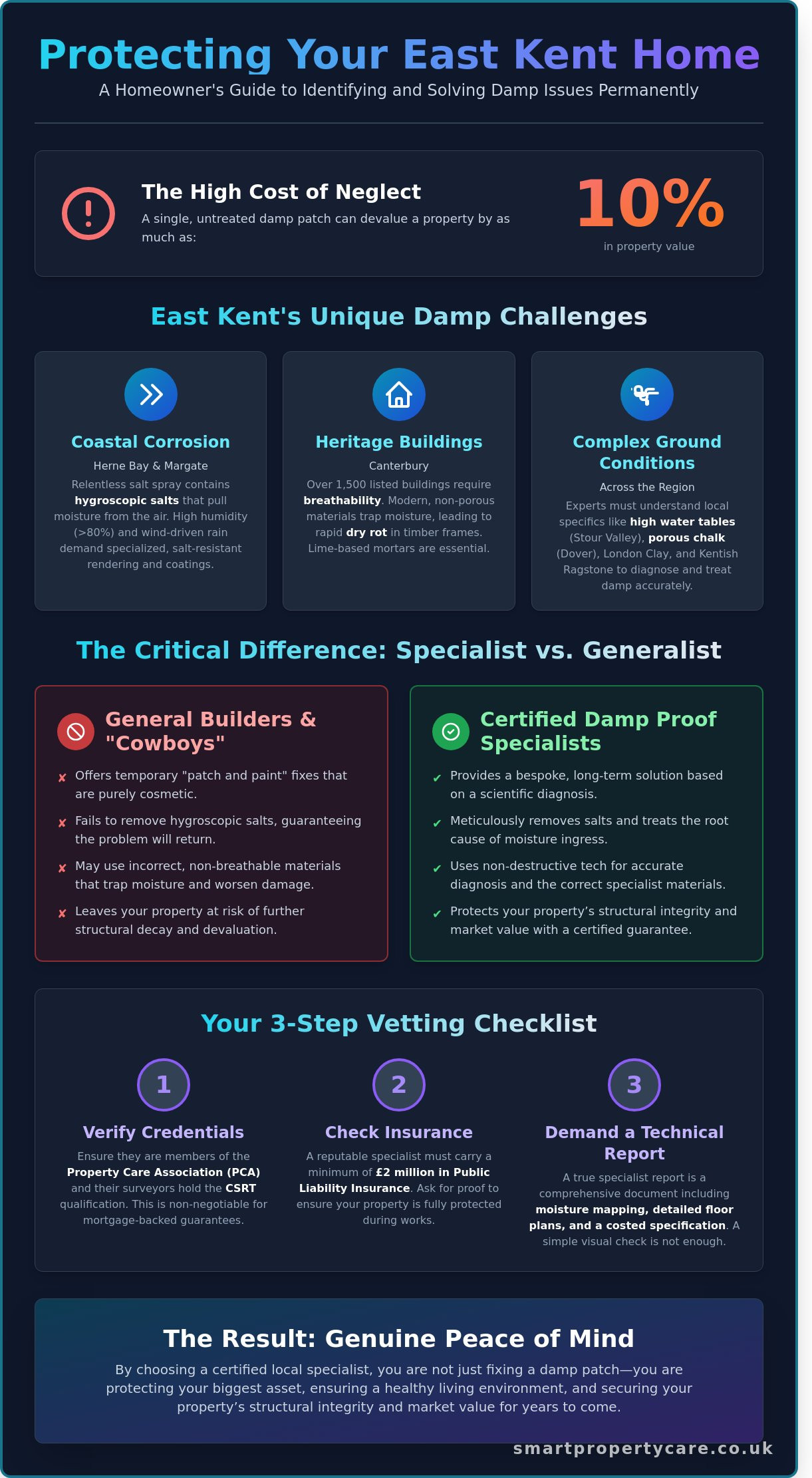
Damp Specialists vs. General Builders: The Critical Difference
Hiring a general builder for a moisture problem often leads to a “patch and paint” job that masks the issue rather than solving it. While a builder is skilled at construction, they often lack the diagnostic training required to identify the root cause of ingress. A standard coat of damp-proof paint or a quick patch of gypsum plaster will likely fail within 12 to 18 months. This happens because the underlying moisture remains trapped, eventually bubbling the new finish and wasting your investment.
The real danger lies in hygroscopic salts like nitrates and chlorides. These salts are drawn from the ground during rising damp and remain embedded in the masonry even after the wall dries. They’re chemically designed to attract moisture from the air. Professional damp proof specialists understand that unless these salts are physically removed or neutralized, the wall will always appear damp. We use advanced diagnostic tools to ensure accuracy, including:
- Protimeter MMS3 devices: These provide sub-surface moisture readings to distinguish between condensation and structural damp.
- Thermal imaging cameras: We use FLIR technology to identify cold spots and thermal bridges where moisture settles.
- Salt analysis kits: These confirm the presence of ground salts that require specialist treatment.
Choosing the wrong tradesman has significant cost implications. Industry figures suggest that 25% of our remedial work in Canterbury involves fixing “repairs” previously carried out by non-specialists. Paying for the same job twice is a financial burden that’s easily avoided by hiring experts from the start.
The Role of Specialist Plastering
Standard gypsum plaster is the enemy of a dry home. It’s highly porous and acts like a sponge, pulling moisture and salts through to the surface. Our team uses a technical salt-neutralising plastering process. This involves a specific sand and cement render mix, often incorporating Perlite or specialized waterproof additives. It creates a breathable yet salt-resistant barrier. We ensure the final skim provides a seamless, aesthetic finish that respects the character of Kent’s period properties while offering a 20-year peace of mind.
Timber Treatment Expertise
Dampness rarely stays in the bricks; it migrates to your floor joists and skirting boards. General builders might simply replace a rotten board, but damp proof specialists look for the presence of Anobium punctatum (common furniture beetle) or fungal decays like Serpula lacrymans (dry rot). We apply targeted chemical treatments that penetrate the wood fibres to prevent future infestations. This meticulous approach preserves the structural integrity of your home without the need for invasive and expensive full-timber replacements.
What to Expect During a Professional Damp Survey in Kent
Booking a visit from damp proof specialists provides the clarity you need to protect your property’s structural integrity. Our surveyors follow a rigorous, five-step protocol to ensure no moisture source remains hidden. We don’t guess; we diagnose with precision to provide a bespoke solution for your home.
- Step 1: External Assessment: We begin by examining the building’s envelope. This involves inspecting gutters, downpipes, and pointing for defects. We pay close attention to ground levels. Building regulations typically require a 150mm splash zone between the ground and your damp proof course (DPC). We check this height meticulously to ensure no bridging has occurred.
- Step 2: Internal Moisture Profiling: Our team uses non-destructive technology to map moisture levels across your walls. This creates a visual blueprint of the problem, allowing us to see where moisture is concentrated.
- Step 3: Definitive Diagnosis: We identify whether you are dealing with rising damp, penetrating damp, or condensation. Each issue requires a different remedial approach. Identifying the specific damp type prevents you from paying for unnecessary treatments.
- Step 4: Timber and Ventilation Check: We inspect sub-floor voids and joist ends where timber health is most at risk. We ensure air bricks provide adequate airflow, as restricted ventilation is a leading cause of wet rot in Kentish period properties.
- Step 5: Remedial Strategy: Once the inspection is complete, you receive a comprehensive report. This includes a detailed remedial strategy and a transparent, fixed quote for the necessary works.
Non-Destructive Testing Methods
We use advanced Protimeter moisture meters to detect dampness deep within the masonry without stripping back your plaster or damaging your decor. These tools measure electrical resistance to provide an accurate reading of the moisture content within the wall. Hygrometers are also deployed to measure relative humidity and dew point, which is essential for identifying condensation risks in modern, airtight homes. A professional damp survey is a technical assessment of a building’s structural integrity using precision moisture meters and thermal imaging to identify moisture ingress without damaging the property’s fabric.
Preparing Your Home for the Surveyor
To ensure a seamless inspection, please clear furniture away from affected “damp spots” so our team can access the skirting boards and wall bases. The surveyor will also need access to lofts, basements, and any under-stairs cupboards. It’s helpful to provide a brief history of the property, such as when you first noticed the issue or if it worsens during heavy rainfall. This data allows us to build a more accurate picture of the building’s performance over time. If you’re ready to secure your property’s future, request your professional damp survey today for total peace of mind.
Why Smart Property Care is Kent’s Trusted Specialist for 2026
Securing your home’s future requires more than a temporary patch. As we move into 2026, Smart Property Care remains the premier choice for damp proof specialists in East Kent. We’ve spent more than 20 years perfecting our craft across Herne Bay and Canterbury, building a reputation for reliability that few can match. Our family-run team views every project as a commitment to preserving the region’s unique architectural history. We balance the needs of modern living with the demands of historic building fabric, ensuring your property remains dry, safe, and valuable.
Our “Expert Craftsman” approach sets us apart from standard contractors. We combine the precision of modern moisture-mapping technology with time-honoured masonry skills. This dual-focus allows us to identify hidden ingress points in Victorian terraces or coastal cottages that others might overlook. We don’t offer generic solutions. Instead, we provide bespoke treatments tailored to the specific masonry and environmental conditions of your postcode. From initial thermal imaging surveys to the application of specialist salt-retardant plasters, we manage the entire lifecycle of your property’s recovery.
Our Seamless Property Restoration Process
We recognise that damp treatment can feel invasive. That’s why our restoration process is built on efficiency and cleanliness. When we install a new damp proof course, we use advanced injection systems that work quickly with minimal mess. Our craftsmen are experts in specialist rendering, applying salt-neutralising layers that prevent recurring issues. We don’t just fix walls; we restore rooms to their original beauty. We use dust-extraction tools and protective coverings to ensure your home stays habitable throughout the work. Every project concludes with a thorough inspection, and we provide professional guarantees that offer long-term peace of mind for every homeowner.
Book Your Specialist Survey Today
We provide expert coverage across Ashford, Sittingbourne, Faversham, and the entire Kent coast. Our technicians deliver transparent pricing and detailed technical reports that outline exactly what your property needs. We don’t believe in jargon or hidden costs. You’ll receive a clear, actionable roadmap for your property’s maintenance, backed by two decades of local expertise. We take immense pride in being a one-stop shop for East Kent, handling everything from structural repairs to final decorative finishes with disciplined punctuality.
Contact our team to secure your property’s structural integrity. Book your specialist damp survey with Smart Property Care today and experience the gold standard in Kentish property maintenance.
Protect Your East Kent Property Investment
Moisture damage won’t wait for a convenient time to compromise your home’s structural integrity. Choosing dedicated damp proof specialists ensures you receive a precise diagnosis instead of the expensive guesswork often associated with general builders. Smart Property Care delivers over 20 years of specialist experience to homeowners across Canterbury, Herne Bay, and East Kent, providing the technical expertise needed to solve complex rising damp and condensation issues permanently.
Every project begins with a rigorous assessment. You’ll receive detailed technical reports that outline exactly what’s happening behind your walls, ensuring full transparency before any work starts. As specialist plastering and rendering experts, we don’t just stop the water; we restore your living space to a meticulous, high-end finish that stands the test of time. It’s about more than a simple repair; it’s about the peace of mind that comes from professional craftsmanship and reliable local service. Take the first step toward a dry, healthy home today.
Get Your Professional Damp Survey in Kent Today
Your property deserves the highest standard of care and a specialist touch that lasts.
Frequently Asked Questions
How do I know if I need a damp proof specialist or just a plumber?
You need a damp proof specialist if the moisture is rising from the ground or soaking through external masonry rather than leaking from a visible pipe. Plumbers handle burst pipes and dripping taps, but damp experts diagnose complex issues like hygroscopic salt contamination or failed damp proof courses. If you see tide marks on ground floor walls or smell a persistent musty odour, it’s time to call a professional for a targeted moisture assessment.
What is the average cost of damp proofing a terraced house in Kent?
According to Checkatrade 2024 data, the average cost to install a chemical damp proof course in a standard UK terraced house ranges from £800 to £3,500 depending on the extent of the damage. This figure often excludes the cost of internal salt-neutralising plastering, which is essential for a permanent fix. Each property in East Kent requires a bespoke quote to account for specific wall thicknesses and the severity of the moisture ingress.
Can I stay in my house while the damp proofing work is being done?
You can typically remain in your property while our damp proof specialists carry out the treatment, though some rooms will be temporarily inaccessible. The process involves removing contaminated plaster and injecting a new damp proof course, which creates localised dust and noise. We use meticulous dust-containment measures to ensure your living areas remain clean and functional throughout the project, minimising disruption to your daily routine.
Do damp proof specialists provide guarantees for their work?
Professional damp proofing work should always include a long-term guarantee, typically lasting 20 to 30 years. These guarantees provide essential peace of mind and are often backed by insurance schemes like the GPI (Guarantee Protection Insurance). At Smart Property Care, we provide certified documentation that stays with the property, which is a vital asset if you decide to sell your home in the future.
Is a damp survey different from a standard homebuyer’s survey?
A damp survey is a specialised diagnostic inspection that goes far deeper than the visual assessment provided in a standard RICS Level 2 or 3 homebuyer’s report. While a general surveyor might flag high moisture readings using a basic meter, a specialist uses invasive and non-invasive tools to identify the exact root cause. This precision prevents you from spending money on unnecessary repairs that a general survey cannot accurately specify.
How long does a typical damp proofing treatment take to complete?
A standard damp proofing project for a single room usually takes 2 to 4 days to complete from initial preparation to the final application of specialist plaster. Larger projects or whole-house treatments in Kent properties can take up to 10 working days. This timeline includes the meticulous removal of salt-affected masonry and the necessary curing time for modern chemical injections or membrane installations.
Why has damp appeared after I installed new double glazing?
Installing new double glazing often causes condensation dampness because it seals the property and reduces natural ventilation. Modern uPVC windows are highly efficient at trapping heat, but they also trap moisture produced by cooking, bathing, and breathing. If your new windows lack trickle vents, the humidity levels can rise above 60 percent, leading to black mould growth on cold wall surfaces that previously had better airflow.